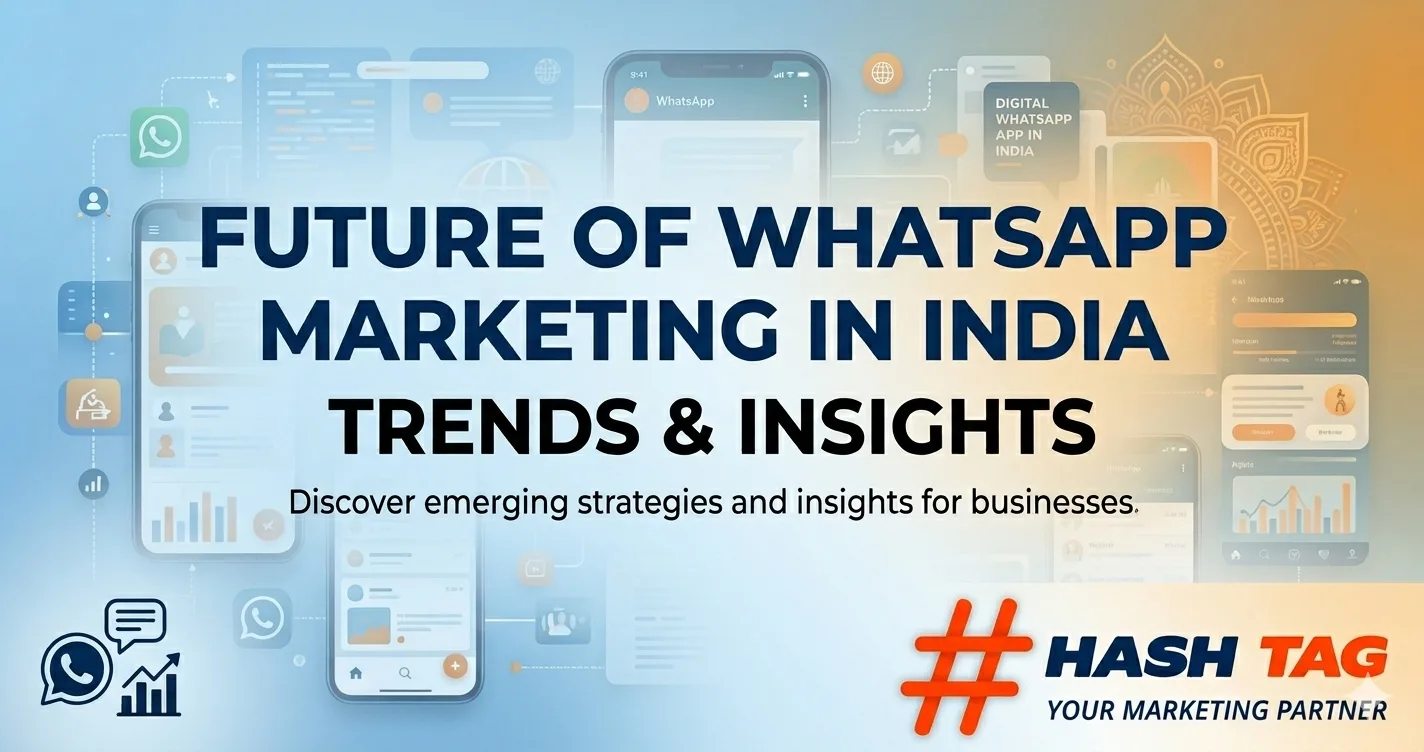
In today’s digital-first world, businesses are constantly searching for faster and more effective ways to connect with customers. In India, one platform has clearly stood out—WhatsApp. With millions of active users across all age groups, WhatsApp has evolved from a simple messaging app into a powerful business communication tool. From sending updates to handling customer queries, brands are increasingly relying on WhatsApp to build direct and meaningful relationships.
As technology continues to grow, WhatsApp marketing is also changing rapidly. This blog explores the current state, key trends, benefits, and future of WhatsApp marketing in India.
Current State of WhatsApp Marketing in India
WhatsApp marketing in India has seen massive growth over the last few years. Businesses—from small startups to large enterprises—are using it for customer engagement, promotions, support, and even sales.
One of the biggest reasons behind this growth is high open rates. Unlike emails or SMS, WhatsApp messages are usually opened within minutes. This makes it a highly reliable communication channel.
Another important factor is the adoption of the WhatsApp Business API. Many companies are now working with a WhatsApp API provider in Delhi to send bulk messages, automate responses, and manage large-scale communication efficiently.
Additionally, industries like real estate, e-commerce, education, and healthcare are actively using WhatsApp to streamline communication and improve customer experience.
Key Trends in WhatsApp Marketing
1. AI-Powered Automation
Artificial Intelligence (AI) is transforming how businesses interact with customers. With AI integration, companies can now automate responses, understand customer queries, and provide instant solutions. AI helps reduce manual effort and ensures that customers receive quick replies—even outside business hours.
2. Chatbots for Customer Support
Chatbots are becoming a core part of WhatsApp marketing strategies. These bots can handle FAQs, guide users, collect leads, and even process orders. For example, a customer can ask about pricing, product details, or service availability and get an instant response without waiting for a human agent.
3. Personalized Messaging
Generic messages no longer work. Today’s users expect personalized communication. Businesses are now using customer data to send tailored messages based on behavior, preferences, and past interactions. This increases engagement and improves conversion rates significantly.
4. Rich Media Communication
WhatsApp allows businesses to send images, videos, PDFs, and even interactive buttons. This makes communication more engaging compared to traditional text-based marketing. Brands are now using catalogs, product demos, and video promotions to capture attention and drive action.
5. Integration with CRM Systems
Companies are integrating WhatsApp with CRM tools to manage customer data more effectively. This allows businesses to track conversations, analyze user behavior, and improve overall communication strategies.
6. Secure and Verified Communication
With increasing concerns around spam and data privacy, WhatsApp has introduced verification systems. Businesses can now operate with verified profiles, which builds trust among users. This also ensures that customers are interacting with genuine brands.
Benefits for Businesses
1. High Engagement Rates
WhatsApp messages have significantly higher open and response rates compared to email and SMS. This makes it a powerful tool for customer engagement.
2. Cost-Effective Marketing
Compared to traditional advertising channels, WhatsApp marketing is more affordable and delivers better ROI. Many businesses are now opting for a whatsapp api service in delhi to manage campaigns efficiently at scale.
3. Direct Communication
WhatsApp allows businesses to connect directly with customers without any middle platform. This helps in building stronger relationships and improving customer trust.
4. Faster Customer Support
Instant messaging enables quick problem resolution. Customers don’t have to wait for long hours to get their queries answered.
5. Increased Conversion Rates
Because of personalized and real-time communication, businesses can convert leads into customers more effectively.
Future Predictions
1. More Advanced Automation
In the coming years, automation will become even smarter. AI tools will be able to understand complex queries and provide more human-like responses.
2. Voice and Video Integration
WhatsApp is expected to expand its business features with better voice and video support. This will help businesses offer more interactive and personalized experiences.
3. Deeper E-commerce Integration
Shopping directly through WhatsApp is likely to grow. Features like product catalogs, payment gateways, and order tracking will become more seamless.
4. Hyper-Personalization
With improved data analytics, businesses will be able to send highly targeted messages based on user behavior, location, and preferences.
5. Stronger Data Privacy Measures
As digital communication grows, privacy will remain a top priority. WhatsApp is expected to introduce more secure features to protect user data and maintain trust.
6. Increased Adoption by Small Businesses
Small and local businesses in India will continue to adopt WhatsApp marketing due to its simplicity, affordability, and effectiveness.
Conclusion
WhatsApp marketing is no longer just an option—it has become a necessity for businesses in India. With evolving technology, features like AI automation, chatbots, and personalization are shaping the future of customer communication.
As competition increases, businesses that adapt to these trends early will have a clear advantage. Staying updated with the latest tools and strategies will be key to long-term success.
For businesses looking to explore this space further, companies like Hashtag SMS provide insights and solutions that help brands understand and implement WhatsApp-based communication more effectively.