
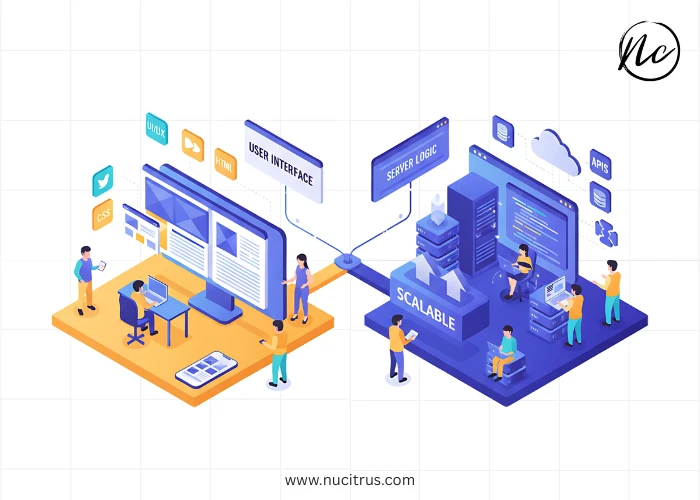
Creating a website involves more than just making it appear nice. Companies want online solutions that are effective, scalable, and flexible enough to meet the ever-evolving needs of the market. To do this, front-end design and back-end development—two essential components of contemporary web development—must work in perfect harmony. Let's examine how these components combine to produce robust, cutting-edge web solutions.
The Role of Front-End Design in Web Solutions
Front-end design, often referred to as the client-side, is what users see and interact with on a website. It includes everything from the layout and typography to interactive features like buttons, forms, and animations. A well-crafted front end ensures that visitors not only stay longer on a site but also engage meaningfully with its content.
Key Principles of Effective Front-End Design
1.User-Centered Design (UCD)
Understanding the target audience is crucial. User-centered design focuses on creating intuitive interfaces that enhance usability and reduce friction in user interactions. Features like responsive layouts, clear navigation, and accessibility compliance ensure a seamless experience across devices.
2.Visual Consistency
Consistent colors, fonts, and design elements build trust and improve brand recognition. Tools like CSS frameworks (Bootstrap, Tailwind) help maintain design uniformity while speeding up development.
3.Performance Optimization
Front-end performance impacts user retention and SEO rankings. Optimizing images, minimizing JavaScript, and implementing lazy loading are essential practices for fast-loading websites.
4.Interactivity and Engagement
Animations, hover effects, and dynamic content can enhance user engagement. However, they must be implemented carefully to avoid slowing down the website or distracting users.
Back-End Development: The Engine Behind Scalable Websites
While front-end design handles the visual experience, back-end development powers the functionality of a website. It involves server-side programming, databases, APIs, and integration with other systems. A robust back end ensures that a website can handle growth, traffic spikes, and complex business logic without compromising performance.
Core Components of Back-End Development
1.Server and Database Management
The back end interacts with servers and databases to store, retrieve, and process data. Choosing the right database system—like MySQL, PostgreSQL, or MongoDB—depends on the type of data and expected traffic volume.
2.API Development and Integration
APIs (Application Programming Interfaces) allow seamless communication between different software components. Well-designed APIs enable features like payment gateways, social media logins, and third-party integrations to function reliably.
3.Scalability and Security
Scalability is essential for businesses expecting growth. Techniques like load balancing, caching, and cloud-based deployment ensure that websites can handle large user bases. Security practices, including encryption, authentication, and data validation, protect sensitive information and maintain user trust.
4.Frameworks and Languages
Back-end developers use frameworks like Node.js, Django, Laravel, and Ruby on Rails to speed up development and maintain code quality. Choosing the right technology stack aligns with project requirements and long-term maintenance goals.
Achieving Harmony Between Front-End and Back-End
For a website to be truly scalable, front-end and back-end teams must work in tandem. Misalignment can lead to slow performance, poor user experience, and costly technical debt. Here’s how to ensure effective collaboration:
- Consistent Communication: Regular meetings and shared documentation keep teams aligned on project goals and timelines.
- API-Driven Development: Designing APIs with the front-end in mind allows smoother integration and reduces dependency issues.
- Version Control Systems: Tools like Git ensure that changes are tracked and conflicts are minimized.
- Testing and QA: Automated testing and quality assurance on both ends help identify bugs early and maintain system integrity.
Why Scalable Web Solutions Matter
Scalable websites are not just a luxury—they are a necessity. As businesses grow, the number of users, data, and interactions increases. Without scalability, websites may experience slow load times, crashes, or degraded functionality, harming user experience and revenue.
By combining intuitive front-end design with robust back-end development, businesses can ensure that their web solutions are not only visually appealing but also reliable, secure, and capable of supporting growth. Scalable architecture also allows for future-proofing, making it easier to add new features or integrate emerging technologies without overhauling the entire system.
Conclusion
A great user interface is not enough to make a website successful. It is the outcome of meticulous development, strategic design, and thoughtful planning. While back-end development provide the functional foundation required for scalability and security, front-end design draws users in and guarantees engagement.
Businesses that invest in both aspects can deliver seamless, high-performance web experiences that grow alongside their audience. Whether you’re launching a startup or scaling an enterprise-level platform, focusing on front-end and back-end synergy is key to creating web solutions that truly stand the test of time.