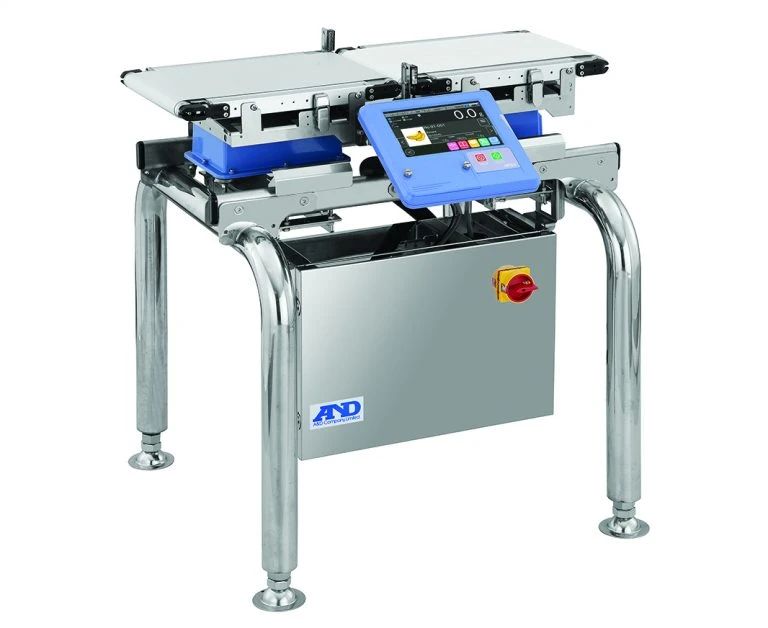
In today’s competitive manufacturing and packaging landscape, efficiency and cost control are critical to staying profitable. Businesses are constantly looking for ways to optimise production, reduce waste, and improve operational efficiency. One technology that has proven invaluable in achieving these goals is the Average Quantity System (AQS), also known as an Average Quantity Checkweigher System. By ensuring precise filling of products and reducing overfill, AQS not only enhances quality control but also drives significant economic benefits.
Understanding the Average Quantity System (AQS)
The Average Quantity System (AQS) is a regulatory-compliant weighing and monitoring system designed to ensure products meet required average quantity standards. Unlike traditional checkweighers that reject individual items outside strict weight tolerances, AQS focuses on the average weight of a production batch, allowing for minor variations in individual product weights while maintaining overall compliance.
Key characteristics of AQS include:
- Real-time monitoring of production lines
- Automated weight control to prevent overfill
- Data collection and reporting for regulatory compliance
- Integration with packaging machinery for seamless operation
By focusing on batch averages rather than individual products, AQS strikes a balance between precision, efficiency, and cost-effectiveness.
Waste Reduction: The First Step Toward Economic Efficiency
Overfilling is a hidden cost in many production processes. Manufacturers often add more product than necessary to avoid underfilling, leading to waste of raw materials. Over time, even small excesses can accumulate into significant losses.
AQS addresses this by:
- Automatically adjusting fill levels to meet target weights
- Minimising product giveaway without risking non-compliance
- Monitoring trends in real-time to correct deviations quickly
The result is a substantial reduction in material waste, which not only preserves raw materials but also reduces disposal costs and environmental impact. For businesses producing thousands of units per day, the savings on raw materials alone can be considerable.
Reducing Production Costs
Waste reduction directly translates into lower production costs. By optimising the filling process:
- Raw material costs decrease – less overfill means more product can be produced from the same quantity of ingredients.
- Labor costs are optimised – automated monitoring reduces the need for manual inspection and rework.
- Energy and operational costs fall – efficient production lines operate smoothly with fewer interruptions and less downtime.
AQS helps manufacturers achieve leaner operations, reducing unnecessary expenditures while maintaining output quality.
Enhancing Packaging Efficiency
In addition to controlling overfill, AQS improves overall packaging efficiency.
- Products are filled consistently within target weights, reducing errors during sealing and labeling.
- Fewer rejected or reprocessed items mean faster line speeds and smoother workflow.
- Integration with modern packaging machines ensures that production lines operate at optimal efficiency.
By streamlining the packaging process, AQS allows businesses to increase throughput without additional investment in machinery.
Ensuring Regulatory Compliance
Compliance with weight and measurement regulations is a legal requirement in many industries, including food, pharmaceuticals, and consumer goods. Non-compliance can lead to fines, recalls, and reputational damage.
AQS supports compliance by:
- Maintaining the average weight of batches within legal tolerances
- Providing automated data logs for audits and inspections
- Minimising risk of human error in monitoring weights
By avoiding penalties and product recalls, businesses protect their bottom line while ensuring customers receive products that meet promised specifications.
Minimising Overfill and Product Giveaway
Overfill or product giveaway occurs when production lines consistently add more product than necessary. This may seem minor on a per-unit basis, but it can lead to substantial financial losses over time.
AQS addresses this problem by:
- Continuously monitoring the average batch weight
- Adjusting fills dynamically to minimise excess product usage
- Alerting operators if deviations occur
Studies have shown that optimising fill levels with AQS can reduce product giveaway by up to 2-3%, which, for large-scale production, translates into thousands of dollars saved annually.
Data-Driven Decision Making
Modern AQS systems are equipped with software that collects and analyses production data. This data allows manufacturers to:
- Track trends in filling accuracy
- Identify inefficiencies in the production line
- Plan maintenance schedules for machinery
- Predict material requirements more accurately
By leveraging this data-driven approach, businesses can make strategic decisions that improve efficiency, reduce costs, and maximise profit margins.
Flexibility Across Multiple Product Lines
AQS is highly versatile and can be applied across various product types, from liquids and powders to packaged foods and consumer goods. Its adaptability allows manufacturers to:
- Switch between product lines without major reconfiguration
- Adjust average weight targets for different product specifications
- Maintain high efficiency even with diverse production requirements
This flexibility ensures that cost savings and waste reduction are not limited to a single product but extend across the entire operation.
Long-Term Economic Advantages
The economic benefits of AQS are not limited to immediate cost reductions. Over the long term, implementing an Average Quantity System provides:
- Sustainable production practices – less waste contributes to lower environmental impact and corporate responsibility goals.
- Improved profitability – consistent fill weights reduce raw material costs and operational inefficiencies.
- Competitive advantage – manufacturers that control costs and maintain compliance can offer better pricing and service to customers.
- Reduced equipment strain – precise filling reduces wear and tear on machinery, lowering maintenance costs.
In essence, AQS provides a holistic approach to production efficiency, benefiting both the operational and financial aspects of manufacturing.
Integration with Existing Quality Systems
AQS can be seamlessly integrated with other quality control systems, such as:
- Metal detectors for contamination control
- Vision systems for label and package inspection
- Automated checkweighers for individual item verification
This integration allows manufacturers to build a comprehensive quality and efficiency framework, ensuring every stage of production contributes to cost savings and waste reduction.
Conclusion
The Average Quantity System (AQS) is more than just a tool for compliance—it is a strategic investment that drives economic advantages across the manufacturing process. By reducing waste, minimising overfill, improving packaging efficiency, and supporting data-driven decisions, AQS helps businesses optimise production costs and maximise profitability.
For manufacturers seeking sustainable and efficient operations, implementing an AQS is a proven way to achieve both operational and financial goals. From small batch operations to large-scale production lines, the economic benefits of AQS—from waste reduction to cost savings—are clear, making it a critical component of modern manufacturing efficiency.