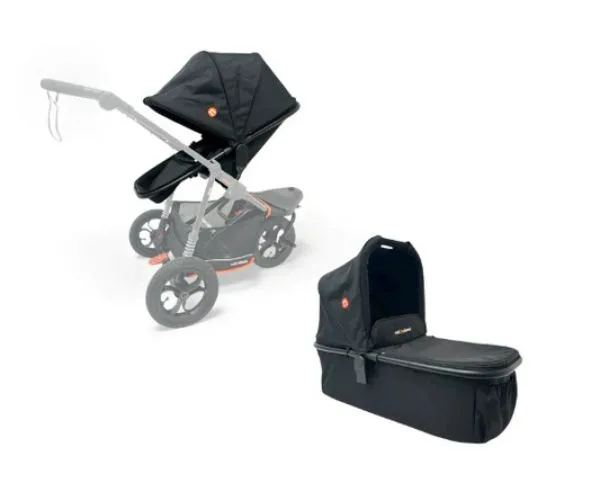
A long-lasting, all-terrain pram that adapts from flat-lying newborn mode to upright toddler seating saves families money by replacing the need to buy multiple separate products as a child grows. Instead of purchasing a newborn pram, then a stroller, and later a toddler seat, one adaptable pram covers several stages of early childhood, reducing both cost and clutter.
New parents are often told they need a different product for every stage: a bassinet for the early months, a stroller once the baby can sit up, and eventually a sturdier seat for an active toddler. But this approach adds up quickly in cost, storage space, and hassle. A growing number of parents are choosing a different route, investing once in a pram built to adapt as their child grows.
Why Buying Multiple Products Gets Expensive
Every stage-specific product comes with its own price tag. A basic newborn pram alone can cost several hundred pounds, and that's before adding a separate toddler stroller or car seat adapters. When you total up the cost of three or four separate products over two to three years, many families end up spending far more than they would on one high-quality, adaptable option.
There are also hidden costs beyond the sticker price:
- Storage space for multiple bulky items
- Time spent researching and buying each new product
- Reduced resale value of single-stage items once outgrown
- Extra accessories (rain covers, liners, adapters) needed for each new product
The True Cost of "Stage Hopping"
Parents sometimes underestimate how quickly babies move through developmental stages. A newborn pram might only be used in its flat-lying mode for a few months before a child is ready to sit upright. If that pram can't convert to the next stage, it's retired early, meaning the investment doesn't stretch nearly as far as it should.
What Makes a Pram "Long-Lasting"
Not all prams are built with longevity in mind. A genuinely adaptable pram usually includes a few key features that allow it to serve a child from birth through the toddler years.
Flat, Newborn-Safe Recline
Young babies need to lie completely flat, since their neck and spine aren't yet strong enough to support an upright seated position. A pram with a near-flat recline mode means it can be used safely from day one, without needing a separate carrycot or bassinet.
Adjustable Seating for Growing Toddlers
As a baby grows into a toddler, they'll want to sit up, see the world around them, and eventually climb in and out independently. A pram designed for longevity will offer an adjustable seat position, a higher weight limit, and sturdy construction that keeps pace with a more active, heavier child.
All-Terrain Build Quality
A pram that's only comfortable on smooth pavements limits where a family can go. Larger, air-filled tyres, solid suspension, and a durable frame mean the same pram can handle everyday errands, countryside walks, and everything in between without needing an upgrade.
Newborn Pram to Double Pram: Planning Ahead for a Growing Family
Many parents don't stop at one child, and this is where adaptability becomes even more valuable. Some pram systems are designed so that a single newborn pram can later be converted into a double pram when a second child arrives, rather than requiring an entirely new purchase.
This kind of forward planning can make a significant difference to a family's budget. Instead of buying a newborn pram for the first child and then a completely separate double pram for two, choosing a system built with expansion in mind means only add-on parts are needed, not a full replacement.
Questions Parents Often Ask
Is a more expensive, adaptable pram actually cheaper in the long run?
Usually, yes. While the upfront cost may be higher than a basic single-stage pram, it typically works out cheaper than buying two or three separate products across a child's early years.
How long can one pram realistically last?
A well-built, adaptable pram can typically be used from newborn through to around three or four years old and sometimes longer with accessories like a buggy board for an older sibling.
Can the same pram really work for a second baby?
With the right system, yes. Some prams are specifically designed to convert into a double-pram setup, meaning families don't need to start from scratch when a sibling comes along.