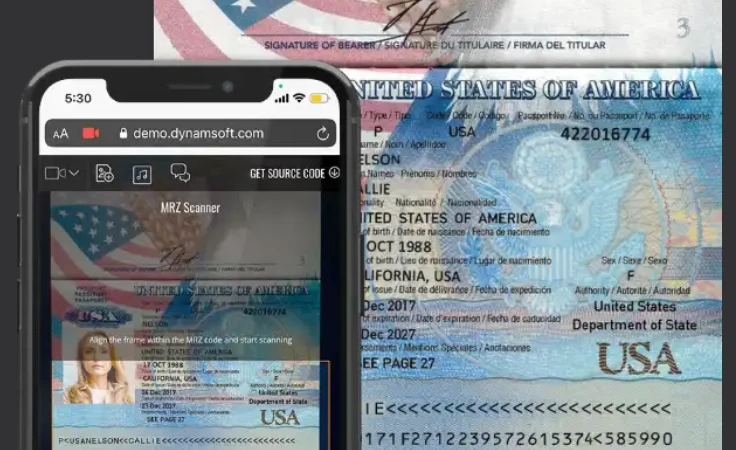
In today’s fast-paced digital environment, first impressions are everything, and for most organizations, that first impression begins with onboarding. Whether welcoming a new employee, client, or customer, onboarding is a foundational step in establishing trust and ensuring operational readiness. Yet despite its importance, many companies still rely on outdated manual methods that slow down the process, increase the risk of errors, and frustrate users.
As more organizations transition to digital operations, onboarding remains one area where outdated processes persist.
Automated ID scanning is beginning to change that. It offers a practical solution to one of the most time-consuming and error-prone steps. Automating identity verification eliminates the need for manual checks and paperwork, providing faster, more accurate, and secure digital alternatives.
This article looks at the challenges of manual onboarding and how automated ID scanning is helping organizations streamline the process.
The Problem with Manual Onboarding
Manual onboarding typically begins with collecting documents such as passports, driver’s licenses, or other forms of identification. These are often scanned, emailed, or submitted in person, then manually reviewed by administrative staff. The process might include entering information into databases, validating the legitimacy of documents, and checking compliance with internal policies or external regulations.
While this approach may feel familiar, it is inherently flawed.
- First, it’s slow. Processing times can stretch across days, especially when there’s a backlog or limited personnel.
- Second, it's error prone. Hand-typed entries increase the risk of misspellings, incorrect dates, and mismatched data.
- Third, it leaves organizations vulnerable to fraud and non-compliance, particularly in sectors like finance, healthcare, and education, where regulations are strict and identity verification is crucial.
These inefficiencies can damage customer experience, delay employee integration, and expose businesses to legal and reputational risks, all of which make a compelling case for a better alternative.
A Seamless Shift: How Automated ID Scanning Improves Onboarding
Modern ID scanning tools use technologies like Optical Character Recognition (OCR), barcode scanning, artificial intelligence, and sometimes biometric verification to streamline identity checks during onboarding. Instead of manual reviews, these systems quickly extract and verify data from ID documents.
A key component in many of these solutions is a barcode scanner SDK, which allows accurate scans and decoding of information embedded in IDs, enabling consistent, error-free data capture without manual input. This allows for seamless data extraction, ensuring consistency, and reducing errors from the start.
This shift from manual to automated onboarding offers tangible advantages across three key dimensions:
Time Efficiency Without Cutting Corners
Speed is no longer a luxury in onboarding, it’s an expectation. Whether it's a customer signing up for a digital bank account or a new hire completing HR paperwork remotely; the faster the process, the better the experience.
With the help of a barcode scanner SDK, ID scanning systems can rapidly capture data from barcode enabled government-issued IDs. The system extracts names, birthdates, document numbers, and other necessary details instantly. In some setups, users also take a selfie or short video to confirm they are the rightful holders of the ID.
Crucially, this speed doesn’t come at the cost of quality. The process remains thorough, and unlike manual checks, it doesn’t suffer from fatigue or oversight.
Improved Accuracy and Fraud Detection
Even in well-trained teams, human error is unavoidable. A number transposed incorrectly, a date misread, or a missed expiration can lead to cascading problems, from onboarding delays to compliance breaches.
Automated ID scanning mitigates these risks by relying on data extraction models designed for precision. Fields are captured exactly as they appear on the document, with built-in error detection for inconsistencies. More advanced systems can detect tampering, identify forged IDs, or spot discrepancies between a photo ID and a live facial scan.
This automated scrutiny goes far beyond what the average employee can perform manually. With built-in checks for formatting, watermark presence, and document structure, ID scanning tools can verify authenticity at a granular level.
Built-In Compliance and Data Handling
Compliance is a non-negotiable aspect of onboarding, particularly in regulated industries like finance, insurance, healthcare, and education. Laws such as KYC (Know Your Customer), AML (Anti-Money Laundering), and GDPR (General Data Protection Regulation) impose strict rules about verifying identity, storing personal data, and protecting privacy.
Manual compliance is often reactive, relying on human diligence to spot issues or flag anomalies. ID scanning, on the other hand, is built with compliance in mind. These systems can automatically detect expired documents, validate country-specific formats, and ensure all required data points are captured before submission.
Moreover, leading solutions offer secure data encryption, access controls, and automated retention policies. This helps organizations maintain compliance not just during onboarding, but throughout the user lifecycle. Additionally, it reduces the burden on internal teams and ensures that legal standards are consistently met.
Conclusion
As businesses race to modernize operations and deliver smoother digital experiences, onboarding stands out as a critical area for improvement. Automated ID scanning simplifies the onboarding process without compromising accuracy or compliance.
By automating the most tedious and error-prone parts of identity verification, organizations can not only improve operational efficiency but also build stronger relationships with the people they serve.