A vessel's engine room is one of the most hazardous working environments on earth — and one of the most routinely under-equipped when it comes to certified imaging. Fuel oil vapour, bilge gas accumulation, and refrigerant leaks from auxiliary machinery all create the conditions for explosive atmosphere classification, yet the cameras brought aboard by inspection engineers, surveyors, and class society representatives are overwhelmingly uncertified consumer devices. The International Maritime Organisation's ISM Code requires that companies identify hazards and implement safeguards for all shipboard operations. It says nothing specific about imaging equipment — and that silence has been interpreted, wrongly, as permission. The gap between what the regulations imply and what most vessels actually enforce is where the risk lives.

Why Vessel Compartments Fall Under Hazardous Area Classification
The hazardous area classification framework does not stop at the gangway. Under the ATEX Directive (2014/34/EU), any enclosed space aboard a vessel where a flammable gas or vapour atmosphere may be present during normal operation meets the criteria for zone classification. For a commercial vessel, that encompasses a larger proportion of the ship than most superintendents acknowledge.
Engine rooms operating with heavy fuel oil, marine gas oil, or lubricating systems have defined flash points that place vapour accumulation within the flammable range under elevated temperature conditions. Cargo hold areas on chemical tankers and product tankers are classified during loading, discharge, and inert gas purging operations. Fuel bunkering areas — including fuel manifold decks and bunker station surroundings — meet Zone 1 criteria during active transfer. Pump rooms on tankers are among the most stringently classified spaces in the maritime environment, typically Zone 1 throughout.
For vessels calling at UAE ports — Dubai, Abu Dhabi, Sharjah, and Fujairah — port state control inspections conducted under the Tokyo MOU and Paris MOU frameworks are increasingly attentive to safety management system compliance, including the suitability of equipment used during onboard operations. An inspection team entering a classified space with uncertified devices creates an observable non-conformance that a diligent port state control officer is entitled to record.
The Inspection Scenarios That Demand Certified Equipment
Not every part of a vessel requires hazardous area imaging. The bridge, accommodation spaces, and open deck areas present no explosive atmosphere risk under normal operating conditions. The problem lies in the compartments where inspection value is highest — and where the ignition risk is also highest.
Your classification survey, if conducted to IEC 60079-10-1 standards, will identify the specific zones aboard your vessel. In the absence of a vessel-specific survey, the following spaces should be treated as classified as a conservative baseline:
- Engine room bilge and lower level — fuel oil and lubricant vapour accumulation under normal operation; Zone 2 minimum, Zone 1 in bilge pits
- Fuel oil purifier room — centrifuge operations create aerosol conditions that meet Zone 1 criteria during normal running
- Pump room (tanker vessels) — Zone 1 throughout; one of the highest-risk confined spaces in the maritime sector
- Cargo manifold area and loading deck — Zone 1 during cargo operations on chemical and product tankers
- Fuel bunkering station — Zone 1 during transfer; Zone 2 during standby periods when vapour release is possible
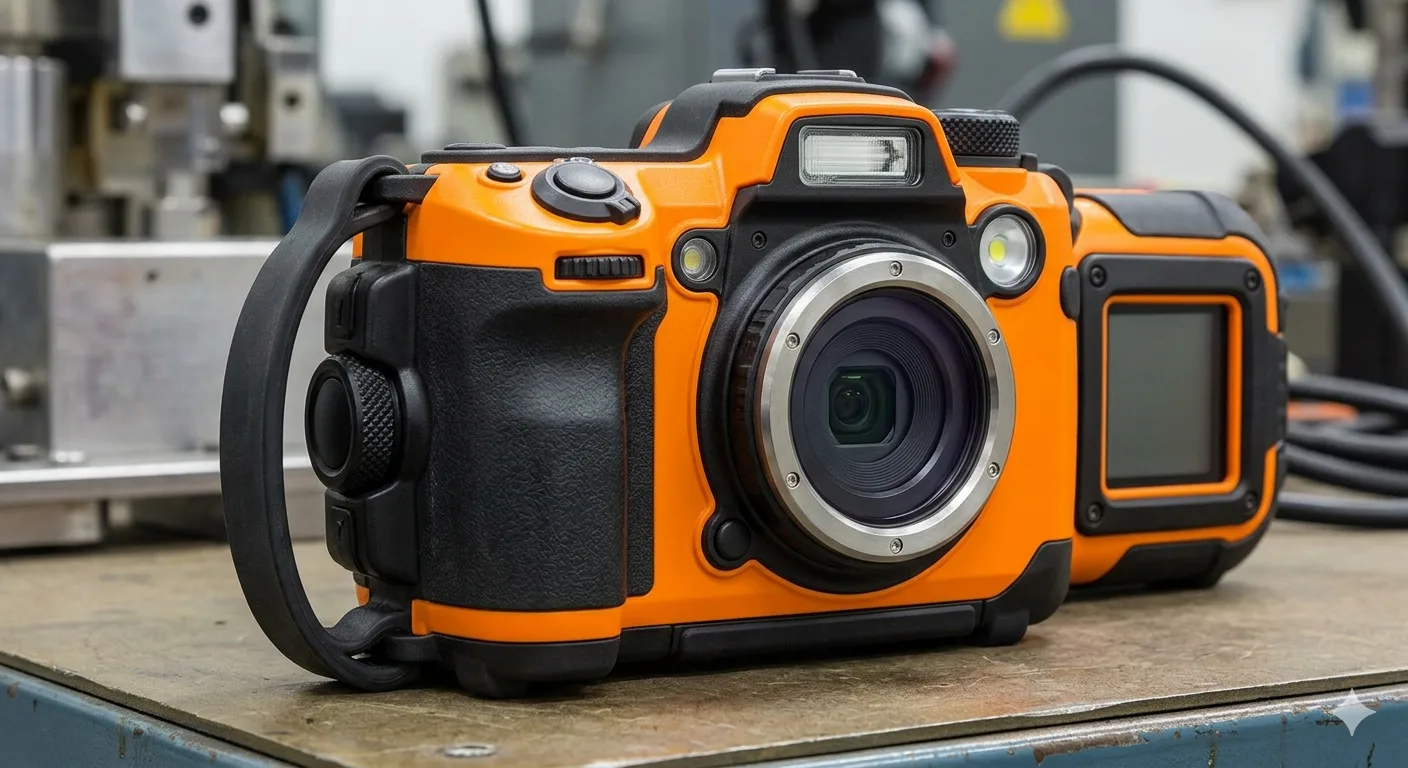
An explosion proof digital camera deployed across these spaces during condition surveys, class inspections, and maintenance verification provides your inspection team with the visual documentation capability they need without introducing an ignition source into an already dangerous environment.

What IECEx Certification Means for International Maritime Operations
For maritime operators working across multiple jurisdictions — which is, by definition, every commercial vessel operator — IECEx certification is the relevant standard, not ATEX alone. ATEX applies within European Economic Area jurisdictions. IECEx is the international scheme, and it is the certification that carries weight with classification societies, P&I clubs, and port authorities in the Gulf region, Southeast Asia, and beyond.
A digital camera explosion proof device carrying dual ATEX and IECEx certification covers your inspection team regardless of whether the vessel is drydocked in Dubai, operating in Kuwaiti waters, or undergoing class survey in a Far Eastern shipyard.
Specifying dual-certified equipment from the outset avoids the compliance gap that single-standard devices create across international trading routes.
When specifying for maritime environments specifically, your procurement requirements should include:
- IECEx and ATEX dual certification, with EPL Gb as the minimum for engine room and pump room use
- IP66 or IP67 ingress protection — maritime environments combine salt water, cleaning agents, and condensation in ways that rapidly degrade inadequate seals
- Corrosion-resistant housing materials suited to the marine atmosphere; aluminium alloy or stainless steel construction is standard for offshore-grade equipment
- Wide dynamic range imaging capability for the contrast extremes of machinery spaces — bright inspection lights against dark bilge areas
- Compact form factor compatible with restricted access hatches and inspection points

Drydock: The Highest-Risk Inspection Window
Drydock periods concentrate hazardous area inspection activity into a compressed timeframe under conditions that are, paradoxically, less controlled than normal operation. Hot work, tank cleaning, confined space entry, and structural inspection all occur simultaneously. Gas-free certification of tanks is a prerequisite for hot work but does not make adjacent spaces safe for uncertified electronics.
An ex proof digital camera is particularly valuable during drydock structural surveys, where your team needs to document internal tank conditions, coating integrity, structural member corrosion, and weld inspection records across classified spaces that are simultaneously under active maintenance. The visual record created during drydock becomes part of the class survey documentation and, in the event of a subsequent incident, the evidence base for insurance and legal proceedings.
For UAE-flagged vessels and those managed by UAE-registered shipmanagement companies, the UAE Maritime Transport Law and ESMA (Emirates Authority for Standardisation and Metrology) equipment standards reinforce the requirement for certified equipment in classified shipboard spaces. Compliance is not discretionary when the vessel operates under UAE flag authority.
Conclusion
Maritime inspection practice has been slow to adopt the equipment standards that the offshore oil and gas sector implemented years ago. The regulatory framework — ATEX, IECEx, ISM, port state control — already provides the basis for requiring certified imaging equipment aboard vessels with classified spaces. What has been missing is consistent enforcement and industry awareness. Both are changing. As UAE port authorities and classification societies sharpen their focus on safety management system quality, an ATEX digital camera issued as standard inspection equipment will increasingly separate vessels with mature safety cultures from those still treating compliance as a paperwork exercise. For engineers and superintendents looking to benchmark their equipment specification against current best practice, the Complete Guide to Explosion Proof Digital Cameras provides the technical foundation to start from.