
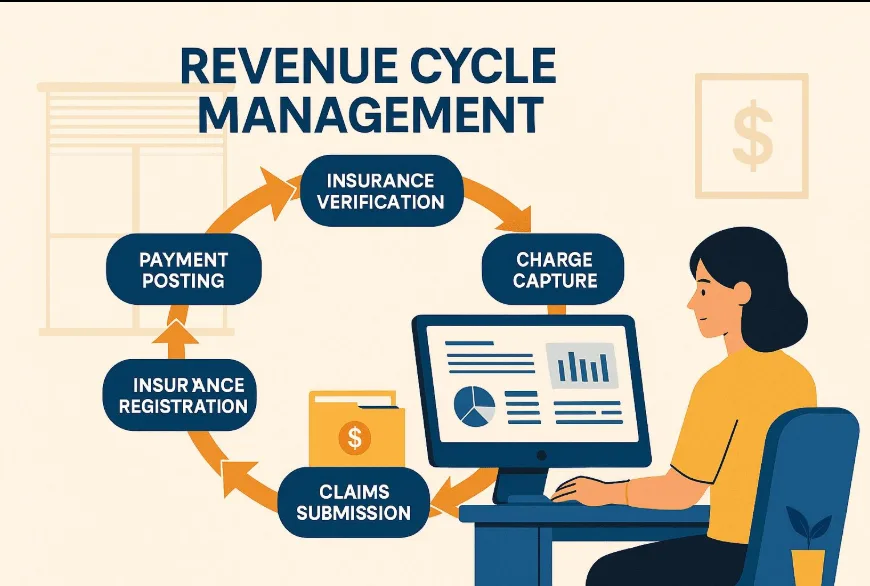
For many healthcare organizations, revenue-cycle work is still organized around queues. Staff open one system to check eligibility, another to review a claim, and a payer portal to investigate its status. The process may be digital, but it is not necessarily connected. Modern rcm solutions aim to change that by turning fragmented tasks into coordinated workflows that surface the right issue at the right time.
This matters as medical groups, hospitals, and specialty practices face tighter margins and greater administrative complexity. Teams cannot simply add more people whenever denials rise or accounts receivable grows. They need a clearer view of why work is accumulating, which accounts deserve attention first, and where recurring problems originate.
Move from reactive follow-up to early intervention
Traditional revenue-cycle operations often address problems after a payer rejects or delays a claim. A more resilient approach uses information from registration, eligibility, authorization, documentation, coding, and claim history to identify risk earlier. RCM Software can support this approach by checking for missing or inconsistent information and routing exceptions before submission.
Early intervention does not mean every decision should be automated. Some cases involve unusual benefits, complex clinical documentation, coordination of benefits, or payer-specific rules that require experienced review. Technology should make those cases easier to find and understand rather than burying them inside a larger queue.
Treat denials as operational intelligence
A denial is not only an individual account to resolve. It is also a signal about a process. When denial reasons are standardized and connected to upstream activity, organizations can identify patterns by payer, location, service line, provider, or workflow stage.
Well-designed healthcare rcm solutions can organize those patterns in dashboards and worklists. For example, leaders may discover that authorization-related denials cluster around a particular procedure or that coding edits repeatedly affect one service line. The next step is not simply working the denied accounts faster; it is changing the process that produces them.
That requires collaboration. Billing teams may see the financial outcome, while clinical, scheduling, and registration teams understand the upstream context. Shared reporting gives these groups a common starting point for improvement.
Use AI where it supports explainable action
Artificial intelligence is increasingly discussed in connection with claim review, denial prediction, payment variance detection, and account prioritization. These capabilities can be useful when they are paired with reliable data and clear oversight. A risk score alone offers limited value if staff cannot understand what created it or what action should follow.
Organizations evaluating rcm solutions should ask practical questions. Can users see why an account was prioritized? Can rules be adjusted as payer policies change? Are recommendations recorded in an audit trail? How are false positives reviewed? Who is responsible for monitoring performance after deployment?
These questions help keep automation aligned with operational needs. They also protect against a common mistake: treating a model as a finished product rather than a capability that requires ongoing evaluation.
Connect patient payments to the wider cycle
Patient responsibility is now a central part of revenue-cycle planning. Clear estimates, understandable statements, digital payment choices, and accessible support can reduce confusion. However, patient-facing tools work best when they receive accurate information from eligibility, billing, and payment systems.
A disconnected portal cannot compensate for inaccurate balances or delayed insurance updates. The patient experience therefore depends on the same integration discipline that supports claims and remittance workflows.
Choose priorities based on workflow evidence
Before modernizing, leaders should map the current process and identify where work stalls, information is re-entered, or exceptions lack ownership. They can then establish a focused set of measures, such as denial recurrence, days in accounts receivable, claim-touch frequency, underpayment recovery, and patient inquiry volume.
The goal is not automation for its own sake. It is a revenue cycle in which routine activity moves efficiently, unusual cases reach qualified people quickly, and operational patterns lead to measurable process changes. That combination of connected data, thoughtful automation, and human expertise is what turns technology into lasting revenue-cycle value.