Launching a clothing brand is about more than choosing attractive designs. Fashion entrepreneurs also need to turn their ideas into garments that customers want to wear, products that meet quality expectations, and collections that make financial sense.
Private label apparel manufacturing offers a practical way to build a clothing brand without establishing and operating your own garment factory. Instead, you work with a manufacturer to develop products under your own brand name, with options for selecting fabrics, adjusting designs, adding labels, and creating a consistent product range.
Understanding each stage of the process helps you prepare better, control costs, and avoid common production problems. Here is how private label apparel manufacturing typically works, from the first concept to the finished collection.
1. Develop Your Brand Concept
Every successful collection begins with a clear idea of what the brand represents and who it serves.
Start by identifying your target customers, preferred clothing categories, price range, and overall design direction. For example, a streetwear brand might focus on oversized T-shirts, heavyweight hoodies, and relaxed-fit sweatpants. A fitness brand might prioritize training shirts, gym shorts, and performance-oriented clothing.
Research your target market to understand customer preferences, competing products, and realistic selling prices. Consider what makes your collection different, whether that is the fit, fabric, design, functionality, or overall brand identity.
You do not need a complete collection plan on the first day. Begin with a focused range of products that reflects your brand and fits your available budget.
2. Choose the Right Products and Designs
After defining your brand concept, decide which garments you want to produce.
Prepare design references, sketches, measurements, color choices, and details about the fit and construction of each product. If you already have designs, organize them so the manufacturer can understand exactly what you expect.
A technical specification sheet or tech pack can make this process easier. It may include garment measurements, fabric composition, stitching instructions, artwork placement, labels, trims, and packaging requirements.
For example, if you want to launch a premium hoodie, specify the fabric weight, preferred cotton blend, hood construction, pocket style, ribbed cuffs, and logo placement.
Clear instructions reduce confusion and help the manufacturer estimate the materials, production requirements, and costs more accurately.
3. Select a Suitable Private Label Manufacturer
Choosing a manufacturing partner is one of the most important decisions in building a clothing brand.
Look for a manufacturer with experience in your product category and the ability to meet your customization requirements. Ask about its production capabilities, minimum order quantities, sampling process, quality checks, and expected lead times.
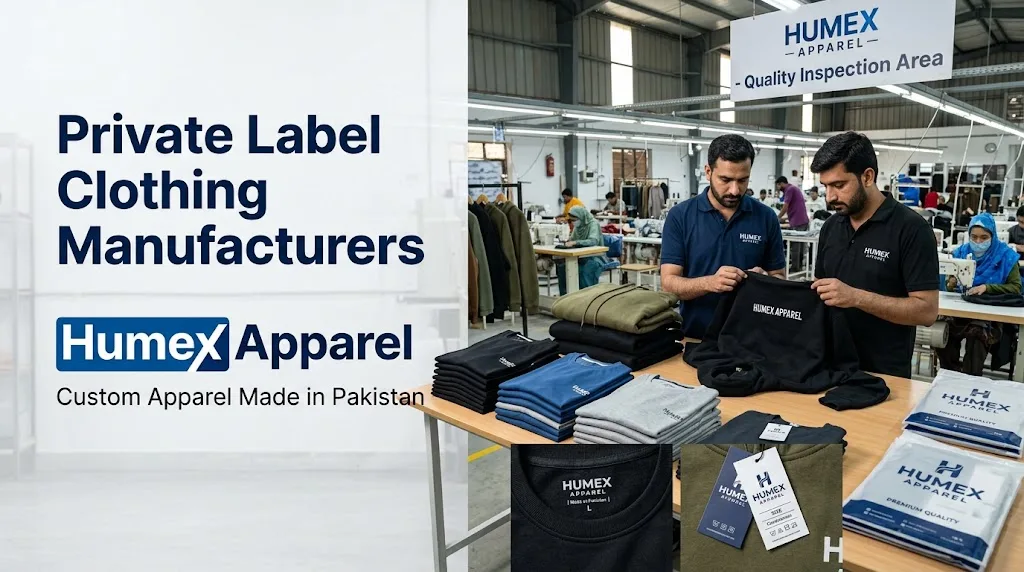
If your collection focuses on casual fashion, consider manufacturers experienced in T-shirts, sweatshirts, hoodies, and streetwear. You can explore Humex Apparel to learn more about its apparel manufacturing offerings.
For brands developing casual and urban clothing collections, the streetwear manufacturer page provides a relevant starting point for exploring streetwear production requirements.
Compare several suppliers before making a decision. Request clear quotations and confirm which services are included rather than assuming every manufacturer offers the same level of customization.
4. Choose Fabrics, Colors, and Customization Options
Fabric selection influences how a garment looks, feels, fits, and performs. It also affects the final production cost.
Cotton is widely used for everyday apparel, while cotton blends may offer different combinations of softness, durability, and ease of care. Polyester and stretch fabrics may be suitable for certain sportswear products, depending on the intended use.
Ask the manufacturer about fabric composition, available weights, color options, shrinkage, and care requirements. If your brand has specific performance or sustainability standards, request suitable documentation and test information.
Next, decide how you want to customize the garments. Options may include embroidery, screen printing, heat transfers, sublimation, woven labels, neck labels, hangtags, and branded packaging.
The best choice depends on the design, material, expected durability, budget, and intended customer.
5. Develop and Approve Product Samples
Before starting bulk production, manufacturers typically prepare samples so you can evaluate the proposed design and construction.
A sample gives you the opportunity to check the fit, fabric, stitching, colors, measurements, logo placement, and finishing. It also helps you identify changes that may be difficult or expensive to make after production begins.
For instance, a T-shirt might have the correct artwork but an unsuitable fit. A sample allows you to adjust the shoulder width, sleeve length, or body measurements before approving the product.
Review each sample carefully and provide specific feedback. If revisions are needed, document them and request an updated sample when appropriate.
Once the sample meets your requirements, confirm the approved specifications in writing. This creates a reference for the bulk order and helps reduce differences between the approved design and finished garments.
6. Confirm Pricing and Minimum Order Quantities
Before approving production, understand the full cost of your collection.
Manufacturing quotations may depend on fabric selection, garment complexity, order quantity, printing or embroidery, labels, packaging, and sampling requirements. Shipping and other charges may be quoted separately.
Minimum order quantity, or MOQ, is the smallest quantity a manufacturer accepts for a particular order or product. Requirements vary between manufacturers and may also differ by color, style, or customization method.
A larger order may reduce the price per garment, but it also requires more upfront investment and creates a greater risk of unsold inventory.
For a new brand, a smaller initial collection may be a sensible way to test demand, provided the manufacturer's MOQ and unit pricing support the business plan.
Calculate the expected landed cost, including applicable shipping, import duties, taxes, and other relevant expenses. Compare this figure with your planned retail price before committing to production.
7. Begin Bulk Production
Once the sample, specifications, pricing, and order details are approved, the manufacturer can schedule bulk production.
Depending on the order, the process may involve fabric procurement, cutting, sewing, printing, embroidery, finishing, and garment assembly. Production times vary according to the quantity, product complexity, material availability, and factory schedule.
Stay in communication with your manufacturing partner throughout this stage. Confirm the production timeline, approval requirements, and procedure for reporting delays or changes.
It is also useful to keep records of the approved sample, size specifications, colors, artwork files, and purchase order. These documents help both parties work from the same requirements.
8. Inspect Quality and Prepare the Finished Collection
Quality control helps ensure that finished garments match the approved specifications.
Depending on the agreement, inspections may take place during production and before shipment. Checks can cover measurements, stitching, fabric defects, print quality, labels, color consistency, and packaging.
Ask the manufacturer how defects are identified and handled. Agree on the quality standards and inspection process before production starts.
After the garments pass the agreed checks, they can be packed according to the order requirements. Confirm carton quantities, shipping documents, delivery arrangements, and any special packaging instructions.
Keep in mind that the exact process varies between manufacturers, so confirm which quality-control and packaging services are included in your agreement.
9. Build Your Brand Beyond the First Order
Private label manufacturing is not only about producing your first collection. It can also help you establish a consistent product range as your business grows.
Keep records of successful styles, customer feedback, sizing issues, and sales performance. Use this information to decide which products deserve repeat orders and which designs need improvement.
As demand increases, discuss future production quantities, material availability, and lead times with your manufacturer. Planning ahead can make repeat orders easier to manage and help maintain consistency across collections.
Final Thoughts
Private label apparel manufacturing gives fashion entrepreneurs a way to develop branded clothing without running their own garment production facility. The process usually involves defining your concept, preparing designs, selecting a manufacturer, choosing materials, approving samples, confirming costs, and managing production and quality checks.
The strongest results come from preparation and clear communication. Detailed specifications, realistic budgets, approved samples, and written agreements help reduce avoidable mistakes.
Whether you are starting a streetwear label, launching everyday apparel, or developing a fitness collection, take time to understand each stage before placing a bulk order. A well-planned manufacturing process can help you turn your initial concept into a collection that reflects your brand and meets your customers' expectations.