As more Australian households install rooftop solar, battery storage is becoming an increasingly important part of the home energy system.
Solar panels generate the majority of their electricity during daylight hours. However, many homes use more power in the late afternoon, evening and overnight. Without a battery, unused solar electricity is normally exported to the grid, while electricity may later need to be purchased back from an energy retailer.
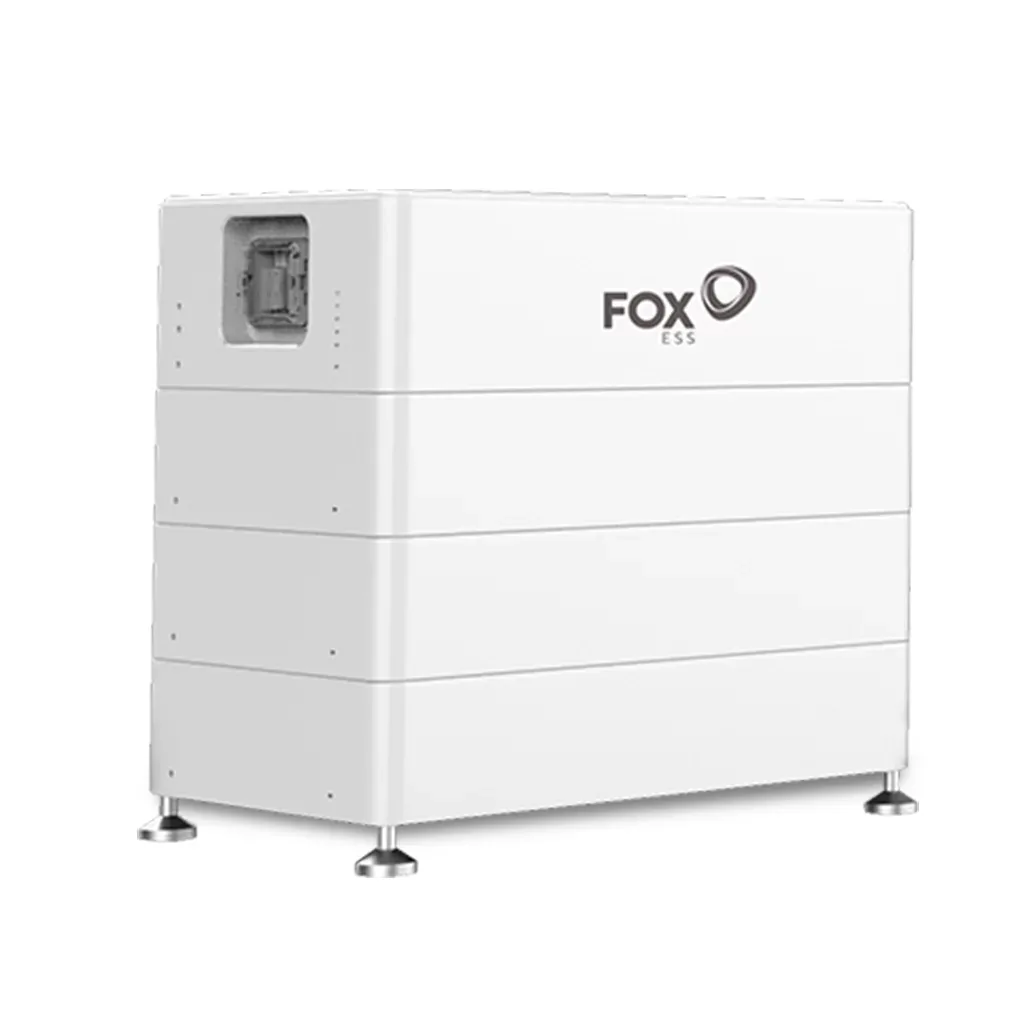
A Fox ESS solar battery helps change that energy pattern by storing surplus solar electricity so it can be used later.
Fox ESS offers a broad range of residential battery storage systems, including modular high-voltage options such as the EQ series and other battery platforms designed to work with compatible Fox ESS hybrid inverters. Its Australian product range currently includes systems covering a wide variety of capacities, from relatively small residential installations through to much larger storage configurations.
For homeowners considering a new solar and battery system, understanding how Fox ESS battery storage works can make it easier to choose an appropriate configuration.
What Is a Fox ESS Solar Battery?
A Fox ESS battery is an energy storage system designed to store electricity for later use.
In a typical home solar installation, rooftop solar panels generate electricity during the day. The home uses this electricity first, while surplus energy can be directed into the battery.
The battery can then discharge stored energy when solar generation drops.
Fox ESS offers several battery families, including:
- EQ series batteries
- EP series batteries
- ECS series batteries
- CQ series storage systems
- Other residential and commercial energy storage options
The Australian Fox ESS product catalogue currently lists models including EQ4800, EQ5500, EP6, EP12, CQ6, CQ7 and other scalable battery configurations.
This broad range allows systems to be designed for different household sizes, solar capacities and energy requirements.
How Does a Fox ESS Battery Work With Solar?
A solar battery storage system works by capturing electricity that would otherwise be exported to the electricity grid.
A typical energy cycle might look like this:
- Solar panels generate electricity during daylight hours.
- The household uses available solar energy first.
- Surplus solar electricity charges the Fox ESS battery.
- Once the battery is sufficiently charged, additional electricity can be exported to the grid.
- When solar production decreases, the battery supplies stored energy.
- Grid electricity is used if household demand exceeds available solar and battery output.
This process helps households use more of the electricity generated by their own solar panels.
It can be particularly useful for homeowners who are away from home during much of the day but consume more electricity in the evening.
Fox ESS EQ Battery Series
One of the better-known Fox ESS residential battery platforms is the EQ series.
Fox ESS describes the EQ as a high-performance, scalable battery storage system with a modular design.
The Australian EQ4800 battery has a listed module capacity of approximately 4.66 kWh and can be configured into systems with total storage capacity of up to approximately 41.93 kWh, depending on the setup.
The current global EQ range also includes several battery module sizes, including:
- EQ3300 – approximately 3.20 kWh
- EQ4800 – approximately 4.66 kWh
- EQ5000 – approximately 4.92 kWh
- EQ6000 Plus – approximately 5.99 kWh
Fox ESS states that the EQ platform supports stackable battery configurations, with compatible systems allowing multiple modules to be installed together.
This modular structure is useful for homeowners because battery capacity can be selected according to actual household energy consumption.
Modular Battery Storage
Modularity is one of the main advantages of many modern home solar battery systems.
Instead of installing one fixed-capacity battery, a modular system allows multiple battery units to operate together.
For example, a small household may initially require relatively modest energy storage, while a larger household may need significantly more capacity.
Future electricity consumption may also increase because of:
- Electric vehicles
- Air conditioning
- Pool pumps
- Electric hot water systems
- Induction cooking
- Home offices
- Additional household members
A modular battery design provides more flexibility when planning for these changing requirements.
Fox ESS specifically promotes its EQ battery platform as expandable and designed to support a range of storage applications.
High-Voltage Battery Technology
Many Fox ESS residential battery systems use a high-voltage architecture.
High-voltage batteries are commonly paired with compatible hybrid inverters as part of integrated residential solar and storage systems.
Fox ESS lists its EQ range as high-voltage battery storage, while the system communicates with compatible equipment using CAN communication.
The correct inverter and battery combination is important.
Homeowners should never assume that any solar inverter can operate with any battery.
A qualified installer should assess:
- Existing inverter
- Solar panel system
- Battery compatibility
- Single-phase or three-phase supply
- Switchboard configuration
- Backup requirements
- Local network requirements
Correct system design helps ensure that the battery and inverter operate as intended.
Store More of Your Solar Energy
One of the main reasons Australian homeowners install solar battery storage is to increase solar self-consumption.
Without battery storage, a household may export large amounts of surplus electricity during the day.
Later, the same household may buy electricity from the grid when solar generation has fallen.
Installing a battery allows some of this daytime solar energy to be retained.
For example, electricity generated at midday could be stored and then used to power:
- Lighting
- Cooking appliances
- Refrigeration
- Television
- Computers
- Air conditioning
- General household appliances
during the evening.
This process can reduce grid electricity imports.
The actual financial benefit depends on household consumption, solar generation, electricity tariffs, feed-in tariffs and battery performance.
Fox ESS Battery Depth of Discharge
Depth of discharge describes how much of a battery's stored energy can be used before the battery reaches its recommended lower operating limit.
Fox ESS currently lists a 90% depth of discharge for its global EQ battery platform.
Some earlier Australian EQ4800 documentation listed 100% depth of discharge, while newer global documentation published in 2026 lists 90%, highlighting why homeowners should always check the current specification sheet for the exact model being installed.
Battery specifications can change between models and product revisions.
For this reason, installers and homeowners should refer to the current Australian datasheet before finalising a system.
Battery Efficiency
Battery systems lose a small amount of energy during charging and discharging.
Fox ESS states that its EQ series can achieve charge and discharge efficiency above 95% under specified operating conditions.
Efficiency affects how much stored electricity is available later for household use.
However, efficiency should not be considered in isolation.
Other important factors include:
- Battery capacity
- Output power
- Warranty
- Solar inverter compatibility
- Backup capability
- Installation cost
- Battery lifespan
- Monitoring functions
The overall system should be designed around how the household actually consumes electricity.
Solar Battery Backup During Blackouts
Backup power can be an important reason for installing a battery.
When combined with compatible Fox ESS equipment and the required backup configuration, a battery system may be able to supply selected household circuits during a grid outage.
The amount of time the battery can provide backup power depends on:
- Available battery capacity
- State of charge when the blackout occurs
- Household energy consumption
- Number of circuits connected to backup
- Battery and inverter power limits
A home using only essential loads may be able to make stored battery energy last considerably longer than a home attempting to run every appliance.
Common backup loads may include:
- Refrigerators
- Lighting
- Wi-Fi
- Security equipment
- Selected power outlets
- Essential appliances
Homeowners who consider backup power important should discuss it before installation so the electrical system can be designed accordingly.
Smart Energy Monitoring
Modern residential battery storage systems normally include monitoring tools that allow homeowners to understand how electricity moves around the property.
Fox ESS offers its FoxCloud platform as part of its broader energy ecosystem. The Australian support area includes FoxCloud documentation alongside inverter, battery and system resources.
Depending on the installed system, monitoring can help homeowners view:
- Solar electricity generation
- Household consumption
- Battery charge level
- Battery charging
- Battery discharging
- Grid imports
- Electricity exports
Understanding these patterns can help homeowners make better decisions about when they use electricity.
For example, flexible appliances may be scheduled during periods of strong solar generation to reduce unnecessary battery cycling or grid imports.
Battery Storage for Larger Homes
Fox ESS offers battery systems with capacities suitable for households with higher electricity consumption.
The company's current global product range includes EP series systems extending beyond 40 kWh and EQ configurations approaching or exceeding similar capacities depending on the model.
Larger battery storage may be useful for homes with:
- Large solar systems
- Multiple air conditioners
- Swimming pools
- Electric vehicles
- High evening consumption
- Larger families
- Significant backup requirements
However, installing a larger battery is not automatically better.
A battery needs enough available solar energy to charge effectively.
If the rooftop solar system produces relatively little surplus electricity, an oversized battery may frequently remain undercharged.
Solar and battery capacity should therefore be considered together.
Fox ESS Battery and Electric Vehicles
Electric vehicles can significantly increase household electricity consumption.
A homeowner who regularly charges an EV at home may require considerably more electricity than before purchasing the vehicle.
Combining:
- Solar panels
- Battery storage
- Smart energy management
- EV charging
can create a more integrated household energy system.
Fox ESS also offers EV charging products within its broader energy product range, allowing homeowners to consider EV charging alongside solar and battery storage.
Households planning to purchase an EV should mention this to their installer during the design process.
What Size Fox ESS Battery Do You Need?
The correct Fox ESS solar battery size depends on how the household uses electricity.
An installer should normally review recent electricity bills and, where available, interval usage data.
Important factors include:
- Total daily electricity use
- Evening consumption
- Overnight consumption
- Solar system capacity
- Amount of excess solar exported
- Air conditioning usage
- Pool equipment
- Electric hot water
- EV charging
- Backup requirements
For example, a household exporting 20 kWh of solar electricity most days may have very different battery requirements from a household exporting only 4 kWh.
Battery capacity should be selected using real consumption data whenever possible.
Can a Fox ESS Battery Be Added to Existing Solar?
In many cases, battery storage can be added to an existing solar system, but the best approach depends on the existing equipment.
Important considerations include:
- Existing solar inverter
- Age of the system
- Solar array size
- Switchboard configuration
- Available installation space
- Grid connection
- Single-phase or three-phase power
Some installations may require inverter upgrades or changes to the electrical design.
Other properties may be able to use existing equipment alongside a new battery configuration.
A site assessment is therefore important before selecting a battery.
Where Can a Fox ESS Battery Be Installed?
Battery placement must comply with the manufacturer's installation requirements and applicable Australian electrical and battery installation rules.
Fox ESS's EQ range is designed to operate across a relatively wide temperature range. Global documentation lists charging between approximately 0°C and 55°C and discharging between approximately -10°C and 55°C for the EQ family.
Even where equipment has suitable environmental protection, battery location must still be carefully assessed.
Installers need to consider:
- Required clearances
- Ventilation
- Heat exposure
- Direct sunlight
- Access
- Structural support
- Nearby doors and windows
- Electrical equipment
- Relevant installation standards
Correct placement helps support reliable operation and compliance.
Choosing a Fox ESS Battery Installer
The quality of the installation can have a major impact on the performance of any home battery system.
A professional installer should assess both current and future energy requirements before recommending a battery configuration.
The assessment should include:
- Household electricity usage
- Existing solar system
- Desired battery capacity
- Inverter requirements
- Backup priorities
- Installation location
- Switchboard condition
- Possible future EV charging
Australian homeowners considering a Fox ESS battery can speak with Greenlight Solar about designing a solar and battery system around their household consumption, property and future energy requirements.
The goal should be to install a balanced system where the solar array, inverter and battery work effectively together.
Benefits of Fox ESS Solar Battery Storage
A properly designed Fox ESS battery system can provide several potential benefits.
Higher solar self-consumption
Surplus electricity generated during the day can be stored and used later.
Reduced grid reliance
Using stored solar electricity may reduce the amount of energy purchased from the grid.
Modular storage
Fox ESS offers scalable battery platforms that allow capacity to be selected for different energy requirements.
Backup capability
Compatible installations can provide backup electricity during certain grid outages.
Smart monitoring
Energy monitoring can help homeowners understand their electricity production and consumption.
Future flexibility
Battery storage can support broader home electrification, including EV charging and additional electrical appliances.
Is a Fox ESS Battery Worth Considering?
Whether a solar battery is worthwhile depends on the household's individual circumstances.
A property that exports substantial solar electricity during the day and imports significant electricity after sunset may have a stronger opportunity to benefit from battery storage.
Homeowners should consider:
- Electricity tariffs
- Feed-in tariffs
- Current solar exports
- Evening energy consumption
- Battery installation cost
- Available battery incentives
- Backup requirements
- Future household electricity use
Financial savings should not be assumed without analysing actual energy consumption.
Battery storage can also offer non-financial benefits, such as increased energy flexibility and backup power.
Final Thoughts
A Fox ESS solar battery can help Australian households store more of the electricity generated by rooftop solar and use that energy when it is needed later in the day.
Fox ESS offers a wide range of modular battery options, including systems such as the EQ4800, with expandable storage capacities designed for different residential energy requirements. The EQ platform also offers high-voltage operation, modular expansion and high charge and discharge efficiency.
However, battery selection should always begin with the household's actual electricity usage.
Solar capacity, evening consumption, inverter compatibility, backup requirements and future energy demand all influence the ideal system.
With appropriate sizing and professional installation, a Fox ESS battery storage system can help homeowners increase solar self-consumption, reduce dependence on grid electricity and build a more flexible home energy system.