Establishing a complete foreign body control plan: it’s more than metal detectors
Metal detectors are a critical control point within any food manufacturing environment. Ensuring your products are free from metallic contaminants before they reach the end user is of paramount importance. However, relying solely on metal detection as your method of foreign body control can leave businesses exposed to potential risks.
Taking a proactive approach to contamination prevention
Much of the focus when it comes to foreign body control is often weighted towards end-of-line inspection. However, by integrating hygienically designed ducting, high-quality stainless steel pipe UK solutions, metal detectable components and preventative maintenance protocols, the opportunities for contamination can be greatly reduced before they occur.
Instead of seeing metal detection as the answer, many leading businesses are starting to see it as just one layer of protection within a broader programme.
Prevention, not just detection
Of course, metal detectors provide an extremely valuable service by catching foreign bodies before they reach the customer. The issue is that they do so after the contamination event has already taken place.
Far better to implement systems and processes that are robust enough to prevent foreign bodies from entering the production process at all.
Examining every angle
A robust contamination control plan looks at every area where foreign materials could potentially enter the process. This includes not only processing equipment, but maintenance procedures, consumables, cleaning implements and operator error. The less opportunity there is for something to go wrong, the less you have to rely on metal detection at the end of the line.
This proactive approach is very much in-line with Hazard Analysis Critical Control Point (HACCP) thinking; working out where and how failures could occur and introducing suitable control measures.
Food grade ducting UK systems
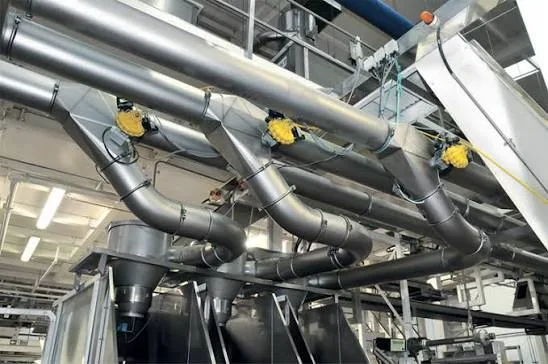
When it comes to identifying weak links in your plan, the design of your process conveying system is a great place to start. Industrial stainless steel ducting UK is used to convey powders, ingredients, granules and bulk materials throughout food and manufacturing facilities. These systems can create hidden areas of contamination if they aren’t correctly specified.
Food grade ducting systems are manufactured to precise tolerances to create seamless systems with a smooth internal surface. This helps to reduce product retention and allows for more effective cleaning.
Joints between sections of ducting are precision engineered to ensure a secure seal, minimising gaps where material could build up. Stainless steel is also incredibly resilient, offering high levels of corrosion resistance even when subjected to aggressive chemicals. Food-grade options are also manufactured from carefully selected materials to ensure compliance with food-contact legislation.
Choose metal detectable options
Whilst process equipment can often be the primary focus when looking to prevent contamination, the reality is that small consumables can often present a bigger risk.
Caps, seals, gaskets, O-rings and rubber covers are regularly handled by maintenance engineers and production operators. Fastenings such as cable ties and stainless steel screws hold equipment together, whilst scrapers and scoops are used to push product through the system and brushes or cloths are used to keep it clean.
Should any of these items become damaged, there is a risk that fragments could enter the product stream undetected. Not only will damaged components likely cause problems during cleaning, but small plastic or rubber fragments can be difficult to detect.
Solution: Metal detectable products contain small detectable particles within the material. If the component does become damaged or broken, standard metal detection suites are much more likely to pick it up.
Metal detectable doesn’t always have to mean metal though. Thanks to recent innovations, detectable rubber and silicone components are now available for use with hygienic process systems.
Detectable seals and gaskets
Seals, gaskets and O-rings have a tough job. They’re required to withstand cleaning cycles, pressure spikes, vibration, abrasive media and heat. Even with the best procedures, they won’t last forever. So, what happens if a piece of a seal gets left behind after changing it out?
Whilst particle detection and good maintenance practices will catch most issues, small fragments of rubber could easily go undetected. By incorporating detectable particles into the seal itself, it becomes possible to spot those troublesome fragments that may otherwise have gone unnoticed.
Considering the potential consequences of undetected contamination within food products, using detectable seals and gaskets can help provide reassurance to your quality control procedures – especially if they’re used within your ducting system where they’ll help minimise the risk of contamination within your product pathway.
Creating defence in-depth
Food manufacturers shouldn’t view metal detectors as their only defence against contamination. By implementing hygienically designed ducting, food grade seals, metal detectable rubber components and preventative maintenance, you can create a defence of multiple controls.
When considered individually, each of these elements might not seem like much. But when they’re effectively combined, they can significantly reduce the risk of foreign body contamination. With that in mind, take a look at your current plan. Are you doing enough to prevent foreign bodies from entering your process?