
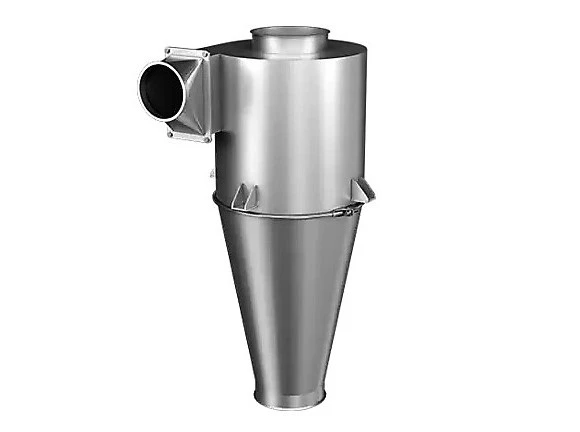
In the industrial sector, efficiency and resource recovery are essential. Among the numerous technologies that are central to these objectives are cyclones and horizontal cyclones. These hardy appliances are engineered to extract solid particles from fluids, and they are of considerable importance in a wide range of applications from raw material recovery to air cleaning before recirculation back into the work environment. These durability and versatility features are what make them a central product for organisations seeking to simplify operations and lift productivity.
Cyclones employ centrifugal force to separate particulate matter from gases or liquids. In industrial operations, this can mean the recovery of valuable raw materials that would otherwise be lost. In most facilities, cyclones are used as a dust collection system to eliminate micro particles and other solid contaminants from recirculated air, enhancing air quality and protecting sensitive equipment. This is particularly critical in environments where air purity directly affects product quality or personnel health. The efficiency of these devices not only reduces downtime due to equipment maintenance, but also assists in cost savings by lowering material losses and enhancing process control.
One of the most important factors in the selection of a cyclone is the material selection. Powder coating, hot-dip galvanising, and stainless steel are popular options, each having its own benefits. Powder coated cyclones provide an excellent balance between corrosion resistance and cost and are used extensively in a variety of industrial processes. Hot-dip galvanised versions, having a thick external coating, are ideal for harsh environments where high strength is required. Stainless steel, as the most expensive option, is used in applications such as food processing or pharmaceuticals where cleanliness and corrosion resistance to aggressive materials cannot be compromised. The choice of material directly affects the lifecycle of the cyclone, maintenance needs and the quality of separation.
The cyclone geometry also affects their use. Smaller diameter cyclones and lipped connections are used where space is limited or where the process is conducted with lower quantities of particulate material. These setups are optimally placed for use in applications where precision and fine material handling efficiency are needed. Conversely, larger diameter cyclones with welded-on flanges are built for heavy-duty applications where the amount of material being handled is significantly greater. The heavier construction of the larger units means that they will be more capable of handling increased loads and more abrasive materials, which goes towards their enhanced life span and performance in harsher industrial environments.
Thickness is also very important when cyclones are designed, with 2mm and 3mm commonly used. A 2mm thickness would be suitable where the operating pressures are not so great and the particulate is less abrasive. A 3mm thickness provides a little extra strength and durability and would be preferable for high-pressure systems or where the unit is handling aggressive materials. Proper thickness not only improves the performance of the service but also reduces the risk of premature breakdown or wear and tear, and so guarantees future consistent and predictable service.
Beyond standard offerings, many suppliers now provide custom-built cyclones tailored to individual requirements. This degree of customisation allows companies to dictate everything from finish and colour to the presence of leg supports and other customised features that pertain to their business operation. Within the food production industry, for example, stainless steel customisations are frequently needed to deliver stringent hygiene specifications and meet local or global regulatory requirements. These customised solutions not only ensure peak performance but also enable the cyclone to be easily incorporated into current steel ducting and pipework systems. The modular design concept also allows for ease of maintenance, since individual modules can be replaced or upgraded without interfering with the overall system. The incorporation of cyclones within modular systems is also highly advantageous on the scalability and flexibility fronts.
Modular setups are typically simpler to install and reconfigure, a necessity in dynamic production environments where processes can change over time. Additionally, the simplicity of maintenance in a modular design translates into less downtime and more predictable operating costs. Module vendors offer end-to-end service from the very first selection and design phase, to long-term maintenance and performance optimisation, so that the cyclone system is cost-effective and efficient throughout its entire life cycle. Lastly, the ability to customise and adapt cyclones and horizontal variants makes them an essential item in modern industrial processes. Whether the goal is the retrieval of valuable raw materials or the enhancement of air quality by the removal of fine particulates, the careful choice of material, design and configuration can greatly impact performance and efficiency, particularly in the long term. For companies that want to reform their manufacturing process without sacrificing efficiency or safety and with minimal waste, investment in an efficiently designed cyclone system is not a technological upgrade — it is a tactical step toward green and efficient operations.