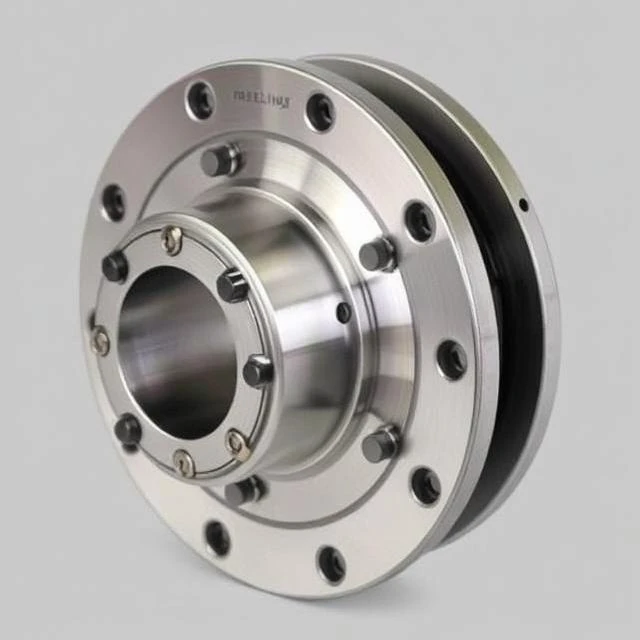
Fluid couplings are hydraulic devices used to transmit power smoothly between two rotating shafts without direct mechanical contact. These couplings operate on the principle of hydrodynamic transmission, using fluid motion to transfer torque, making them ideal for applications that require shock load absorption, smooth start-up, and overload protection.
A fluid coupling connects the driver and driven machine via a rotating fluid medium—typically oil or transmission fluid. This setup eliminates the need for rigid connections, reducing mechanical wear and enhancing equipment longevity.
In modern industries, fluid couplings are widely adopted in heavy-duty systems such as conveyors, crushers, pumps, fans, and turbines. Their ability to protect machinery during start-up and under variable loads makes them indispensable in challenging operating conditions.
As a trusted name in the power transmission industry, Rathi Couplings manufactures high-performance fluid couplings engineered for maximum efficiency, durability, and versatility across various industrial environments.
2. How Fluid Couplings Work
Fluid couplings work based on the principle of hydrodynamic energy transfer. The coupling consists of three primary parts: an impeller (connected to the input shaft), a runner (connected to the output shaft), and a fluid-filled casing.
Here’s how the process works:
- The impeller, driven by the motor, rotates and throws the fluid outward due to centrifugal force.
- This moving fluid hits the runner, causing it to spin and transmit torque to the output shaft.
- The process allows torque transfer without direct mechanical engagement.
This seamless transfer results in reduced mechanical stress, smooth acceleration, and protection against load shocks.
3. Components of a Fluid Coupling
A typical fluid coupling includes:
- Impeller (Pump): Attached to the driving shaft, it initiates fluid motion.
- Runner (Turbine): Connected to the driven shaft, it receives fluid energy and transfers it.
- Housing: Encloses the fluid and internal parts to contain pressure and rotation.
- Working Fluid: Usually oil, selected based on operating conditions.
- Seals and Bearings: Ensure leak-free operation and smooth rotation.
Each component is carefully engineered to deliver reliable, long-lasting performance. Rathi Couplings uses high-grade materials and precision manufacturing to maintain durability under heavy industrial conditions.
4. Benefits of Using Fluid Couplings
Fluid couplings offer several advantages that make them ideal for high-performance and heavy-load applications:
- ✅ Shock Load Absorption – Prevents sudden torque peaks from damaging the system.
- ✅ Smooth Start-Up – Enables gradual acceleration without sudden jerks.
- ✅ Overload Protection – Slips under excessive load, protecting the motor and machine.
- ✅ Reduced Maintenance – No metal-to-metal contact, resulting in less wear and tear.
- ✅ Increased Equipment Life – Prevents transmission failure and reduces downtime.
These benefits contribute to better system reliability and lower total operating costs.
5. Industrial Applications of Fluid Couplings
Fluid couplings are widely used across industries that involve continuous and heavy-duty mechanical operations:
- Mining and Quarrying: Crushers, conveyors, and bucket elevators.
- Steel Plants: Rolling mills, cooling beds, and shears.
- Cement Industry: Ball mills, fans, and kilns.
- Power Plants: Coal handling conveyors, ID/FD fans, and pumps.
- Textile and Paper Mills: Slitters, winders, and mixers.
- Chemical Processing: Agitators and pumps with varying loads.
Rathi Couplings designs application-specific fluid couplings to suit these high-demand sectors.
6. Types of Fluid Couplings
Based on design and operation, fluid couplings can be categorized as:
- Constant Fill Couplings: Pre-filled with fluid and designed for continuous duty operations.
- Variable Fill Couplings: Allow control over fluid level during operation for torque regulation.
- Scoop Control Couplings: Enable torque variation while running, suitable for high-precision systems.
- Delayed Fill Couplings: Used in systems that require a soft start with time delay.
Rathi Couplings provides all these variants, with optional add-ons like cooling fins, delay chambers, or forced oil circulation for enhanced performance.
7. How to Select the Right Fluid Coupling
Selecting the right fluid coupling requires an understanding of both the mechanical system and operational environment. Key factors include:
- Rated Power (kW) and Torque Requirements
- Starting and Full Load Conditions
- Shaft Speed (RPM)
- Machine Type (e.g., fan, crusher, conveyor)
- Ambient Temperature and Working Environment
Rathi Couplings offers expert consultation and customized sizing to ensure you select the ideal fluid coupling for your application.
8. Maintenance Guidelines for Fluid Couplings
Though fluid couplings are low-maintenance, routine checks help ensure optimal performance:
- ✔️ Inspect Fluid Levels Regularly – Top-up if needed.
- ✔️ Monitor Temperature and Vibration – Abnormalities may indicate wear or imbalance.
- ✔️ Check for Leaks – Inspect seals and gaskets periodically.
- ✔️ Clean the Housing – Prevents overheating from dust buildup.
- ✔️ Use the Recommended Fluid – Ensure compatibility and correct viscosity.
Rathi Couplings also offers maintenance kits and genuine spare parts to support long service life.
9. Why Choose Rathi Couplings for Fluid Couplings
With decades of engineering expertise, Rathi Couplings is a leading fluid coupling manufacturer offering:
- 🛠️ Precision-Engineered Designs for consistent performance.
- 🧪 High-Quality Materials to withstand heavy-duty conditions.
- 🔄 Custom Solutions tailored to each application.
- 📞 Dedicated Support Team to assist from selection to after-sales service.
- 🌐 Widespread Industry Adoption across India and global markets.
From design to delivery, Rathi Couplings is committed to performance, reliability, and customer satisfaction.
10. Conclusion: Enhancing Equipment Life with Fluid Couplings
Fluid couplings are a smart choice for industries that require smooth, controlled torque transmission and reliable overload protection. They minimize stress on mechanical systems, enable energy-efficient operation, and ensure longer equipment life.
Choosing a trusted partner like Rathi Couplings guarantees access to well-engineered, durable, and application-specific fluid couplings. Whether you’re upgrading existing systems or building new ones, Rathi delivers performance you can rely on.