
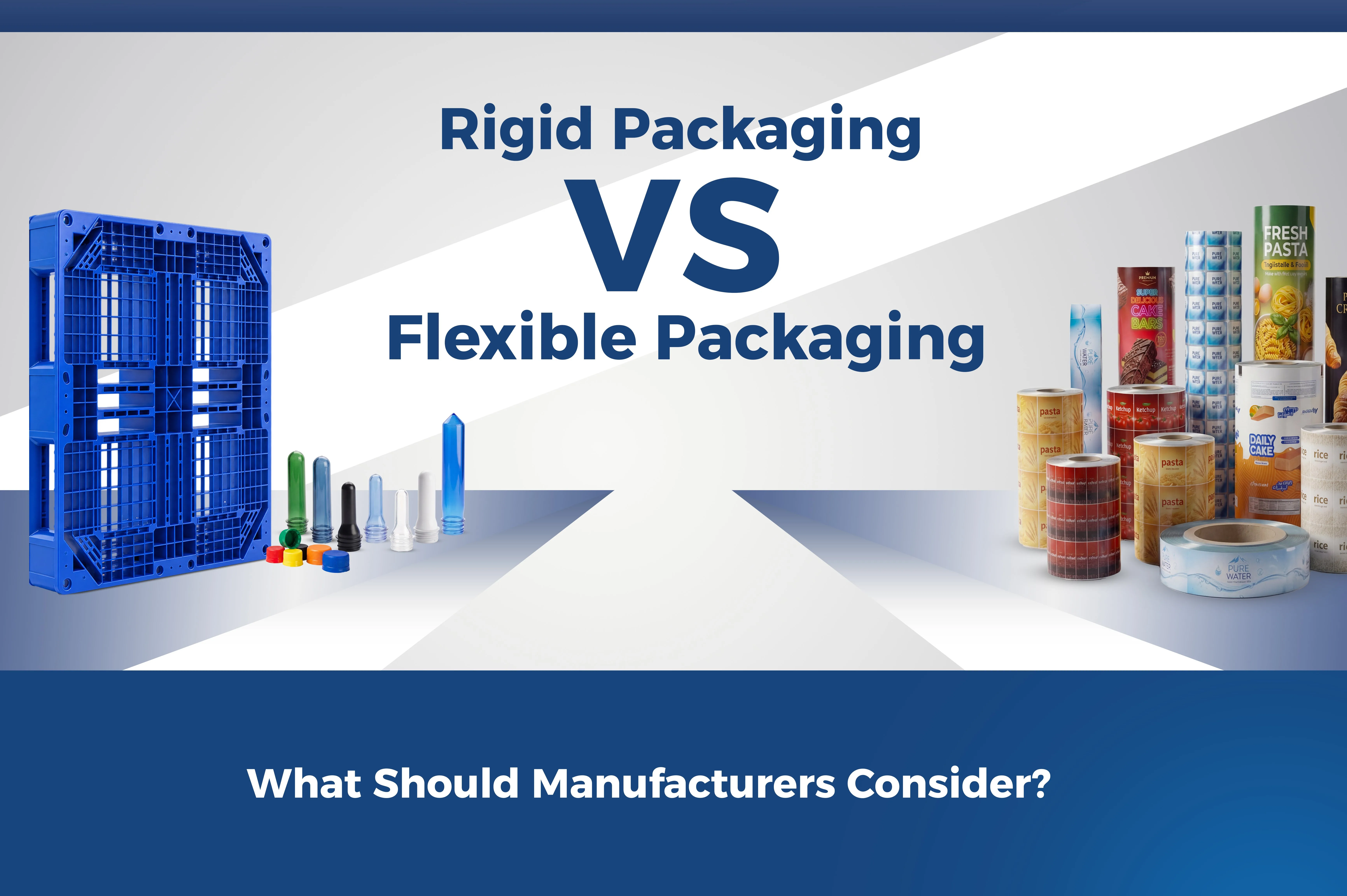
Choosing the right packaging is an important decision for any product-based business. Packaging does much more than simply hold a product. It protects the contents, influences shelf life, supports branding, affects transportation costs, and can even shape how customers perceive a product.
Two of the most widely used packaging categories are flexible packaging and rigid packaging. While both are designed to protect products and make them easier to store and transport, they differ significantly in terms of materials, flexibility, durability, cost, sustainability, and applications.
So, when it comes to Flexible Packaging vs Rigid Packaging, which option is better for your product?
The answer depends on your product type, protection requirements, packaging design, distribution method, budget, and sustainability goals. In this guide, we will explain the differences between flexible and rigid packaging and help you understand which option may be more suitable for your business.
What Is Flexible Packaging?
Flexible packaging is packaging made from materials that can easily bend, fold, or change shape. Unlike rigid containers, flexible packaging does not maintain a fixed shape when empty.
Common materials used in flexible packaging include:
- Plastic films
- Polyethylene (PE)
- Polypropylene (PP)
- Polyester (PET)
- BOPP films
- Metallized films
- Aluminium foil
- Paper-based flexible materials
- Laminated and multilayer films
Flexible packaging can be manufactured in several formats, including pouches, sachets, bags, wraps, and roll stock.
For example, snack foods, spices, coffee, dry fruits, pet food, sauces, cosmetics, and many other products are commonly packed in flexible pouches.
Key Features of Flexible Packaging
Flexible packaging offers several practical advantages:
Lightweight: Flexible packs generally weigh less than rigid containers, which can help reduce transportation and handling costs.
Space efficient: Empty flexible packaging can occupy less storage space because it can be folded or compressed.
Customizable: Flexible films can be printed with attractive graphics, product information, branding elements, and promotional designs.
Convenient: Features such as resealable zippers, spouts, tear notches, and easy-open structures can improve consumer convenience.
Protection: Depending on the material structure, flexible packaging can provide protection against moisture, oxygen, light, aroma, and other external factors.
For businesses looking for customized packaging solutions, White Lotus Industries provides flexible packaging solutions designed around different product and protection requirements.
What Is Rigid Packaging?
Rigid packaging is packaging that maintains its shape and structure even when it is empty. It is generally stronger and more resistant to physical deformation than flexible packaging.
Common rigid packaging materials include:
- Glass
- Metal
- Aluminium
- Paperboard
- Cardboard
- PET
- HDPE
- PP
- Other rigid plastics
Typical examples include bottles, jars, cans, tubs, trays, cartons, and containers.
Rigid packaging is widely used for beverages, cosmetics, pharmaceuticals, household products, food products, personal care products, and industrial goods.
Key Features of Rigid Packaging
Rigid packaging is known for its structural strength and stability.
Strong structure: Rigid containers can withstand pressure and maintain their shape during handling and transportation.
Product protection: They can provide excellent physical protection against crushing and impact.
Premium appearance: Glass bottles, metal containers, and specially designed rigid packs can create a premium product presentation.
Easy stacking: Many rigid containers can be efficiently stacked during storage and transportation.
Reusable options: Certain rigid packaging formats, such as glass containers and durable plastic containers, can potentially be reused depending on the product and application.
However, rigid packaging can also be heavier and may require more storage space compared with flexible alternatives.
1. Weight and Transportation
One of the biggest differences between flexible and rigid packaging is weight.
Flexible packaging is generally much lighter than rigid containers. This can be particularly useful for businesses that transport products over long distances.
Lower packaging weight may help reduce transportation requirements and handling costs.
Rigid packaging, on the other hand, can be heavier, particularly when materials such as glass or metal are used.
For businesses shipping large quantities of products, packaging weight can therefore become an important consideration.
2. Storage Efficiency
Flexible packaging can provide excellent storage efficiency because empty pouches, films, and bags can be stored in a relatively compact form.
Rigid containers occupy their original shape even before they are filled. This means they may require more warehouse space.
For businesses dealing with limited storage capacity, flexible packaging can provide a practical advantage.
3. Product Protection
Both packaging types can provide effective product protection, but the type of protection varies.
Rigid packaging offers excellent structural protection. It can help protect products from crushing, impact, and physical damage.
Flexible packaging can provide specialized barrier protection against moisture, oxygen, light, and aroma when the correct material structure is selected.
For products such as spices, snacks, coffee, and other moisture- or oxygen-sensitive products, selecting the appropriate flexible packaging structure can be particularly important.
4. Branding and Appearance
Packaging is also a major marketing tool.
Flexible packaging allows businesses to print detailed graphics, colors, product information, branding elements, and promotional designs across a large printable surface.
For example, a well-designed stand-up pouch can provide significant shelf visibility while also communicating important product information.
Rigid packaging can also offer strong branding opportunities, particularly through bottles, jars, cartons, labels, and unique container shapes.
The better option depends on the desired brand image and product positioning.
5. Convenience for Consumers
Consumer convenience has become increasingly important in packaging design.
Flexible packaging can include features such as:
- Resealable zippers
- Tear notches
- Spouts
- Easy-open seals
- Handle designs
- Stand-up structures
These features can make products easier to open, use, store, and carry.
Rigid packaging can also offer convenient features such as screw caps, pumps, flip-top lids, and dispensing systems.
Therefore, the best choice depends on how consumers are expected to use and store the product.
6. Cost Considerations
Packaging cost depends on several factors, including material, design, printing, production volume, product protection requirements, and manufacturing technology.
Flexible packaging can often use less material and may provide transportation and storage advantages due to its lightweight nature.
However, a specialized multilayer flexible structure with advanced barrier properties may cost more than a basic flexible film.
Similarly, rigid packaging costs can vary considerably depending on whether the container is made from plastic, glass, metal, or another material.
Instead of focusing only on the initial packaging price, businesses should consider the total packaging cost, including transportation, storage, handling, and product protection.
How to Choose Between Flexible and Rigid Packaging
Choosing between flexible and rigid packaging requires looking at the complete product lifecycle.
Here are some important questions to consider.
1. What Type of Product Are You Packaging?
Start with the product itself.
Is it a dry food, liquid, powder, cosmetic, pharmaceutical product, snack, spice, or industrial product?
Different products require different levels of protection.
For example, dry products may benefit from flexible pouches with appropriate moisture and oxygen barriers, while some liquids may require bottles, jars, or specialized flexible formats.
2. What Protection Does the Product Need?
Think about what can damage your product.
Does it need protection from:
- Moisture?
- Oxygen?
- Light?
- Aroma loss?
- Contamination?
- Physical impact?
- Temperature changes?
Once you understand the product's risks, you can select a packaging structure designed to provide the required protection.
3. Consider Your Distribution Process
Think about how your product will reach customers.
Will it be transported locally or internationally? Will it be shipped through e-commerce channels? Will it spend a long time in warehouses or on retail shelves?
For products transported over long distances, lightweight packaging may offer logistical advantages.
For products requiring strong physical protection, rigid packaging may be more suitable.
4. Think About Consumer Convenience
Your packaging should make the product easy to use.
Consider whether your customers need:
- Resealable packaging
- Easy opening
- Portion control
- Easy pouring
- Portability
- Reusability
- Convenient storage
Flexible packaging offers many options for incorporating consumer-friendly features into pouches and bags.
5. Consider Sustainability Goals
Sustainability is another important factor in modern packaging decisions.
Businesses should look beyond simply asking whether packaging is "flexible" or "rigid." Instead, consider the complete packaging lifecycle, including material consumption, production, transportation, recyclability, and end-of-life management.
Lightweight packaging may reduce transportation-related impacts, while certain rigid materials may have established recycling systems in specific markets.
The most suitable sustainable solution depends on the product, packaging structure, local recycling infrastructure, and intended market.
6. Work With the Right Packaging Manufacturer
Packaging performance depends heavily on material selection, structure, sealing, printing, and manufacturing quality.
A packaging manufacturer can help you evaluate your product requirements and select a suitable packaging structure.
White Lotus Industries offers flexible packaging solutions for different product categories and can help businesses explore packaging options based on product requirements, branding, functionality, and protection needs.
Flexible Packaging vs Rigid Packaging: Which One Should You Choose?
There is no single packaging solution that works for every product.
Flexible packaging can be an excellent choice when you need lightweight, space-efficient, customizable, and convenient packaging. It is particularly useful for products such as snacks, spices, dry foods, coffee, pet food, cosmetics, and many other consumer products.
Rigid packaging can be a better choice when structural strength, impact resistance, premium presentation, or specific dispensing requirements are more important.
The right decision should be based on your product, distribution requirements, target customers, budget, branding strategy, and protection needs.
In many cases, the best packaging solution is not simply the cheapest option. It is the option that provides the right balance between product protection, functionality, appearance, cost, convenience, and sustainability.
Conclusion
Understanding Flexible Packaging vs Rigid Packaging is essential when selecting packaging for your product. Flexible packaging provides advantages such as lightweight construction, efficient storage, design flexibility, and convenient features. Rigid packaging, meanwhile, offers structural strength, durability, and strong physical protection.
Before making a decision, consider your product's protection requirements, transportation process, storage conditions, customer expectations, branding goals, and sustainability objectives.
If you are looking for reliable flexible packaging solutions tailored to your product requirements, White Lotus Industries can help you explore suitable packaging options and structures.
Ultimately, the right packaging is the one that protects your product, supports your brand, meets customer expectations, and works efficiently throughout the product's journey from manufacturing to the hands of the consumer.