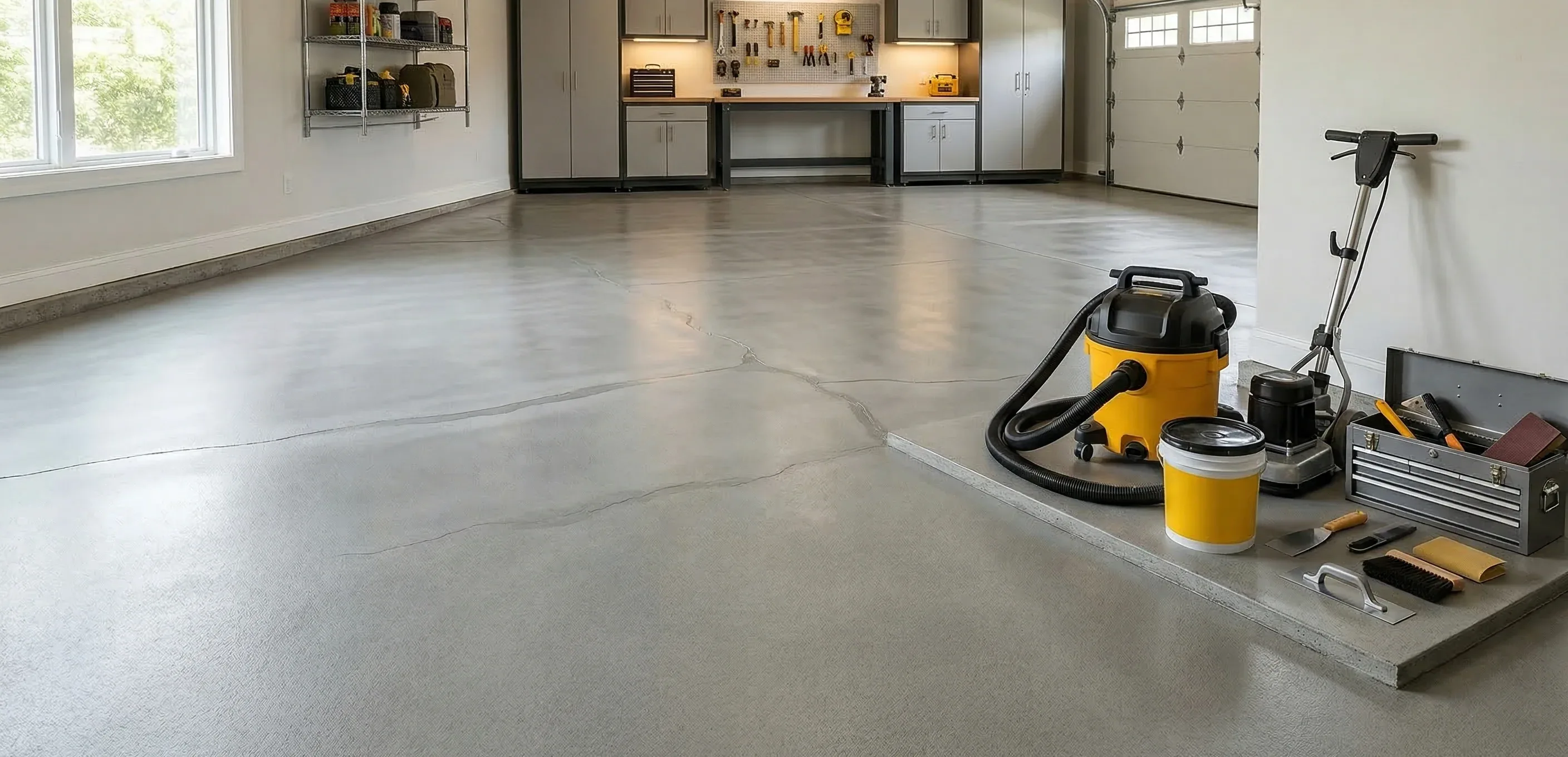
Professional epoxy garage floors in Palm Desert begin with proper concrete preparation. Before applying the coating, contractors should address oil stains, surface cracks, moisture, and uneven areas to ensure strong adhesion and a durable finish. Proper preparation creates a smooth, uniform surface, while the right decorative flakes, repair materials, and protective topcoat can improve appearance, performance, and long-term resistance to everyday garage use.
Start With a Close Check of the Concrete
Before choosing colors or coatings, inspect the garage floor. Concrete can look strong while hiding problems that may affect the finished surface. Old oil stains, weak areas, and small cracks need attention before any coating is applied.
Begin by moving vehicles, tools, storage boxes, and other items out of the garage. Sweep away loose dirt so the concrete is easier to inspect. Look closely at areas where cars usually park, near the garage door, and around water heaters or other equipment.
Watch for these common problems:
- Oil and grease stains: These can stop a coating from bonding well with the concrete.
- Cracks and chips: These may need repair before the coating process begins.
- Peeling old paint: Loose material must be removed so it does not weaken the new finish.
- Damp areas: Moisture may affect how the coating sticks or cures.
- Uneven patches: These can show where the concrete needs extra preparation.
Do not cover a problem just because the finished coating will hide it. A clean-looking surface on top does not mean the concrete underneath is ready.
Remove Oil, Grease, and Old Coating Residue
Garages collect more than dust. Engine oil, brake fluid, tire marks, cleaning products, and other substances can build up over many years. If these remain on the concrete, they may cause weak spots, bubbles, or peeling.
Use a concrete cleaner or degreaser that is suitable for the type of stain. Follow the product instructions, and rinse away any residue as directed. Some deep oil stains may need repeated treatment or professional attention.
Old paint and weak coatings also need to be removed. A new epoxy layer may not bond properly if it is placed over a loose surface. The preparation method depends on the condition of the floor and the type of material already present.
After cleaning, the floor must dry as required by the coating system. Do not assume that a surface is dry simply because it looks dry. Moisture can remain inside concrete and affect the result.
Repair Cracks Before Applying the Main Coating
Small cracks can make a finished garage floor look uneven. Larger cracks may point to movement or other concrete problems that need closer inspection.
The repair material should match the crack and the coating system. Some products work well for narrow surface cracks, while wider or moving cracks may require a different repair method. Simply filling every crack with the same material can lead to poor results.
A good repair process includes removing loose concrete, cleaning the damaged area, applying the correct repair product, and allowing it to cure as directed. The repaired area may also need grinding or smoothing so it blends with the surrounding surface.
It is important to understand that filling a crack does not stop structural movement. If a crack keeps growing, the floor has shifted, or the concrete is sinking, the cause should be assessed before a decorative coating is installed.
Prepare the Surface So the Coating Can Grip
One of the most important parts of garage floor preparation is creating the right surface for the coating to bond with. Concrete that looks smooth may still be too closed or polished for some coating systems.
Professional preparation often uses mechanical grinding to remove weak material and create a suitable surface profile. This process can also help remove leftover coatings and smooth repaired areas. The exact level of grinding depends on the product being used and the condition of the slab.
Dust removal is equally important. Fine concrete dust can settle over the prepared floor and interfere with bonding. The surface should be cleaned with suitable equipment before the coating is applied.
For homeowners considering epoxy garage floors in Palm Desert, proper preparation is especially important because garage floors may face hot vehicle tires, dust, oil spills, and regular temperature changes. The coating system must be selected and applied to suit the actual concrete and garage conditions.
Choose Flakes That Match Your Garage
Decorative flakes add color and texture to an epoxy floor. They are available in many color combinations, from simple grey and white blends to darker mixes that create a bold look.
However, choosing flakes is not only about appearance. Think about how the garage is used and how much dirt or dust is likely to show.
A few practical choices include:
- Light blends: These can make a small or dark garage feel brighter, but may show some dirt more clearly.
- Dark blends: These can create a strong, modern look and help hide some everyday marks.
- Mixed-color flakes: These can help disguise minor visual differences in the floor.
- Larger or denser flakes: Depending on the system, these can create a more textured appearance.
Ask for a sample before choosing a final color. View it under the lighting used in your garage, because sunlight, ceiling lights, and wall colors can change how the flakes look.
Flakes should be applied according to the coating system's instructions. Uneven coverage or poor timing can affect the final appearance.
Select a Finish for Everyday Use
The final finish affects how the floor looks, feels, and performs. A clear topcoat may add protection and help make cleaning easier, but it must be compatible with the layers beneath it.
A glossy finish can reflect light and create a bright, clean look. A less reflective finish may suit homeowners who prefer a softer appearance. The right option depends on personal taste and the needs of the space.
Safety should also guide the choice. A very smooth, glossy floor may become slippery when wet or oily. If the garage is used for washing vehicles, working on equipment, or storing wet items, ask whether a suitable anti-slip additive is recommended.
The topcoat also needs enough time to cure before cars, heavy tools, or storage units are returned to the garage. Walking on it too soon or parking a hot-tired vehicle before the product allows it can damage the finish.
Check for Moisture Before Coating
Moisture is a common reason for coating problems. Water vapor can move through concrete from the ground below, even when there is no visible leak. If the floor has excess moisture, a coating may blister, bubble, or lose its bond.
A simple visual check cannot always confirm whether the slab is suitable for coating. Depending on the product requirements and site conditions, moisture testing may be needed before work begins.
Look for signs such as damp patches, white mineral deposits, or coatings that have lifted in the past. These signs do not always prove the cause, but they should not be ignored.
If moisture levels are too high, the right next step depends on the source and the coating manufacturer's limits. Applying another layer without solving the moisture problem may lead to another failure.
Avoid Rushing the Preparation Process
A flawless-looking garage floor depends on following the correct order. Cleaning, repairs, surface preparation, coating, flake application, and sealing each have a purpose. Skipping one step can affect the layers that follow.
Before work starts, confirm that the contractor has explained:
- How oil stains and old coatings will be handled.
- How cracks and damaged areas will be repaired.
- Whether grinding and moisture testing are needed.
- Which flakes and topcoat will be used.
- How long the floor must cure before normal use.
These questions help you understand what the job includes rather than judging the project by color and price alone.
Give Your Garage Floor a Strong Start
The best-looking epoxy floor begins with concrete that is clean, sound, dry enough for the selected system, and properly prepared. Repairs help create an even base, decorative flakes add style, and the right topcoat provides the final layer of protection.
When planning epoxy garage floors in Palm Desert, focus on preparation as much as the finished appearance. A suitable system, careful application, and proper curing can help the floor stand up to daily parking, household storage, and regular cleaning.
A little extra care before the first coat is applied can prevent costly problems later. The goal is not simply to cover the concrete, but to build a finished floor that looks good and works well for years.
Final Thoughts
A durable, attractive garage floor starts with proper preparation, reliable repairs, and the right coating system. Addressing cracks, moisture, stains, and surface imperfections helps improve adhesion and long-term performance. For the best results, choose experienced flooring professionals who understand surface preparation, decorative flakes, and protective finishes. Investing in professional installation can help protect your concrete, enhance your garage’s appearance, and deliver a smooth, resilient floor built to withstand everyday use for years.
Frequently Asked Questions
1. Why is proper garage floor preparation important before applying an epoxy coating?
Proper garage floor preparation removes contaminants, repairs surface damage, and creates a suitable concrete surface for epoxy adhesion. Thorough preparation helps prevent peeling, bubbling, and premature coating failure while improving the durability and appearance of the finished floor.
2. What steps are involved in preparing a garage floor for epoxy?
Garage floor preparation typically includes removing oil stains, cleaning the concrete, repairing cracks and chips, addressing moisture concerns, and mechanically grinding or otherwise preparing the surface. Contractors then remove dust and verify surface conditions before applying the epoxy coating system.
3. How do professionals repair cracks and holes in garage floors?
Professionals assess the size and condition of cracks, remove loose concrete, and use suitable repair compounds or fillers. They then smooth the repaired areas to create a consistent surface. Identifying the underlying cause of significant cracks helps prevent recurring damage.
4. What are decorative flakes used for in epoxy garage flooring?
Decorative flakes add color, texture, and visual depth to epoxy garage floors. Available in different colors and blends, they help homeowners customize their garage's appearance. When incorporated into a suitable coating system, flakes can also contribute to surface texture and help conceal minor imperfections.
5. How does moisture affect epoxy garage floor installation?
Excess moisture in concrete can interfere with epoxy adhesion and contribute to bubbling, blistering, or coating failure. Professionals should evaluate moisture conditions before installation and address underlying issues when necessary. Following the coating manufacturer's moisture limits helps support a durable finish.
6. How long should concrete preparation take before epoxy application?
Preparation time depends on the garage's size, concrete condition, existing coatings, and the extent of repairs required. Minor preparation may take several hours, while heavily damaged or contaminated floors can require additional work. Repairs and cleaning must be completed before coating begins.
7. What type of finish is best for an epoxy garage floor?
The best finish depends on the desired appearance, traffic levels, maintenance needs, and exposure to chemicals or sunlight. Glossy finishes provide a polished appearance, while decorative flake systems offer added visual texture. A compatible protective topcoat can improve wear resistance and simplify cleaning.
8. How can homeowners maintain an epoxy garage floor after installation?
Homeowners can maintain epoxy flooring by sweeping away dirt, promptly cleaning spills, and using a mild cleaner with a soft mop. Avoiding abrasive tools and harsh chemicals helps protect the coating. Regular inspections can also identify minor damage before it becomes more extensive.
9. Can epoxy be applied directly to an existing garage floor coating?
Epoxy should not be applied directly over an existing coating without assessing its condition and compatibility. Loose, peeling, or damaged coatings may need removal, while sound surfaces may require specialized preparation. Professional evaluation helps determine the appropriate installation method.
10. How do you choose a professional garage floor coating contractor?
Choose a contractor who evaluates concrete conditions, explains surface preparation methods, addresses moisture concerns, and uses compatible repair materials and coating products. Ask about warranties, project timelines, and maintenance recommendations to understand the expected performance and long-term care requirements.