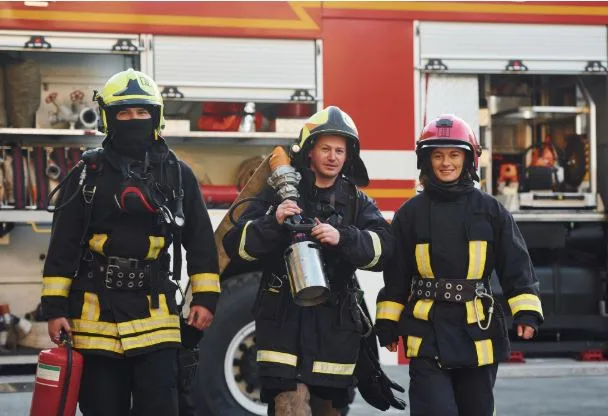
At first glance, construction sites and event venues seem like completely different environments. One is unfinished, constantly changing, and driven by operational work. The other is organized, temporary, and focused on managing crowds. But from a fire safety perspective, they share something critical: both operate under shifting conditions where standard fire protection systems may be limited, altered, or temporarily compromised. Corporate campuses hire Fire Watch Companies Near Me to coordinate temporary fire safety coverage efficiently, especially when multiple buildings or zones require synchronized oversight.
This is where specialized fire watch companies become essential. Their role is not simply to monitor it is to understand how fire risk behaves differently in each setting and adapt accordingly to maintain control.

Why These Two Environments Require Specialized Fire Watch
Fire risk is not uniform across environments.
On construction sites, hazards come from ongoing work especially hot work like welding and cutting. Structures are incomplete, materials are moved frequently, and fire protection systems may not yet be fully operational.
Event sites present a different challenge. The structure may be complete, but temporary setups lighting rigs, electrical systems, staging areas introduce new risks. At the same time, large crowds create additional pressure on access, evacuation, and response.
Fire watch services in both cases must go beyond routine monitoring.
Fire watch is defined as assigning trained personnel to monitor a property for fire hazards when fire detection or suppression systems are impaired or when activities increase fire risk. In these environments, that definition expands into something more complex:
👉 Monitoring must reflect both changing conditions and changing behavior.
Construction Sites: Where Risk Moves With the Work
On a construction site, risk is never stationary.
As work progresses, hazards shift. A welding operation in one area may be replaced by material storage in another. Temporary walls, scaffolding, and incomplete structures change how heat and airflow behave.
Fire watch personnel must follow the work itself.
In practical terms, this means:
- tracking ignition sources such as sparks from hot work
- monitoring where those sparks land, not just where they originate
- adjusting patrol focus as work zones change
Without this level of adaptability, fire risk monitoring becomes disconnected from reality.
Event Sites: Where Risk Is Driven by Occupancy
Event environments operate under a completely different dynamic.
Here, the primary variable is not the work being done it is the number of people present and how they move through the space.
Temporary electrical setups, decorative materials, and tightly arranged layouts increase fire exposure. At the same time, maintaining clear access routes becomes critical.
Fire watch services must balance hazard monitoring with crowd awareness.
Key focus areas at event sites include:
- ensuring exits and pathways remain unobstructed
- monitoring temporary installations for overheating or faults
- maintaining visibility across high-density areas
In this environment, fire safety and crowd control are closely connected.
When Fire Watch Requirements Are Triggered
Both construction and event sites often operate under conditions that require fire watch.
This may include system impairments, high-risk activities, or regulatory requirements tied to occupancy and operations.
Standards established by the OSHA and the NFPA define when fire watch requirements apply.
However, these standards focus on what must be done, not how it should be adapted.
That adaptation is where expertise becomes critical.
A Side-by-Side Scenario: Same Requirement, Different Execution
Imagine two situations:
A construction site where the fire alarm system is not yet active.
An event venue where the same system is temporarily offline due to maintenance.
Both require fire watch.
But the execution differs significantly.
On the construction site, monitoring focuses on active hazards and material conditions. On the event site, attention shifts toward crowd movement and access routes.
The requirement is the same. The response is not.
This is why specialized fire watch companies stand out they adjust their approach based on environment.
The Role of Fire Watch Guards Across Both Settings
Fire watch guards operate as the primary layer of protection when systems are compromised.
Their responsibilities include monitoring hazards, ensuring access to fire safety equipment, and maintaining accurate documentation.
But their effectiveness depends on how well they interpret their environment.
On a construction site, this means understanding how work activities influence fire risk.
On an event site, it means recognizing how crowd behavior and temporary setups create exposure.
This dual capability is what defines expertise.
Emergency Fire Watch: Where Both Environments Converge
Despite their differences, construction and event sites share one common challenge unexpected changes.
A system failure, a sudden increase in activity, or a compliance issue can require immediate fire watch coverage.
Emergency fire watch services must respond quickly while adapting to the specific environment.
Effective response includes:
- rapid assessment of site-specific risks
- immediate deployment of trained personnel
- structured monitoring tailored to current conditions
In both environments, speed and adaptability are equally important.
Choosing a Fire Watch Company for These Environments
Selecting a provider for construction or event site safety requires more than general evaluation.
The key is determining whether the company understands the unique challenges of each setting.
Consider these factors:
- experience with both dynamic work environments and high-occupancy spaces
- ability to adjust monitoring strategies based on changing conditions
- strong understanding of compliance requirements across different scenarios
These factors indicate whether the provider can deliver effective fire watch services.
The Risk of Applying a Single Approach
One of the most common mistakes is using the same fire watch strategy across different environments.
A fixed patrol routine that works in a warehouse may fail on a construction site. A monitoring approach designed for industrial settings may not account for crowd dynamics at an event.
This mismatch creates gaps.
Fire risk develops in those gaps.
Specialized fire watch companies eliminate this risk by tailoring their approach to each environment.
Why Expertise Matters in Mixed-Use Projects
Some projects combine elements of both construction and event environments.
A partially completed venue hosting an event, or a construction site with active public access, introduces overlapping risks.
In these cases, fire watch services must integrate both approaches simultaneously.
This requires a high level of coordination and situational awareness.
Companies with expertise in both areas are better equipped to manage these complexities.
Final Thought
Construction sites and event venues may appear different on the surface, but both operate under conditions where fire risk is constantly evolving and standard systems may not provide full protection. Fire watch companies with expertise in these environments understand that effective monitoring requires more than presence it requires adaptation to how risk behaves in each setting. By adjusting their approach to match changing conditions, maintaining awareness across both operational and occupancy factors, and aligning with compliance requirements, they provide a level of protection that keeps both projects and people safe. In environments where even small gaps can lead to significant consequences, this specialized approach is what ensures consistent and reliable fire safety.