- By Dr. Manisha D. Kadam – Obstetrician & Gynaecologist, Prisha Women’s Clinic, Wagholi | 15+ Years of Experience
Heavy periods may feel like a normal part of life for many women—but they shouldn't be. If you're regularly soaking through pads or tampons, changing protection every hour, or feeling fatigued due to blood loss, it's time to dig deeper.
One of the most common causes of heavy menstrual bleeding in women is uterine fibroids. At Prisha Women’s Clinic, we often hear women say, “I thought it was just a heavy flow,” not realizing they’ve been living with fibroids for years.
Let’s break down the link between fibroid uterus and heavy periods—and most importantly, what you can do about it.
What Are Uterine Fibroids?
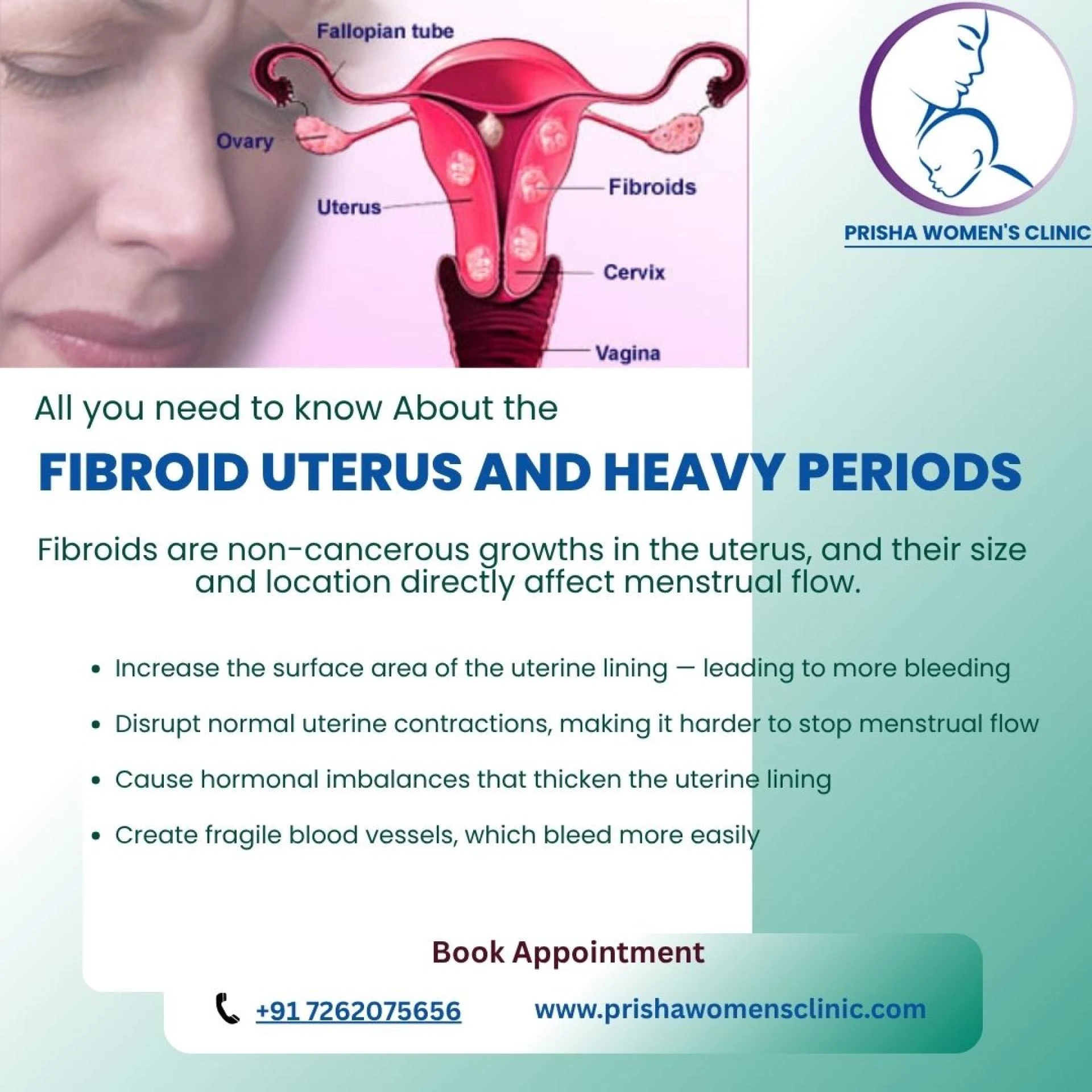
Fibroids are non-cancerous growths that form in or on the uterus. Also called leiomyomas or myomas, these tumors are made up of muscle and connective tissue. They can be:
- Small and silent, never causing symptoms
- Large and disruptive, affecting your menstrual cycle, bladder, fertility, or more
Their location matters. Fibroids that develop inside the uterine lining or within the uterine wall (submucosal and intramural fibroids) are most likely to cause heavy menstrual bleeding.
Why Do Fibroids Cause Heavy Periods?
Fibroids affect menstruation in several ways:
1. Increased Surface Area
Fibroids that grow into the inner lining of the uterus increase its surface area. More lining = more bleeding during your period.
2. Impaired Uterine Contractions
The uterus contracts to help expel its lining during menstruation. Fibroids interfere with these contractions, making it harder for the uterus to stop bleeding efficiently.
3. Hormonal Influence
Fibroids can create hormonal imbalances, particularly in estrogen and progesterone, causing the uterine lining to grow thicker and bleed more.
4. Fragile Blood Vessels
Fibroids can distort the uterus and lead to the formation of abnormal or delicate blood vessels, which break easily and bleed more.
How Do You Know It’s “Heavy” Bleeding?
Many women underestimate how heavy their periods are. You may have menorrhagia (medical term for heavy periods) if:
- Your bleeding lasts more than 7 days
- You pass clots larger than a ₹1 coin
- You need to change pads or tampons every 1–2 hours
- You feel dizzy, tired, or faint (possible signs of anemia)
- You avoid work or social events due to flow
If this sounds like your monthly experience, fibroids could be the cause—and help is available.
Diagnosis: How We Detect Fibroids
At Prisha Women’s Clinic, led by Dr. Manisha D. Kadam, one of the best gynaecologists in Wagholi with over 15+ years of experience, we start with a detailed history and pelvic examination. To confirm fibroids, we may recommend:
- Ultrasound scan – The most common and non-invasive test
- Sonohysterography – Fluid-based ultrasound for clearer images of the uterine lining
- MRI – For detailed mapping in complex cases or surgical planning
Treatment Options: Managing Fibroids & Heavy Periods
The best treatment depends on your age, symptoms, fibroid size and location, and your future pregnancy plans. Options include:
1. Medication
- Hormonal birth control pills or IUDs (like Mirena) to regulate periods
- Tranexamic acid tablets to reduce menstrual blood loss
- GnRH analogs to shrink fibroids temporarily (short-term use only)
Ideal for women with mild symptoms or those planning pregnancy soon.
2. Minimally Invasive Procedures
a. Uterine Artery Embolization (UAE)
This blocks blood flow to fibroids, causing them to shrink. Suitable for women who want to avoid surgery or aren’t planning pregnancy.
b. Hysteroscopic Myomectomy
Removes fibroids from inside the uterus using a thin camera inserted through the cervix—no incisions required.
3. Surgical Options
a. Laparoscopic Myomectomy
Fibroids are removed while keeping the uterus intact. Best for women who still want to conceive.
b. Hysterectomy
A permanent solution that removes the uterus. Recommended when childbearing is complete and fibroids severely affect quality of life.
Don’t Ignore Anemia
Heavy bleeding from fibroids often leads to iron deficiency anemia, which may cause:
- Fatigue
- Shortness of breath
- Pale skin or lips
- Mental fog or weakness
We typically recommend iron supplements and dietary guidance alongside fibroid treatment to restore your strength.
When Should You See a Gynaecologist?
Don’t wait until your daily life is affected. Seek expert advice if:
- Your period lasts more than 7 days regularly
- You’re passing large clots
- You feel faint or exhausted during menstruation
- You’re struggling to get pregnant
- You feel bloated or your lower abdomen feels heavy
Why Choose Prisha Women’s Clinic?
Led by Dr. Manisha D. Kadam, a trusted name and best gynaecologist in Wagholi, Prisha Women’s Clinic offers:
- Personalized treatment plans
- Advanced ultrasound and diagnostic care
- Expertise in fibroid management and minimally invasive surgery
- A compassionate approach with over 15 years of trusted care
In Conclusion
Heavy periods may seem normal—but they often signal something more. Uterine fibroids are one of the most treatable causes of excessive bleeding. With the right diagnosis and care, you can restore your energy, confidence, and comfort.