A lot of exterior damage starts quietly.
Not with a dramatic leak. Not with a gutter falling off the house. Usually, it begins with something small: paint that keeps peeling near the roofline, a soft spot you notice while cleaning the gutters, or a section of trim that just looks tired no matter how many times it gets patched.
That is why fascia repair vs. replacement matters more than most homeowners realize. In Florida, where humidity, heavy rain, and wind-driven storms keep working the same vulnerable edges of your home, fascia is not decorative trim you can ignore. It is part of the system that helps protect your roof edge, supports your gutters, and keeps moisture from turning a manageable issue into structural damage.
At Armour Siding and Soffit LLC, we help homeowners make the right call before minor roofline problems become expensive exterior repairs.
Key Takeaways
- Fascia damage often starts with moisture, gutter overflow, or hidden rot.
- Small, isolated issues may be repairable, but widespread softness or warping usually points to replacement.
- The right material and proper installation matter as much as the repair itself.
- Acting early protects your roof edge, soffit, gutters, and long-term home value.
Why do fascia problems spread faster in Florida
Fascia sits right at the roof edge, where water management either works beautifully or fails repeatedly. When gutters overflow, flashing is weak, or moisture stays trapped, fascia boards absorb the stress first.
You may notice peeling paint, staining, cracks, soft wood, pest activity near the eaves, or gutters starting to pull away. Those are not just cosmetic annoyances. They are often signs that water has been returning to the same area for too long.
The real problem is rarely only the board you can see. Once moisture gets in, it can affect the soffit, roof decking, fasteners, and the gutter attachment points. The visible damage is often the warning, not the full story.
What is the difference between fascia repair and replacement?
Fascia repair fixes limited, localized damage when the surrounding board and structure are still solid. Replacement is the better choice when rot, warping, repeated moisture exposure, or gutter instability show that the problem is no longer isolated.
As Benjamin Franklin put it, “An ounce of prevention is worth a pound of cure.”
When is repair enough, and when is replacement smarter?
This is the question most homeowners really want answered.
A repair may be enough when:
- The damage is limited to one small section
- The wood around it is still firm
- The gutters are stable
- Moisture has not spread into the soffit or roof edge
Replacement is usually the smarter investment when:
- Multiple sections feel soft or look swollen
- Rot has spread beyond the surface
- Gutters are sagging or pulling away
- The same area has already been patched before
- Water intrusion keeps returning after storms
That is the practical framework we use: extent, source, stability, and recurrence.
If the damage is broad, the moisture source is ongoing, the gutter attachment is compromised, or the issue keeps coming back, replacement usually saves more money and frustration than another short-term repair.
The 4-point roofline check before you decide
Here is a simple way to think through fascia repair vs replacement before you hire anyone:
- Check the surface
- Look for peeling paint, cracks, dark staining, and swollen edges.
- Check the firmness
- Soft or crumbling wood usually means moisture has moved past the surface.
- Check the gutters
- If they are loose, tilted, or separating from the roofline, the fascia may no longer be supporting them properly.
- Check the surrounding system
- Inspect soffits, roof edges, and downspout drainage. Fascia damage rarely exists in isolation.
Which fascia materials make the most sense in Florida?
Material choice is not just about appearance. It is about how much moisture, maintenance, and weather exposure you want to fight over the next several years.
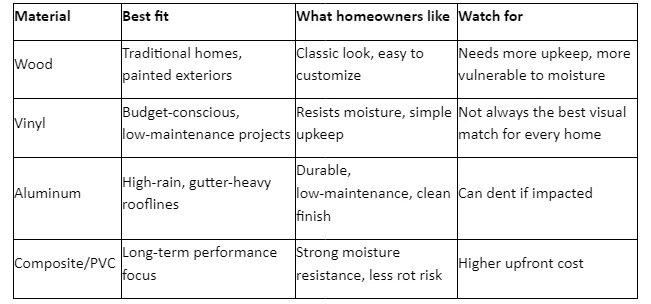
There is no universal best choice. The right answer depends on your budget, your home’s style, and whether you want the lowest upfront price or the lowest long-term hassle.
What most homeowners get wrong
A familiar scenario goes like this: you see peeling paint, assume it is cosmetic, patch one section, and move on. A few months later, the gutter starts pulling away. Then the soffit shows staining. Then someone finally opens the area and finds rot that had already moved deeper into the roof edge.
That is the trap.
Do this, not that
- Do this: fix the moisture source, inspect the surrounding roofline, and choose repair only when the damage is truly isolated.
- Not that: patch over symptoms while leaving clogged gutters, weak flashing, or soft attachment points in place.
The EPA notes that if wet or damp materials are dried within 24 to 48 hours, mold often will not grow, which is one more reason roofline moisture should be addressed early, not after it has lingered for days.
Why installation quality matters as much as the material
Even a durable fascia product can fail if it is installed over hidden rot, fastened poorly, or paired with gutters that still do not drain correctly.
Professional installation should include inspection of the roof edge, removal of compromised sections, alignment, sealing, and proper gutter positioning. The goal is not simply to make the roofline look clean again. The goal is to restore the whole system so it sheds water correctly and holds up through Florida weather.
That is where trust matters. Homeowners want to know who is doing the work, whether the crew is accountable, and whether the job will be treated with care instead of rushed like another line item on a schedule.
At Armour Siding and Soffit LLC, that matters to us. We focus on durable materials, careful workmanship, and solutions that protect the home for the long haul.
Final Thoughts
When homeowners weigh fascia repair vs replacement, the real question is not just, “Can this be patched?” It is, “Will this actually protect my home?”
If the issue is small and contained, repair may be enough. But if moisture, rot, or gutter instability has already spread the problem, replacement is usually the smarter move. Acting early helps protect your family’s home, your exterior investment, and your peace of mind.
If you are seeing signs of roofline damage, Armour Siding and Soffit LLC can help you evaluate the problem clearly and choose the solution that makes sense for your home.
Frequently Asked Questions (FAQs)
1. What makes Armour Siding and Soffit LLC a good choice for fascia work?
Homeowners want more than a quick patch. Armour Siding and Soffit LLC focuses on careful evaluation, durable materials, and workmanship that protect the full roofline system.
2. When should I call Armour Siding and Soffit LLC for a professional inspection?
Call when you notice peeling paint, soft wood, sagging gutters, staining near the eaves, or recurring moisture issues. Early inspection usually gives you more repair options.
3. What makes a good fascia repair?
A good fascia repair fixes both the damaged section and the cause behind it, such as overflow, poor drainage, or trapped moisture.
4. What are the best practices for longer-lasting fascia?
Keep gutters clear, address leaks quickly, inspect the roofline regularly, and choose materials suited to Florida’s wet, humid conditions.
5. Are there any fascia replacement trends homeowners should know?
More homeowners are choosing lower-maintenance materials like aluminum, PVC, and composite when long-term durability matters more than short-term savings.
6. How to tell if fascia damage is more than cosmetic?
Look for softness, swelling, repeated paint failure, pest activity, or gutters pulling away. Those signs often point to deeper moisture damage.
7. When to hire a fascia contractor instead of waiting?
Hire a contractor as soon as the damage affects gutter support, spreads across multiple sections, or keeps returning after storms.
8. What fascia services are usually included in the job?
Professional services often include inspection, removal of damaged sections, installation, sealing, and gutter reattachment or adjustment.
9. What is the best low-maintenance fascia material?
Aluminum and composite-style products are popular choices when homeowners want strong moisture resistance and less upkeep.
10. What does fascia replacement cost depend on?
Cost usually depends on material choice, how much damage is present, labor complexity, and whether soffit, gutters, or hidden roof-edge repairs are needed.