Fairytale gardens are not just about pretty plants and miniature decorations—they’re about creating a feeling. The moment someone steps into a fairytale garden, they should feel like they’ve crossed an invisible boundary between the real world and a magical one. That’s exactly why Fairytale Garden Ideas have captured the hearts of homeowners, parents, and creative gardeners everywhere.
At their core, fairytale gardens blend nature with imagination. They invite storytelling, slow living, and a sense of wonder that many of us haven’t felt since childhood. Whether it’s a tiny door hidden beneath a tree or a winding pebble path that seems to lead somewhere secret, these gardens spark curiosity in ways traditional landscaping often doesn’t.
Why Fairytale Gardens Are Trending
The rise of fairytale gardens isn’t random. According to lifestyle and wellness studies, spending time in imaginative outdoor environments can significantly reduce stress levels and improve mood. In fact, a 2023 survey on outdoor living trends found that over 60% of respondents felt more relaxed in creatively designed garden spaces compared to minimalist ones.
Social media has also played a role. Platforms like Pinterest and Instagram are full of whimsical garden scenes, inspiring people to recreate that magic at home. But beyond trends, fairytale gardens fulfill a deeper emotional need—they give people permission to dream again.
Who Can Create a Fairytale Garden
The beauty of fairytale gardens is that they’re accessible to everyone. You don’t need acres of land or a professional landscaper. A fairytale garden can exist in:
- A small backyard corner
- A balcony container
- A windowsill planter
- Even an indoor pot
Age doesn’t matter either. Children, adults, retirees—anyone with imagination can build one.
About Garden Inspirations from Media
Influence of The London Magazine on Garden Aesthetics
Lifestyle publications such as The London Magazine have increasingly embraced romantic, slow-living aesthetics. Their features often highlight gardens as extensions of emotional well-being rather than just design statements.
This editorial shift reflects a broader cultural movement: people want spaces that feel meaningful, layered, and soulful—not overly polished or artificial.
Editorial Trends and Nature-Focused Living
Modern garden inspiration now emphasizes:
- Natural textures
- Imperfection
- Personal storytelling
- Sustainability
Fairytale gardens fit seamlessly into this philosophy.
The Inspiration Behind Modern Fairytale Gardens
Literary and Cultural Roots
Fairytale gardens draw inspiration from centuries of folklore, myths, and fantasy literature. European fairy tales, Celtic legends, and classic fantasy novels all contribute to the aesthetic we recognize today—moss-covered stones, hidden woodland homes, and enchanted clearings.
These stories taught us that nature is alive, mysterious, and full of unseen inhabitants. Fairytale gardens bring that belief into the physical world, even if just for fun.
The Role of Storytelling in Garden Design
A successful fairytale garden tells a story without words. Every element plays a role:
- A tiny ladder suggests movement
- A miniature table implies gatherings
- A curved path hints at adventure
Instead of designing for symmetry or perfection, you design for narrative. Ask yourself: Who lives here? What do they do? Where are they going?
Childhood Imagination and Nature
Child development experts consistently highlight the importance of imaginative outdoor play. Studies show that children who engage in imaginative environments demonstrate higher creativity, improved emotional expression, and better problem-solving skills.
A fairytale garden becomes a stage where children can act out stories, invent characters, and interact with nature organically—without screens.
Planning Your Fairytale Garden
Choosing the Right Location
Location is everything when creating magic. Look for areas that already feel a bit secret or quiet. Natural shade, tree roots, or corners near fences work beautifully because they create a sense of discovery.
Avoid high-traffic areas. A fairytale garden should feel stumbled upon, not showcased.
Setting a Theme
Without a theme, fairytale gardens can quickly feel cluttered. A clear direction helps guide plant choices, décor, and scale.
Woodland, Cottage, or Enchanted Forest Styles
- Woodland themes feel earthy and grounded, using moss, bark, and ferns
- Cottage styles feel cheerful and floral, with soft colors and rustic charm
- Enchanted forest designs lean into mystery with lighting and winding paths
Essential Elements of a Fairytale Garden
Plants and Flowers That Create Magic
Plants set the mood. Low-growing and delicate varieties help maintain scale and realism. Popular choices include:
- Moss for softness
- Thyme for fragrance
- Dwarf shrubs for structure
- Flowering ground covers for color
Color Psychology in Fairytale Gardens
Color plays a subtle psychological role. Soft hues create calm and comfort, while brighter accents draw attention to focal points like doors or pathways.
Natural Materials and Textures
Natural materials anchor the fantasy in reality. Wood, stone, clay, and bark age beautifully over time, making the garden feel lived-in rather than staged.
Creating Miniature Worlds
Designing a Fairy House
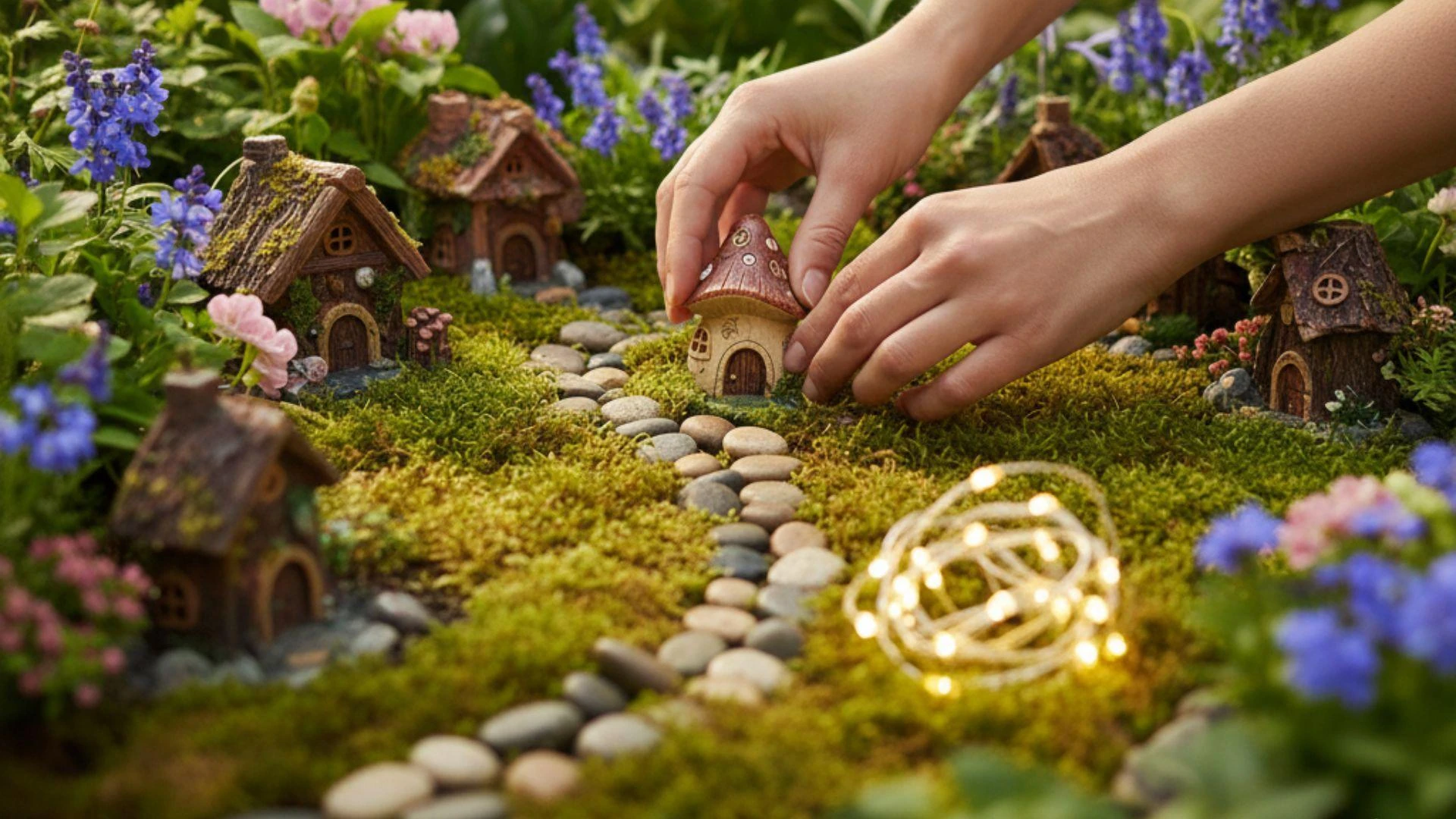
A fairy house for garden settings becomes the emotional center of the space. It gives visitors something to connect with—a “home” within the garden.
Fairy houses don’t need to be elaborate. Sometimes a simple door or window is more powerful than a full structure.
Placement Tips for Realistic Appeal
- Tuck houses into existing landscapes
- Avoid symmetry
- Let plants partially obscure structures
Adding more than one fairy house for garden designs can suggest a community, but spacing is key to avoid clutter.
DIY Decorations and Accessories
Handmade Pathways and Stones
Pebble paths guide the eye and create flow. Painted stones, acorns, and shells add personality and charm.
Upcycled Items for Sustainable Design
Upcycling reduces waste and adds uniqueness. Environmental data shows that reusing materials for décor significantly lowers household waste output.
Lighting for a Magical Atmosphere
Solar Lights vs. LED Strings
Solar lighting is ideal for eco-conscious gardeners, while LED strings allow more control over brightness and placement.
Safety and Energy Efficiency Statistics
Switching to solar outdoor lighting can reduce energy consumption by up to 75% annually, making it both magical and practical.
Seasonal Fairytale Garden Ideas
Spring and Summer Themes
Bright flowers, butterflies, and open layouts dominate warmer months. These are classic fairy ideas for the garden that feel joyful and alive.
Autumn and Winter Enchantments
Cool seasons bring moodier magic. Think lanterns, fallen leaves, pinecones, and tiny winter scenes. Fairy ideas for the garden can evolve year-round.
Fairytale Gardens for Small Spaces
Container and Balcony Gardens
A single pot can become a magical scene by layering small plants, mini accessories, and textures while keeping everything scaled to create depth without overcrowding.
Vertical Gardening Techniques
Use wall planters, shelves, or hanging containers to build upward, adding visual interest and magical layers while saving valuable ground space in small gardens.
Engaging Children Through Fairytale Gardens
Educational Benefits
Fairytale gardens teach children responsibility, patience, and basic plant care while encouraging curiosity about nature and the environment in a fun, hands-on way.
Encouraging Creativity and Outdoor Play
Imaginative outdoor spaces help children develop storytelling skills, confidence, and emotional balance while reducing screen time and increasing meaningful outdoor play.
Maintenance and Longevity
Weatherproofing Miniatures
Protect fairy houses and figures by sealing wood, choosing resin or stone materials, and positioning decorations away from heavy rain or direct sunlight.
Long-Term Care Tips
Maintain your fairytale garden by cleaning miniatures, trimming plants, refreshing soil, and updating seasonal decorations to keep the scene magical year-round.
Common Mistakes to Avoid
Overcrowding Elements
Adding too many decorations makes the garden feel cluttered and confusing, reducing its magical appeal and making individual details harder to appreciate.
Ignoring Scale and Proportion
Always choose miniatures and plants that match each other in size to maintain realism and preserve the illusion of a tiny enchanted world.
Conclusion
A fairytale garden is an invitation—to slow down, imagine, and reconnect with nature. With thoughtful planning and creative intention, even the smallest space can become a magical retreat that evolves with time.
Frequently Asked Questions
How to make fairies for a fairy garden?
Use air-dry clay, fabric scraps, or resin molds to shape tiny fairies, then paint and seal them to withstand outdoor weather conditions.
How do you make a fairy garden?
Start with a theme, choose small plants, add a fairy house and accessories, and build layers gradually to create depth and a natural magical look.
How to make a garden fairy?
Form a simple wire base, sculpt the body with clay, paint detailed features, and apply a waterproof sealant to protect it outdoors.
How to make a garden fairies?
Create several fairies using lightweight materials, vary poses and sizes, and place them throughout the garden to make the scene feel lively and realistic.
What plants work best in fairy gardens?
Low-growing plants like moss, thyme, dwarf ferns, baby tears, and succulents maintain scale and help create a lush, enchanted garden appearance.