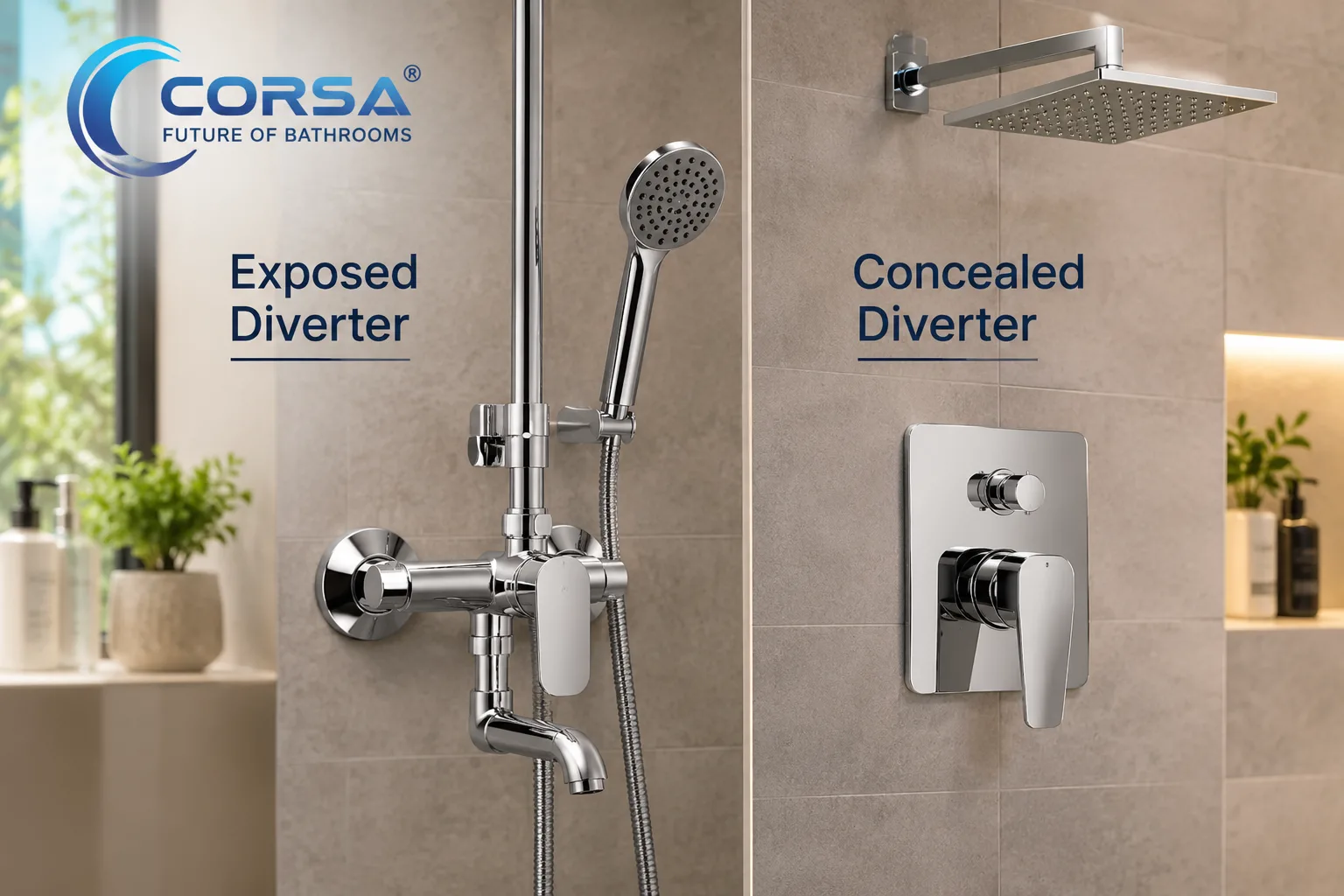
4. Exposed vs Concealed Diverter: Which Is Better for a Modern Bathroom?
Choosing between an exposed vs concealed diverter depends on your bathroom layout, installation requirements, design preference and maintenance needs. An exposed diverter is generally easier to install and access, while a concealed diverter offers a cleaner and more minimal bathroom appearance.
Exposed Diverter for a Practical Bathroom
An exposed diverter is a practical choice when functionality, installation convenience and accessibility are important. It may be especially suitable for existing bathrooms where the wall is already tiled and the plumbing connections are in place.
Exposed shower mixers are also available in contemporary designs, so choosing an exposed system does not necessarily mean compromising on bathroom appearance.
Concealed Diverter for a Minimalist Bathroom
A concealed diverter is often preferred when the bathroom design focuses on clean lines, minimal visible hardware and a coordinated shower area.
For example, in a modern walk-in shower, a concealed diverter can complement an overhead shower, a hand shower, glass partitions and minimal tile joints.
The final appearance depends on the placement of the control plate, shower outlets, wall finishes and overall bathroom layout.
5. Exposed vs Concealed Diverter: Which Is Easier to Install?
Exposed diverters are generally easier to install because the main valve body is mounted on the finished wall and connected to the existing plumbing points. This can make them a suitable choice for replacement work and bathrooms where major wall modifications are not planned.
A concealed diverter requires more coordination between the plumber, tile installer and bathroom designer. The valve body must be installed at the correct depth and position, and the outlet connections must be planned before the wall is finished.
Exposed Diverter Installation Considerations
- Check the existing hot and cold water connections.
- Verify the pipe spacing and connection type.
- Confirm the diverter's compatibility with the existing plumbing.
- Check the shower outlet and hand shower connections.
- Follow the manufacturer's installation instructions.
- Ensure the installation is tested before regular use.
Concealed Diverter Installation Considerations
- Decide the number and type of shower outlets before installation.
- Check the required valve recess depth.
- Confirm the wall construction and available installation space.
- Plan the position of the control plate and shower outlets.
- Coordinate plumbing connections before tiling.
- Pressure-test the plumbing as appropriate before closing the wall.
- Ensure waterproofing is completed correctly around the installation.
- Check the manufacturer's instructions for access to replaceable parts.
For concealed diverters, the installation depth and wall preparation should be checked against the exact model's installation drawing before the wall is finished.
6. Which Diverter Is Easier to Maintain?
Maintenance depends on the diverter's design, the water quality, the cartridge and the accessibility of internal components.
An exposed diverter generally provides easier visual access to the valve body, connections and controls. This can make inspection and replacement simpler in many installations.
A concealed diverter hides the main valve body behind the wall, but some models are designed for maintenance through the front trim plate. Buyers should check whether the cartridge, seals and other serviceable components can be accessed without breaking tiles.
Maintenance Tips for Both Types
- Clean the exterior with a soft cloth and a suitable mild cleaner.
- Avoid harsh acids, abrasive powders and aggressive chemicals.
- Follow the manufacturer's finish-care instructions.
- Check the shower outlets for mineral deposits.
- Inspect visible connections for signs of leakage.
- Have cartridge or internal valve issues checked by a qualified plumber.
- Use the correct replacement parts for the specific diverter model.
7. Exposed vs Concealed Diverter: Which One Should You Choose?
If you are still unsure, the easiest way to make the decision is to consider your bathroom's current condition, your design preferences and how much renovation work you are planning.
Choose an Exposed Diverter If:
- Your bathroom is already tiled.
- You want a simpler installation.
- You are replacing an existing wall mixer.
- You prefer easier access to the valve body.
- You want to minimise wall modification.
- You need a practical shower solution.
Choose a Concealed Diverter If:
- You are building a new bathroom.
- You are undertaking a complete bathroom renovation.
- You prefer a minimalist design.
- You want fewer visible fittings on the wall.
- Your wall can accommodate the concealed valve.
- You have planned the shower outlets in advance.
For Homeowners
If you are upgrading an existing bathroom without removing tiles, an exposed diverter may be a practical option. If you are designing a new bathroom from scratch, a concealed diverter may help achieve a cleaner appearance.
For Architects and Interior Designers
Concealed diverters can be useful when the bathroom design focuses on minimalism, symmetry and clean wall surfaces. However, valve dimensions, tile thickness, control height, outlet positioning and maintenance access should be coordinated with the plumbing layout.
For Builders and Contractors
The choice between exposed and concealed diverters should be made before the plumbing work begins. Concealed systems need coordination between plumbing, civil work, waterproofing, tiling and the final fitting installation.
For Hotels and Commercial Projects
The diverter selection should be based on expected usage, maintenance requirements, replacement availability, water pressure, installation access and the overall project specification. A design decision should not be made solely on appearance.
8. Common Mistakes to Avoid When Choosing a Diverter
Choosing a diverter without considering the installation can lead to unnecessary plumbing changes, installation problems and maintenance challenges.
1. Selecting a Concealed Diverter After Tiling
Concealed diverters are generally planned before wall finishing. Selecting the valve too late may require additional wall modifications or compromise the installation.
2. Ignoring the Required Installation Depth
Every concealed diverter may have a specific minimum and maximum installation depth. The depth must account for the wall structure, plaster, tile and other finishing materials.
3. Choosing Based Only on Appearance
The finish and design matter, but the valve configuration, water pressure requirements, installation compatibility, cartridge and warranty should also be considered.
4. Not Checking the Number of Outlets
A diverter must be compatible with the shower outlets you want to use. Check whether the selected model supports an overhead shower, hand shower, bath spout or other outlets and whether they operate individually or in combinations as specified.
5. Ignoring Maintenance Access
Before choosing a concealed diverter, confirm how the cartridge and other serviceable components can be accessed. This is especially important for bathrooms in hotels, rental properties and residential projects.
6. Not Coordinating With the Plumber
A diverter should be selected and its installation instructions reviewed before plumbing work begins. This helps avoid incorrect connection layouts, installation depth issues and unnecessary rework.
9. How Many Outlets Can a Diverter Control?
The number of outlets a diverter can control depends on the valve design and configuration. A diverter is not automatically a two-outlet or three-outlet fitting; different models are designed for different combinations.
Common shower outlet combinations include:
| Shower Configuration | Typical Outlets |
|---|---|
| Basic shower setup | One shower outlet |
| Two-outlet shower system | Overhead shower and hand shower |
| Bath and shower system | Bath spout and hand shower |
| Multi-outlet shower system | Overhead shower, hand shower and additional outlet, depending on valve design |
Some diverters allow switching between outlets, while other systems may support simultaneous operation of selected outlets. Always verify the manufacturer's specifications before selecting a valve.
10. Why Choose Corsa Bath for Shower Fittings and Diverters?
Corsa Bath is an Indian bathware brand established in 1996, offering bathroom fittings, showers, faucets, accessories and sanitaryware for residential, commercial and hospitality applications.
Our bathroom fitting range includes shower solutions, mixers, diverters, faucets, bathroom accessories and other products designed to complement modern bathroom interiors.
Whether you are planning a new bathroom, renovating an existing space, specifying products for a residential project or exploring bathware for your showroom, Corsa Bath offers a range of bathroom fitting solutions to explore.
Explore the Corsa Bath collection:
- Bathroom Showers – Explore shower products and showering solutions.
- Bathroom Faucets – Discover bathroom faucets and mixer solutions.
- Bathroom Accessories – Explore bathroom accessories for modern interiors.
- About Corsa Bath – Learn about the brand and its bathware range.
- Corsa Bath Dealership – Explore dealer and distributor opportunities.
Explore Corsa Bath for bathroom fittings, showers and diverter solutions designed for contemporary bathrooms.
11. Frequently Asked Questions
What is the difference between exposed and concealed diverters?
An exposed diverter has its main valve body mounted on the bathroom wall, while a concealed diverter has its main valve body installed behind the wall. Exposed diverters are generally easier to install and access, whereas concealed diverters provide a cleaner appearance and require planning before wall finishing.
Which is better, an exposed or concealed diverter?
Neither is universally better. Exposed diverters may be more practical for existing tiled bathrooms and replacements. Concealed diverters may be better suited to new bathrooms and full renovations where a minimalist design is preferred.
Are concealed diverters difficult to maintain?
Maintenance depends on the valve design. Many concealed diverters provide access to replaceable components through the control plate, but the serviceability of each model should be checked before installation.
Can I install a concealed diverter in an existing bathroom?
Yes, but it may require opening the wall, adjusting the plumbing, creating space for the valve body and completing the wall finish again. It is generally easier to plan a concealed diverter during a new construction or full bathroom renovation.
Can I replace an exposed diverter without changing tiles?
In many cases, yes. If the existing plumbing connections, mounting dimensions and outlet arrangement are compatible with the replacement, the diverter may be replaced without changing the tiles. Compatibility should be confirmed before purchasing.
Do exposed diverters look outdated?
No. Exposed diverters are available in contemporary designs, finishes and styles. Their visible valve body can be coordinated with the shower, bathroom accessories and other fittings.
Do concealed diverters require waterproofing?
Waterproofing is an important part of bathroom wall and shower construction. The installation around a concealed diverter should follow the plumbing system's requirements, the manufacturer's instructions and the applicable waterproofing practice.
Can a concealed diverter control an overhead shower and hand shower?
Yes, many concealed diverters are designed to direct water between an overhead shower and a hand shower. The number of outlets and operating combinations depend on the selected valve model.
Are exposed diverters suitable for hotels?
They can be suitable for hotels, depending on the project requirements. Hotel buyers should consider maintenance, accessibility, replacement parts, installation, water pressure and usage requirements before choosing the system.
What should I check before buying a concealed diverter?
Check the valve depth, wall construction, number of outlets, cartridge, water pressure requirements, installation instructions, waterproofing, trim compatibility and maintenance access.
What should I check before buying an exposed diverter?
Check the existing plumbing connections, pipe spacing, mounting compatibility, outlet configuration, finish, cartridge, water pressure requirements and warranty.
Explore bathroom showers and fittings from Corsa Bath: