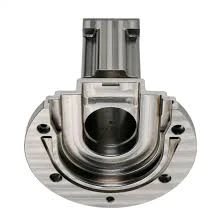
In today’s highly competitive manufacturing landscape, companies across aerospace, automotive, medical, electronics, and industrial sectors demand components with extreme accuracy and consistency. High-tolerance parts are no longer optional—they are essential for performance, safety, and long-term reliability. As global supply chains evolve, one manufacturing destination continues to stand out for its technical capability and scalability: precision machining China. Chinese machining providers have invested heavily in advanced technology, skilled labor, and quality systems to meet the stringent requirements of international clients.
This article explores how precision machining China has become a preferred solution for producing high-tolerance components. From advanced CNC capabilities and material expertise to cost efficiency and quality control, we will examine the key factors that make China a global leader in precision manufacturing. By understanding these strengths, businesses can make informed decisions when sourcing critical components that require exacting standards.
Advanced CNC Technology Driving High-Tolerance Accuracy
One of the core strengths of precision machining China lies in its widespread adoption of advanced CNC (Computer Numerical Control) technology. Leading Chinese manufacturers operate state-of-the-art CNC milling, turning, grinding, and multi-axis machining centers capable of producing complex geometries with micron-level accuracy. These machines, often sourced from globally recognized brands, allow for tight dimensional control, repeatability, and efficient production of intricate components. As a result, manufacturers can meet demanding tolerances required by industries such as aerospace, medical devices, and high-performance electronics.
Beyond equipment, Chinese machining facilities integrate automation and digital manufacturing systems to further enhance precision. Robotic loading, real-time monitoring, and CAD/CAM integration reduce human error while improving consistency across large production runs. This combination of advanced machinery and smart manufacturing processes ensures that precision machining China can deliver high-tolerance components at scale without compromising accuracy. For global companies, this technological maturity translates into reliable output and reduced risk in critical applications.
Skilled Workforce and Engineering Expertise
Technology alone cannot achieve high-tolerance machining without skilled professionals to operate and optimize it. Another key advantage of precision machining China is its large pool of trained machinists, engineers, and quality specialists. Over the past two decades, China has invested heavily in technical education and vocational training programs focused on manufacturing and engineering disciplines. This has resulted in a workforce capable of interpreting complex technical drawings, managing tight tolerances, and applying best practices in machining processes.
In addition to shop-floor skills, Chinese manufacturers often employ experienced engineering teams who collaborate closely with international clients. These engineers provide design-for-manufacturability (DFM) feedback, material recommendations, and process optimization suggestions to improve part performance and reduce costs. This consultative approach adds significant value, especially for high-tolerance components where minor design changes can dramatically affect manufacturability. Through this blend of hands-on expertise and engineering support, precision machining China delivers not just parts, but comprehensive manufacturing solutions.
Material Versatility for High-Performance Applications
High-tolerance components are often made from specialized materials that require precise handling and machining expertise. Precision machining China excels in working with a wide range of materials, including aluminum alloys, stainless steel, titanium, brass, copper, tool steels, and advanced plastics such as PEEK and PTFE. Chinese machining facilities are equipped to handle both common and exotic materials, ensuring consistent results even with challenging specifications.
Material knowledge goes beyond cutting capabilities. Chinese manufacturers understand how different materials behave under machining stress, temperature variation, and finishing processes. This expertise is critical for maintaining dimensional stability and surface integrity in high-tolerance parts. Additionally, many suppliers offer secondary processes such as heat treatment, anodizing, plating, and surface polishing to enhance performance and durability. By offering end-to-end material solutions, precision machining China enables clients to source fully finished, high-precision components from a single, reliable partner.
Rigorous Quality Control and International Standards Compliance
When producing high-tolerance components, quality control is non-negotiable. A major reason global companies trust precision machining China is the strong emphasis on inspection, testing, and standards compliance. Leading Chinese machining suppliers operate ISO 9001, ISO 13485, IATF 16949, and AS9100 certified quality management systems, depending on the industry they serve. These certifications ensure consistent processes, traceability, and continuous improvement.
Advanced inspection equipment further supports quality assurance. Coordinate Measuring Machines (CMMs), optical comparators, laser scanners, and surface roughness testers are commonly used to verify dimensional accuracy and surface finish. Many manufacturers provide detailed inspection reports, first article inspections (FAI), and statistical process control (SPC) data to meet customer requirements. This transparent and data-driven approach builds trust and confidence, proving that precision machining China can consistently meet the tightest tolerances demanded by global markets.
Cost Efficiency and Scalability Without Compromising Precision
While precision and quality are essential, cost efficiency remains a key consideration for most businesses. Precision machining China offers a compelling balance between high accuracy and competitive pricing. Lower labor costs, efficient supply chains, and economies of scale allow Chinese manufacturers to produce high-tolerance components at a fraction of the cost compared to many Western markets. Importantly, these savings do not come at the expense of quality when working with reputable suppliers.
Scalability is another major advantage. Chinese machining facilities are well-equipped to handle both low-volume prototyping and high-volume production runs. This flexibility is particularly valuable for companies developing new products that require rapid iteration before scaling to mass production. By partnering with precision machining China, businesses can streamline their manufacturing strategy, reduce time-to-market, and maintain consistent quality as demand grows. This combination of affordability, scalability, and precision makes China an ideal sourcing destination for high-tolerance components.
Global Supply Chain Integration and Reliable Lead Times
In a globalized economy, seamless supply chain integration is critical for manufacturing success. Precision machining China benefits from a mature industrial ecosystem that includes raw material suppliers, tooling providers, surface treatment specialists, and logistics partners. This tightly integrated network enables efficient coordination across all stages of production, reducing delays and improving overall reliability. For high-tolerance components, where multiple processes must align perfectly, this ecosystem provides a significant competitive advantage.
Modern Chinese manufacturers also prioritize communication and project management to meet international expectations. Many suppliers employ English-speaking sales and engineering teams, use digital project tracking systems, and provide regular production updates. Combined with well-established export infrastructure and global shipping expertise, precision machining China can deliver high-precision parts on schedule to clients worldwide. This reliability strengthens long-term partnerships and reinforces China’s role as a trusted manufacturing hub.
Innovation and Continuous Improvement in Precision Machining
Innovation plays a crucial role in maintaining competitiveness in high-tolerance manufacturing. Precision machining China continues to evolve by adopting new technologies such as five-axis machining, additive manufacturing integration, and smart factory systems. These innovations allow manufacturers to produce more complex components with fewer setups, improved accuracy, and reduced lead times. As a result, Chinese machining providers can meet increasingly complex design requirements from advanced industries.
Continuous improvement is also embedded in the culture of leading Chinese manufacturers. Through lean manufacturing principles, process optimization, and data-driven decision-making, they consistently refine their operations to enhance precision and efficiency. This commitment to innovation ensures that precision machining China remains aligned with global trends and emerging industry standards. For companies seeking long-term manufacturing partners, this forward-thinking approach provides confidence in sustained quality and technological relevance.
Customization and Prototyping for High-Tolerance Needs
High-tolerance components often require custom designs tailored to specific applications. Precision machining China excels in providing customized solutions, from one-off prototypes to fully customized production runs. Advanced CAD/CAM systems and rapid prototyping capabilities enable manufacturers to quickly translate complex designs into functional parts while maintaining tight tolerances. This responsiveness is particularly beneficial for industries that require fast development cycles and frequent design iterations.
Prototyping services also allow clients to test and validate designs before committing to large-scale production. Chinese machining suppliers work closely with customers during this phase, offering feedback to improve manufacturability and performance. By supporting both prototyping and production under one roof, precision machining China simplifies the development process and reduces the risk of costly errors. This integrated approach makes China an attractive partner for innovation-driven companies.
Industries Benefiting from High-Tolerance Machining in China
A wide range of industries rely on precision machining China for high-tolerance components. In aerospace, manufacturers require lightweight yet strong parts with exact dimensions to ensure safety and performance. In the medical sector, precision-machined components are critical for surgical instruments, implants, and diagnostic equipment where accuracy can directly impact patient outcomes. The electronics industry depends on tight tolerances for connectors, housings, and heat sinks to support miniaturization and performance.
Automotive, robotics, energy, and industrial automation sectors also benefit significantly from China’s precision machining capabilities. These industries demand durable, high-performance components produced at scale and at competitive costs. By serving such diverse sectors, precision machining China demonstrates its versatility and ability to meet complex, industry-specific requirements. This broad application base further reinforces China’s position as a global leader in high-tolerance manufacturing.
Choosing the Right Precision Machining Partner in China
While precision machining China offers many advantages, selecting the right supplier is essential for success. Businesses should evaluate potential partners based on technical capabilities, certifications, quality systems, communication practices, and past project experience. Factory audits, sample evaluations, and clear specification documentation can help ensure alignment and reduce risks. Establishing clear expectations from the outset is especially important when dealing with high-tolerance components.
Building a long-term partnership rather than a transactional relationship often yields the best results. Reliable Chinese machining suppliers are willing to invest time in understanding customer needs and continuously improving processes to meet evolving requirements. By choosing the right partner, companies can fully leverage the benefits of precision machining China—achieving high accuracy, cost efficiency, and dependable supply for even the most demanding applications.
Conclusion: The Future of High-Tolerance Manufacturing with Precision Machining China
As industries continue to push the boundaries of performance and innovation, the demand for high-tolerance components will only increase. Precision machining China has proven itself as a capable, reliable, and forward-looking manufacturing solution for global companies. With advanced CNC technology, skilled expertise, material versatility, rigorous quality control, and cost-effective scalability, Chinese machining providers are well-positioned to meet the most stringent requirements.
For businesses seeking precision without compromise, partnering with a trusted Chinese machining supplier can unlock significant competitive advantages. By embracing the strengths of precision machining China, companies can achieve consistent quality, faster production cycles, and sustainable growth in an increasingly demanding global market.