

A great-looking lawn doesn’t happen overnight. It’s the result of consistent care, smart timing, and a little help from professionals along the way. But what you do between service visits matters just as much as the treatments your lawn receives from experts. In fact, the everyday habits you build at home can make professional lawn care work even better. With the right steps, you can keep your yard strong, green, and healthy from season to season.
The best part is that maintaining your lawn between visits doesn’t have to be complicated. A few simple routines keep the grass growing the way it should, reduce stress on your lawn, and help prevent many common problems before they start. When you combine these habits with scheduled service, your lawn stays fuller, greener, and more resilient.
Why Your Between-Visit Care Matters
Every professional lawn service delivers important treatments that boost the health of your turf. These include fertilizer applications, weed control, pest protection, and seasonal adjustments based on your lawn’s condition. But lawns are living systems, and they continue to grow, spread, and respond to their environment every single day.
That means what happens in between those visits has a real impact. If your lawn gets too much water, not enough sunlight, or heavy foot traffic, those effects build up quickly. And if you don’t mow properly or ignore early warning signs, small issues can turn into bigger ones before your next treatment.
With the right between-visit routines, you strengthen the work your lawn care team already does. Your grass becomes more responsive to fertilizer, more resistant to weeds, and better at handling stress from heat or weather changes. In short, your daily care keeps everything working smoothly.
Watering the Right Way Every Week
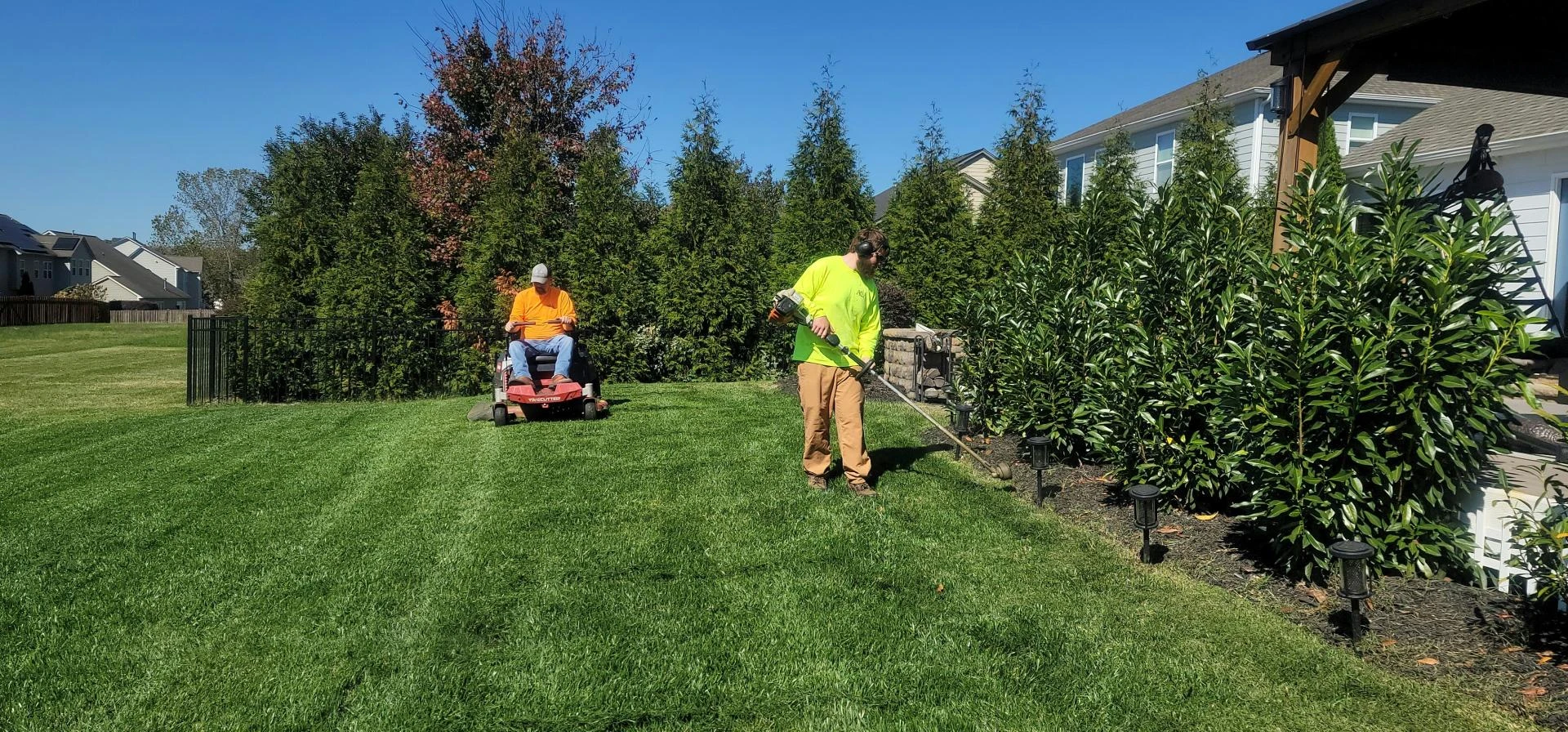
Consistent watering is one of the most important ways to maintain your lawn between visits. Many homeowners assume more water equals healthier grass, but the truth is that too much watering can weaken roots, attract pests, and create fungal problems. At the same time, watering too little causes stress that shows up as dry patches and brittle blades.
The best approach is deep, slow watering a few times a week rather than short daily watering. When water has time to sink into the soil, it encourages the roots to grow deeper. This makes the lawn stronger and less sensitive to heat or drought. If your grass starts looking wilted, curls at the edges, or doesn’t spring back when stepped on, it usually means it needs a deeper soak.
Water in the early morning so the grass has time to dry throughout the day. Morning watering helps prevent fungus and gives your lawn the best chance to absorb what it needs without losing too much to evaporation.
Mowing at the Right Height
Mowing may seem simple, but the height and frequency of your cuts make a huge difference. Cutting your grass too short is one of the most common mistakes homeowners make. When the blades are trimmed too low, the grass loses its protection from sun and heat. Short grass also weakens the roots and leaves more room for weeds to creep in.
A better approach is mowing high, which helps shade the soil and keep moisture in. Taller grass also makes your lawn look fuller and more even. Sharp mower blades matter too, because dull blades tear the grass instead of cutting it cleanly. Torn grass dries out faster and becomes more vulnerable to disease.
If the grass grows quickly between visits, don’t remove too much at once. Keeping mowing gradual helps the lawn adjust and prevents stress, making it easier for professional treatments to do their job.
Letting Clippings Work for You
A lot of homeowners worry that grass clippings look messy, but when mowed properly, the clippings break down quickly and return nutrients to the soil. Leaving clippings on the lawn can help keep your lawn greener and reduce the need for additional fertilizer.
The key is mowing regularly enough that the clippings stay short and light. Thick piles of wet clippings can smother patches of grass, but light clippings spread out naturally and decompose into the soil. This simple habit gives your lawn a little extra boost between visits.
Keeping an Eye on Early Warning Signs
Your lawn communicates with you long before problems become serious. You can spot many issues early just by paying attention to changes in color, growth, or texture. Pale patches may mean your lawn needs water or nutrients. Random thinning can indicate foot traffic damage. Sudden brown circles might suggest fungus or pests.
These signs don’t always require heavy treatments — sometimes small adjustments solve the problem right away. Light watering, gentle raking, or reducing traffic on stressed areas often helps the grass bounce back. And when you do notice something that seems unusual or spreading, telling your lawn care provider helps them address the issue more effectively during their next visit.
Managing Foot Traffic
Heavy foot traffic can cause compacted soil, thinning grass, and worn-down patches that struggle to recover. This is especially true around walkways, play areas, and places where people often cut corners through the yard.
One easy way to protect your lawn is to rotate where you walk or move outdoor furniture occasionally. Giving high-traffic zones a rest helps the grass repair itself naturally. If the area is constantly used, adding a stepping stone or designated path can prevent long-term damage while still keeping the lawn functional.
Supporting Strong Root Growth
Healthy roots are the foundation of a beautiful lawn. Even when the grass above ground looks fine, the root system may be struggling if the soil becomes compacted or lacks airflow. Regular walking or heavy equipment can press the soil down over time, making it hard for roots to expand.
Lightly loosening the soil in stressed areas can help. Simple tasks like gently poking holes with a garden fork or raking the top layer allow more oxygen to reach the roots. This can make the lawn more responsive to fertilizer and water, helping it recover quickly until your next professional treatment.
Adjusting Your Watering After Weather Changes
Seasonal shifts can happen suddenly, especially during spring and summer. Long dry weeks or unexpected rain can create stress for your lawn. When weather changes quickly, adjusting your watering schedule prevents problems before they snowball into bigger issues.
After heavy rain, let the soil dry before watering again so the roots don’t sit in waterlogged conditions. After long hot days, check the grass for signs of heat stress and add an extra deep watering if needed. Being flexible with weather shifts keeps your lawn steady between service visits.
Helping Your Lawn Recover After Heat or Storms
Extreme weather can temporarily damage even the healthiest lawns. Heat waves dry out the blades, storms flatten the grass, and sudden temperature drops can shock the turf. While these issues might look dramatic, grass often recovers faster than you expect when given the right support.
Watering deeply after heat stress, lightly lifting flattened grass with your hand after storms, and removing debris quickly all help your lawn bounce back. These small actions create a smoother recovery until your lawn care team arrives for the next scheduled treatment.
Preventing Weeds From Spreading
Weeds love weak spots in the lawn. When grass becomes thin or stressed, weeds move in fast. One of the best things you can do between visits is stay ahead of new weeds before they spread. The sooner a weed is removed, the less likely it is to reseed and multiply.
Pulling small weeds by hand works well if the soil is soft. For stubborn ones, keeping the area mowed high helps weaken them over time. When combined with your provider’s weed control treatments, this small step keeps your yard much cleaner and more uniform.
Keeping Your Lawn Hydrated While Avoiding Overwatering
Balancing water is a big part of lawn health. It’s easy to assume your lawn needs water whenever it looks stressed, but overwatering can sometimes cause the exact same symptoms as drought. Mushy soil, yellow patches, or fungus growth often point to too much water rather than too little.
Letting the top few inches of soil dry between watering sessions helps the lawn breathe. If weather has been cool or cloudy, your yard may need less water than usual. And if you see standing water after sprinkling, adjusting the duration or angle can help prevent soggy conditions.
This balance keeps your professional treatments working effectively, creating a healthier lawn overall.
Cleaning Up Yard Debris Regularly
Leaves, branches, lawn toys, and even garden tools can block sunlight and trap moisture on your grass. Over time, these small obstructions create weak spots or yellow patches. A quick cleanup once or twice a week prevents this from happening.
Keeping your yard clear also improves airflow, which helps your lawn dry evenly after watering or rain. This small habit reduces the risk of fungus and keeps your grass looking even and bright between professional care visits.
Knowing When to Ask for a Little Extra Help
While routine maintenance keeps your lawn stable, there are times when problems grow beyond simple fixes. Recurring yellow spots, spreading weeds, or thinning areas that don’t improve may need a deeper treatment such as aeration, overseeding, or a targeted fertilizer application.
Reaching out to your lawn service provider between visits isn’t uncommon. Professionals can advise whether a problem should wait for the next visit or if the lawn would benefit from quicker intervention. Staying proactive helps protect your lawn long-term and prevents the same problems from coming back.
Conclusion
Maintaining your lawn between professional service visits doesn’t require complicated routines or hours of yardwork. Small habits like watering deeply, mowing at the right height, noticing early signs of stress, and protecting high-traffic areas can make a huge difference. When you combine these simple practices with expert care, your lawn becomes healthier, greener, and more resilient through every season.
Your lawn care provider lays the foundation, but your everyday support keeps that foundation strong. With the right balance of professional service and consistent at-home care, your yard stays beautiful, vibrant, and ready for anything nature brings.