
If getting out of a chair makes your knees ache, climbing a flight of stairs leaves your back feeling stiff, or you've stopped exercising because you're worried about making the pain worse, you're not alone. Millions of adults experience knee or back discomfort that affects not only their workouts but also everyday activities.
The good news is that pain doesn't always mean you should stop moving. In fact, for many people, the right kind of exercise plays an important role in improving strength, supporting joint health, and restoring confidence. The challenge is to rebuild strength without placing unnecessary stress on your body.
Instead of high-impact workouts or pushing through discomfort, the focus should be on controlled, progressive Superslow Strength Training that supports your muscles, improves stability, and helps you move better over time. Whether you're returning to exercise after an injury, managing age-related joint pain, or simply looking for a safer way to stay active, here's what you need to know.
Why Avoiding Exercise Can Make Knee or Back Pain Worse
When movement hurts, avoiding exercise often feels like the safest choice. While short-term rest may be appropriate after an acute injury, long-term inactivity can create new challenges.
As muscles become weaker, they provide less support for the knees, hips, and spine. Everyday movements that once felt effortless can become harder because your joints are doing more work than your muscles.
Research has consistently shown that appropriately prescribed resistance training can improve muscle strength, balance, physical function, and overall quality of life for many adults living with chronic knee or back discomfort. The goal isn't to ignore pain but to strengthen the body in ways that reduce unnecessary strain and improve how you move.
Can You Rebuild Strength If You Have Bad Knees or Back Pain?
In many cases, yes.
Having knee or back pain doesn't automatically mean strength training is off limits. What matters most is how you exercise, not simply whether you exercise.
Building strength safely often involves:
Choosing movements that match your current ability instead of copying generic online workouts.
Progressing gradually rather than increasing weight too quickly.
Improving movement quality before focusing on intensity.
Strengthening the muscles that stabilize your joints instead of only targeting the painful area.
This approach allows your body to adapt over time while reducing the likelihood of unnecessary setbacks.
How Weak Muscles Affect Your Joints
Your muscles act as your body's natural support system. Every time you stand, walk, bend, or lift something, they help absorb force and keep your joints stable.
When those muscles weaken, everyday tasks place greater stress on the joints themselves.
For example:
· Weak glute muscles can increase pressure on the knees during walking or climbing stairs.
· A weak core provides less support for the spine, which may contribute to lower back discomfort.
· Limited hip strength can affect balance and movement efficiency.
· Poor posture and muscle imbalances may increase unnecessary strain throughout the body.
Rather than focusing only on where you feel pain, an effective strength program addresses the muscles that support healthy movement as a whole.
How to Rebuild Strength Safely
Recovering strength isn't about doing more. It's about doing the right things consistently.
· Start with Controlled Movement: Before adding resistance, focus on moving well. Slow, controlled repetitions improve body awareness and allow you to build confidence without relying on momentum.
· Strengthen the Muscles That Protect Your Joints: Strong muscles help reduce the workload placed on sensitive joints. Prioritize exercises that develop your core, glutes, hips, hamstrings, and upper back, as these areas contribute to better posture, balance, and stability.
· Increase Resistance Gradually: One of the biggest mistakes people make is progressing too quickly. A gradual increase in resistance allows muscles, tendons, and connective tissues to adapt together, reducing the risk of irritation or overuse.
· Stay Consistent: Two or three well-designed strength sessions each week are often more effective than occasional high-intensity workouts. Long-term consistency builds lasting strength and supports healthier movement patterns.
How to Know You’re Exercising Safely
It's normal to wonder whether what you're feeling is productive muscle fatigue or a sign that something isn't right.
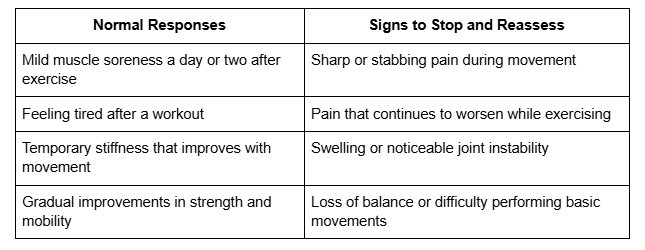
Listening to your body is important. While mild muscle fatigue is a normal part of getting stronger, persistent or worsening joint pain should never be ignored. If symptoms continue, consult a qualified healthcare professional before progressing your exercise routine.
Joint-Friendly Exercises That Help Build Strength
Choosing lower-impact exercises doesn't mean sacrificing results. In many cases, they provide a safer and more sustainable way to improve strength while reducing stress on sensitive joints.
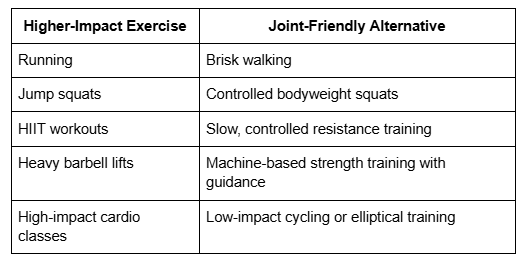
These alternatives allow you to challenge your muscles while minimizing repetitive impact. They can also improve balance, coordination, and functional strength, making everyday activities feel easier over time.
Why Slow-Motion Strength Training Works
One of the most effective approaches for individuals with knee or back concerns is Slow-Motion Strength Training.
Rather than relying on speed or momentum, each repetition is performed slowly and under control. This keeps the muscles under tension longer, encourages proper technique, and reduces unnecessary force on the joints.
Potential benefits include:
· Greater muscle activation through controlled movement rather than momentum.
· Reduced impact on the knees, hips, and lower back.
· Improved balance and stability during everyday activities.
· Better movement awareness and exercise technique.
· Efficient workouts that emphasize quality over quantity.
This science-based approach is particularly well suited for adults who want to rebuild strength without the wear and tear often associated with fast-paced or high-impact workouts. It also allows trainers to monitor movement more closely and make adjustments based on individual needs.
Myth vs. Reality
Many misconceptions prevent people from exercising safely. Understanding the facts can help you make more informed decisions.
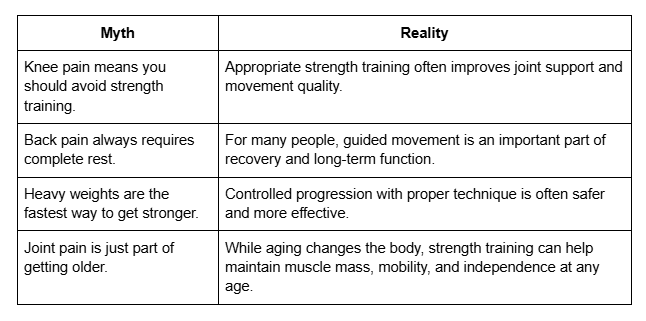
When Is It Time to Work with a Personal Trainer?
If you've been avoiding exercise because of knee or back pain, professional guidance can make the process feel less overwhelming.
Working with a qualified personal trainer may be beneficial if:
· You're unsure which exercises are safe. Personalized instruction helps you choose movements that match your current abilities and avoid unnecessary strain.
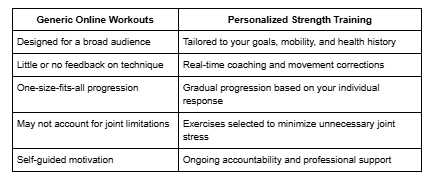
· You've tried online workouts without success. Generic fitness programs rarely account for previous injuries, chronic discomfort, or individual movement patterns.
· You're worried about your technique. Proper form helps distribute force more effectively and reduces stress on sensitive joints.
· You want steady, measurable progress. A structured plan can help you build strength gradually while adapting exercises as your fitness improves.
· You value accountability and confidence. Regular guidance can help you stay consistent and overcome the fear of making your pain worse.
Personalized Training vs. Generic Workouts
Build Strength with Confidence, Not Fear
Living with knee or back pain doesn't mean giving up on an active lifestyle. With the right strategy, rebuilding strength is not only possible but often one of the best investments you can make in your long-term mobility, independence, and overall quality of life.
The key is to focus on controlled movement, gradual progression, and exercises that support your joints instead of overloading them. Small, consistent improvements often lead to meaningful changes in how you move and feel each day.
For those seeking individualized guidance, E Studio in Santa Rosa, California, offers a personalized approach through one-on-one coaching and science-based Slow-Motion Strength Training. Rather than chasing intensity, the focus is on helping clients build strength safely, improve movement quality, and regain confidence in their bodies.
No matter where you're starting, remember that getting stronger isn't about pushing through pain. It's about training smarter, respecting your body's limits, and taking steady steps toward a healthier, more active future.