The shift towards home fitness has turned the living room or spare bedroom into the newest health club. While the convenience of a home gym is undeniable, the initial financial outlay for equipment is a significant hurdle that requires careful planning. Before making a purchase, every prospective buyer must confront a critical question: how do I balance my fitness needs with my budget, and what is a fair exercise machine price for the Thai market? The costs associated with setting up a home gym—from single pieces of cardio equipment to comprehensive strength training systems—are influenced by a mix of mechanical engineering, embedded technology, and local economic factors.
Understanding the true value of fitness equipment is not about finding the lowest price; it is about finding the highest quality that meets your consistent training demands. In a climate like Thailand’s, where humidity can affect electronics and metal components, factors like robust construction and reliable after-sales service become non-negotiable elements that justify a higher price point. This article provides a realistic breakdown of costs for different equipment categories, highlighting the key features that determine where your money should be invested for long-term health and usage.
Factors Driving Exercise Machine Price
The price gap between budget and premium fitness equipment is not arbitrary; it is rooted in materials, longevity, and technological capabilities tailored to different user demands.
Core Construction and Durability
The quality of the frame and internal mechanisms is the primary differentiator between price tiers and is especially important in the tropical conditions of Thailand.
- Frame Gauge and Stability: Budget machines (often ฿7,000–฿20,000 for basic ellipticals or treadmills) typically use lighter, thinner steel frames, which leads to instability, movement, and noise during intense workouts. Premium machines (often ฿50,000+) utilize heavier, reinforced steel designed for commercial-grade stability, higher user weight capacities (over 130 kg), and resistance to frame warping.
- Motor Quality (Treadmills): The continuous horsepower (CHP) of a treadmill motor dictates its lifespan and performance. A motor below 2.0 CHP is suitable only for walking or light jogging. Serious runners should invest in a motor rated at 2.5 CHP or higher (typically found in machines ฿25,000+), which is designed to dissipate heat and handle sustained, high-speed use without burnout.
- Component Longevity: High-end equipment uses sealed bearings and superior resistance systems (like magnetic resistance in bikes and ellipticals) that require less maintenance and run quieter than the belt-drive or friction-based systems found in cheaper alternatives.
Technology and Digital Integration
The increasing demand for connected fitness dramatically inflates the initial Exercise Machine Price.
- Smart Consoles: The inclusion of large, high-definition touchscreens (often 10 inches or more) capable of streaming content, offering guided workouts, or simulating trails adds a substantial premium. While highly motivating, the hardware and software licensing costs are significant.
- Subscription Ecosystems: Many modern machines integrate with proprietary apps (e.g., Kinomap or specific brand ecosystems). The initial hardware cost reflects the value of this integrated technology, and users must budget for recurring subscription fees to access the full functionality. This connected segment is one of the fastest-growing but most expensive in the Thai market.
Local Service and Logistics Costs
In Thailand, the availability of post-purchase support and the complexities of importing heavy machinery influence the retail price.
- Warranty Assurance: A reliable warranty that covers the motor, frame, and parts for several years—backed by a reputable local distributor in Bangkok or a major city—is critical. The cost of maintaining this service infrastructure is baked into the price of machines from established international brands (like Technogym or Life Fitness).
- Delivery and Installation: The specialized delivery and assembly required for large, heavy machines (especially in high-rise condos) also contributes to the final price, ensuring professional setup and reducing the risk of damage.
Cost Breakdown by Major Equipment Type
A successful home gym budget should prioritize investment in the equipment that aligns with the user’s primary fitness goal (cardio vs. strength). Here are typical price ranges in the Thai retail market.
Dedicated Cardio Machines
Cardio equipment represents the highest variable cost due to the complexity of motors, flywheels, and electronic components.
Equipment Type
Budget/Casual (฿)
Mid-Range/Serious Home (฿)
Premium/Commercial (฿)
Treadmills
12,000 – 25,000
25,000 – 55,000
55,000 – 150,000+
Ellipticals / Cross Trainers
8,000 – 20,000
20,000 – 45,000
45,000 – 80,000+
Rowing Machines
10,000 – 25,000
25,000 – 50,000
50,000 – 90,000+
- Treadmill Insight: The jump from a budget to a mid-range treadmill secures the essential running platform features: adequate motor size (2.5+ CHP), a shock-absorbent deck (crucial for protecting joints), and a usable running area (width and length).
- Elliptical Insight: For ellipticals, the mid-range price point ensures a smooth, non-jerky motion due to a heavier flywheel and an optimal stride length (18–20 inches), making the workout more comfortable and effective.
Strength and Versatility Equipment
Strength equipment costs are primarily driven by the weight capacity, steel thickness, and safety features.
- Adjustable Dumbbells: These offer the best value-to-space ratio. A high-quality set that replaces multiple fixed dumbbells typically costs ฿10,000 – ฿25,000. Avoid extremely cheap sets, as the adjusting mechanisms are prone to failure.
- Adjustable Bench: A quality FID (Flat, Incline, Decline) bench is foundational. A stable, durable bench with a high weight rating (essential for safety) costs ฿6,000 – ฿15,000.
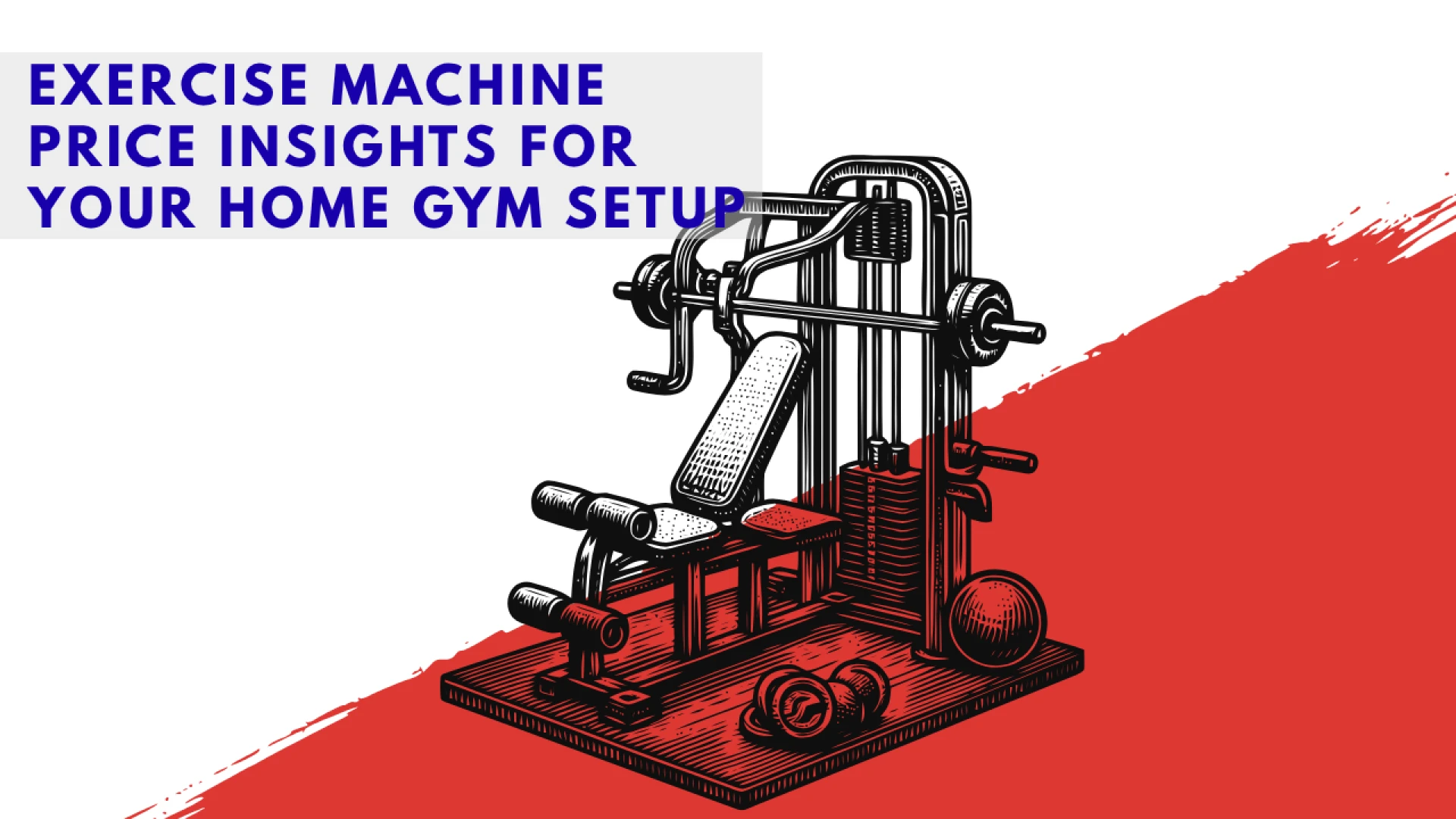
- Power Racks and Multi-Gyms: A compact home multi-gym with a guided weight stack starts around ฿15,000. A robust power rack or functional trainer (for barbell lifts) can range from ฿30,000 to ฿70,000, reflecting the steel gauge and total versatility.
Strategic Budgeting for a Home Gym
To maximize the return on investment in a home gym, consumers must adopt a strategic purchasing philosophy focused on long-term usage.
The "80/20" Rule of Investment
Allocate 80% of your total budget to the equipment you will use 80% of the time, and the remaining 20% to essential accessories.
- Prioritize the Primary Movement: If you are a runner, invest in the best treadmill you can afford, as that is where you will spend the most time and put the most mechanical stress on the equipment. If you are a lifter, invest in the bench, adjustable weights, and a solid power rack structure.
- Start Simple: For beginners, an initial budget of ฿3,000 to ฿10,000 for high-utility, low-cost items like a high-quality yoga mat, resistance bands, a kettlebell, and a pull-up bar can deliver a highly effective workout program before committing to a major machine purchase.
Evaluate the Cost-Per-Use (CPU)
A higher initial Exercise Machine Price often yields a lower CPU over the machine's lifetime, making it the smarter investment.
- Example: Consider a ฿20,000 budget treadmill that needs replacement after two years versus a ฿40,000 mid-range model that lasts eight years. The mid-range machine is significantly cheaper in the long run and provides a superior, safer workout throughout its life. Longevity in fitness equipment is a key driver of value.
- Space Saving Premium: In apartment-heavy Thai cities, always factor in the value of space. Paying a premium for a high-quality foldable treadmill or compact adjustable dumbbells is often justified by the ability to reclaim living space.
Value Over Price
Setting up a home gym is an investment not just in equipment, but in consistency and long-term health. The final Exercise Machine Price must be viewed through the lens of durability, user experience, and the safety features required for your intensity level. By focusing your budget on the mid-range tier for your primary cardio choice (securing good motors and stable frames) and selecting high-quality, space-saving strength gear, you can build a versatile and resilient home gym setup in Thailand that is designed for decades of reliable use, far outweighing the cost of short-term gym memberships.
FAQs
What is the minimum I should spend on a reliable home treadmill in Thailand?
For a reliable treadmill suitable for regular jogging and running, you should budget a minimum of ฿25,000 to ฿30,000. This ensures you get a Continuous Horsepower (CHP) motor of at least 2.5, which can handle running speeds without overheating, and a sufficiently large and cushioned running deck for comfort and joint protection.
Are cheap multi-gyms (below ฿15,000) worth the investment?
For basic resistance exercises and light muscle toning, a cheap multi-gym may suffice. However, if you plan on serious strength training or loading heavy weights, models below ฿15,000 often feature thin cables, low weight stacks, and thin-gauge steel frames with poor stability. It is often a better investment to buy high-quality adjustable dumbbells and a stable bench instead.
Should I pay extra for a machine with a large touchscreen display?
The large touchscreen display is primarily a convenience and motivation feature and significantly drives up the cost. If budget is a concern, you do not need one. A reliable mid-range machine with a simple display and a stand for your own tablet or smartphone will save you ฿15,000 to ฿30,000 and still allow you to access all streaming workout content. Prioritize mechanical quality over screen size.
Why is the warranty so important for exercise machines in Thailand?
The warranty is critical due to the high heat and humidity in Thailand, which can stress electronics and increase the risk of rust. A strong warranty (especially on the motor and frame, lasting 3–5 years) ensures that if a component fails due to climate or manufacturing defects, the local distributor will provide timely service and spare parts, preventing your large investment from becoming unusable scrap metal.