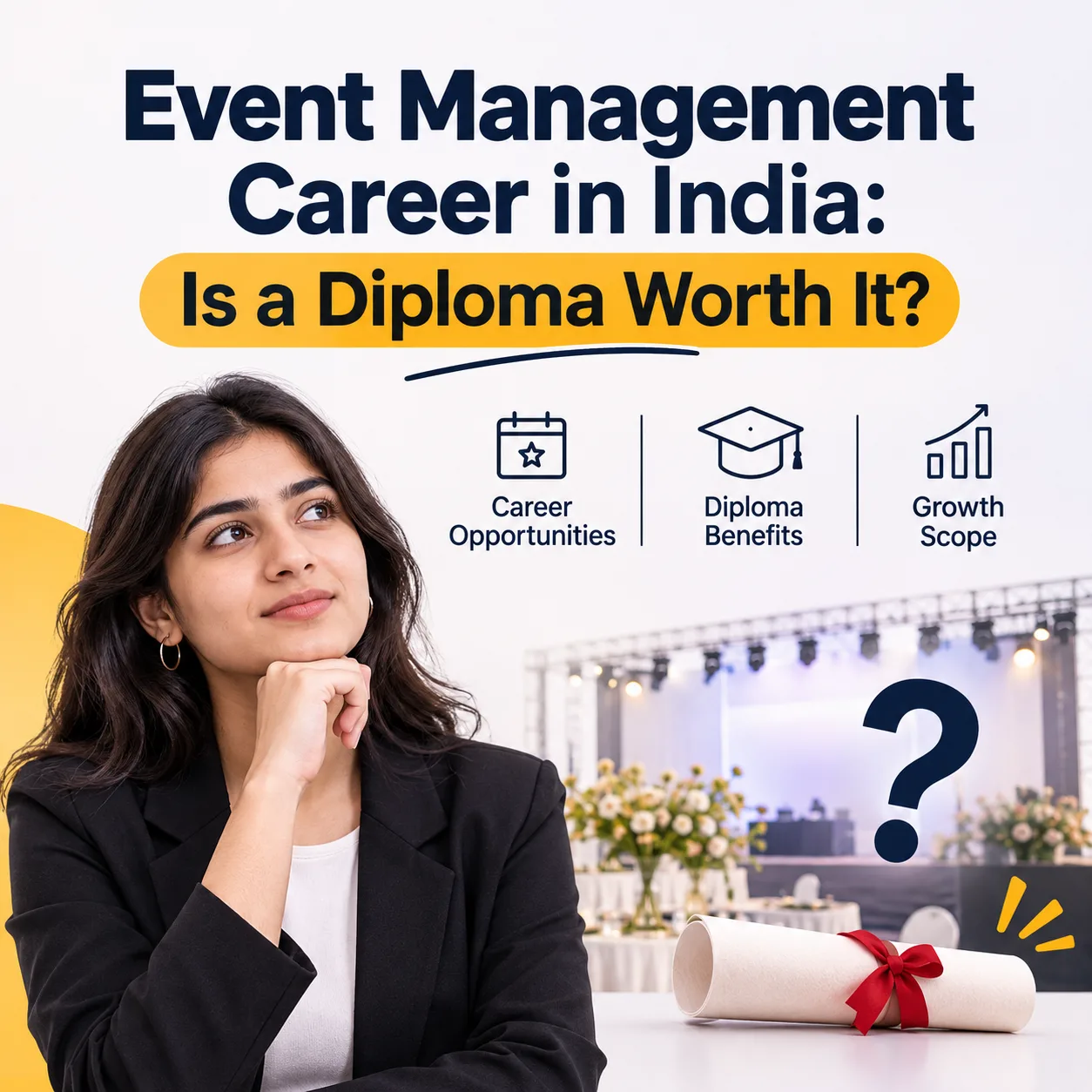
Weddings, concerts, brand launches, college fests, corporate conferences. Every one of them looks smooth on the day, and that is because a team worked behind the scenes for weeks. If you have ever watched an event and thought, “I could do this,” you are not alone. A lot of people are now looking at a diploma in event management course as a way to turn that interest into real work.
This guide explains what the field looks like, what a diploma actually teaches, and how to pick a program that is worth your time and money.
Why events have become a proper career
A few years ago, many families handled their own functions. A relative booked the tent, another one called the caterer, and everyone hoped for the best. That has changed. People now want themed weddings, branded launches, destination celebrations and well-timed corporate meets. Brands spend serious money on live experiences because they know people remember what they see and feel in person.
Because of this, event management has grown into an organised industry with its own roles, budgets and standards. Companies hire event managers, coordinators, producers, vendor handlers and on-ground leads. Many people also start their own event businesses after a few years of experience.
The good part is that this field rewards skill more than paper degrees. If you can plan well, stay calm and deliver on time, people will trust you with bigger events. The hard part is that nobody is born with these skills. You have to learn them, ideally somewhere you can also practise them.
What an event manager really does
Most people think the job is about decoration and good photos. That is maybe ten percent of it. The rest looks more like this:
Understanding the client. Before anything is booked, you need to know what the client wants, who the guests are and what the budget allows. A weak brief leads to a weak event.
Planning and budgeting. You build a timeline, divide the money across venue, food, décor, sound, lighting and staff, and keep a reserve for surprises. There are always surprises.
Managing vendors. You work with caterers, decorators, DJs, photographers, AV teams and transport providers. Good vendor handling means clear instructions, written confirmations and a backup option.
Leading the team on the day. Someone has to make quick decisions when the chief guest is late, the stage light fails or the food count is wrong. That someone is you.
Closing the event properly. Payments, feedback, wrap-up reports and thank-you notes. This is what brings repeat clients.
None of this is magic, but it does need practice. That is where structured training helps.
What a good diploma teaches you
A well-built diploma in event management should take you beyond basic coordination. You should come out knowing how to plan an event from the first client call to the final invoice.
Here are the areas worth looking for in any syllabus:
- Client briefing and event strategy
- Budgeting, finance and sponsorships
- Vendor negotiation and control
- Production planning for concerts, stages and large setups
- Wedding and VIP event handling
- Event marketing and promotion
- Legal basics, permissions and contracts
- Risk and crisis management
- Use of technology in events, including newer tools like AR and VR
- Team leadership and decision-making
Notice that a lot of this is about thinking and leading, not just arranging things. That is what separates someone who assists at events from someone who runs them.
Why practical exposure matters more than theory
You can read about stage setups for a month, but it will not teach you what happens when the generator stops ten minutes before the show. Real learning comes from being on ground, making mistakes in a safe setting and fixing them with guidance.
So when you look at any institute, check how much live work is built into the program. Ask these questions:
- Will I work on real events or only case studies?
- Are the mentors people who actually run events?
- Is there an internship, and is any part of it paid?
- Is there a final project where I plan something from start to finish?
As one example, Event University in Connaught Place, New Delhi, runs a 9-month executive program with 32 modules and 15 mentor sessions. It includes a one-month paid internship followed by a one-month unpaid internship, along with placement assistance. The program also has a capstone project where students plan and deliver a live event under mentor supervision, and a startup lab where students pitch ideas to industry mentors. Whether you choose this institute or another one, this is the kind of structure you should look for. Learning, internship and a real project, all in one path.
Who should consider this course
This kind of training suits more people than you might expect.
Fresh graduates and 12th pass students who want a creative career without sitting through years of unrelated subjects.
Working professionals in marketing, hospitality, sales or administration who want to move into events or take on bigger roles.
Wedding planners and freelancers who already do some work but want proper systems, better pricing sense and a stronger client pitch.
Entrepreneurs who want to start their own event company and need to understand operations, costs and legal basics before spending money.
If you are organised, good with people and comfortable working under pressure, a diploma in event management can give you a clear start. If you hate last-minute changes and long working hours on event days, think carefully, because those are part of the job.
How to choose the right program
There are many options in Delhi and across India, so it helps to compare with a clear checklist. When you evaluate any diploma in event management course, look at these points:
1. Syllabus depth. It should cover planning, finance, production, marketing, legal and leadership. If it only covers décor and basic coordination, it will not take you far.
2. Faculty background. Prefer mentors who currently work in the industry. They bring real contacts, real stories and current practices.
3. Internship and placement support. Ask for specifics. How long is the internship? Is it paid? What kind of companies do students go to? Be careful with anyone promising guaranteed jobs, because no honest institute can promise that. Support and assistance are realistic. Guarantees are not.
4. Live projects. A mentored live event is worth more than ten lectures.
5. Duration that fits your goal. A short course is fine for learning basics. If you want a leadership role or plan to build your own company, a longer program gives you more depth and more practice.
6. Alumni and network. Event work runs on relationships. An active alumni network can bring you referrals years after the course ends.
7. Honest conversation. Visit the campus or attend a demo session. Ask questions. If the counsellor answers clearly and does not push you to sign up the same day, that is a good sign.
Career paths after the course
Once you finish, there are several directions you can take:
- Event coordinator or event executive in an agency
- Wedding planner or wedding designer
- Corporate event and conference manager
- Concert and live show production assistant
- Brand activation and promotion executive
- Sponsorship and partnership manager
- Hospitality and venue operations roles
- Your own event company
Many people start as coordinators, learn the ground reality for a year or two, and then move into senior or independent roles. Event management rewards people who keep learning, keep a good vendor list and treat every client like a long-term relationship.
A few honest tips before you start
Start small. Volunteer at college fests, family functions or local community events. Take photos and keep notes about what worked and what did not. Build a simple portfolio, even if it only has three or four events in it.
Learn to talk about money clearly. Many new planners lose profit because they are shy about pricing. Understand your costs, add your fee and explain it calmly.
Finally, be patient. The first year can feel tiring, with long days and small pay. But people who stay consistent and deliver well usually find that their name gets passed from one client to the next.
Final thoughts
Events are not going away. People will keep celebrating, brands will keep launching, and companies will keep gathering their teams. The demand for trained, reliable people who can run these events smoothly is real and growing.
If you are serious about building a career here, choose a program that gives you structure, mentors and hands-on practice. A well-planned diploma in event management course can save you years of trial and error and help you step into the industry with confidence.