
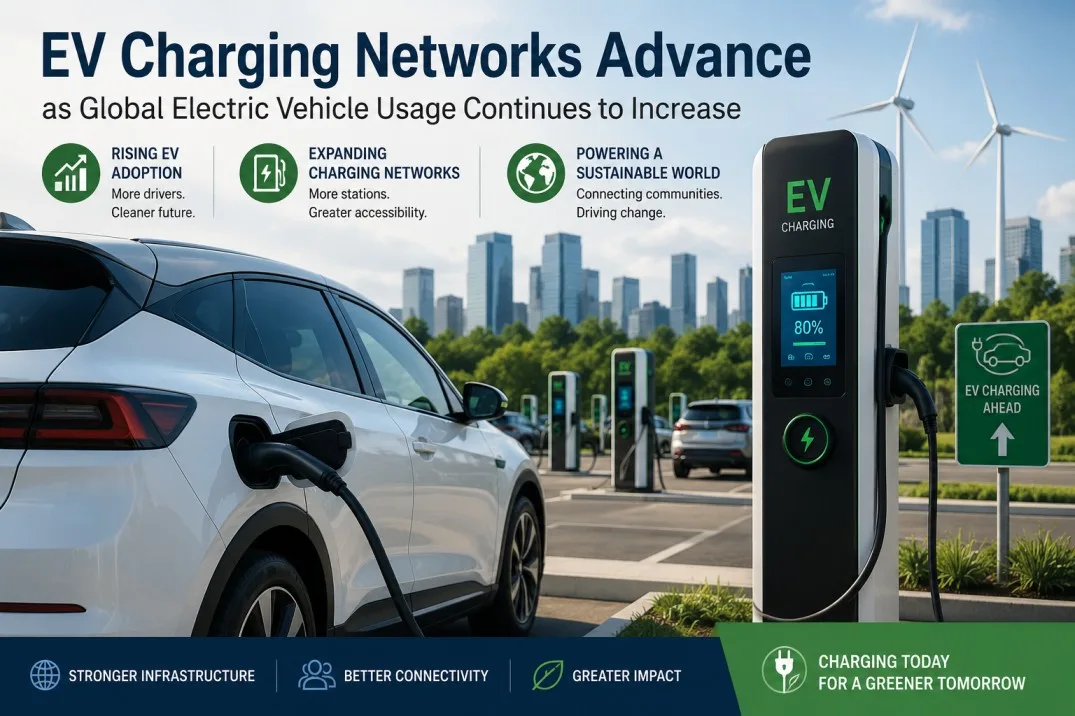
The global transportation industry is undergoing one of the most significant transformations in its history. Electric vehicles are no longer viewed as a future concept; they have become a growing reality. As governments, businesses, and consumers shift toward cleaner mobility solutions, the demand for EV charging infrastructure continues to rise at an unprecedented pace.
According to industry reports, global electric vehicle sales surpassed 17 million units in recent years, accounting for a growing share of total automobile sales worldwide. Analysts predict that EV adoption will continue to increase throughout the decade, creating a strong demand for reliable and accessible EV charging networks. As a result, EV charging has emerged as one of the most important sectors within the clean transportation ecosystem.
Why Is EV Charging Becoming Essential?
Electric vehicles depend on efficient charging infrastructure to operate effectively. Unlike conventional vehicles that rely on fuel stations, EVs require charging stations located at homes, workplaces, public destinations, and highway corridors.
The availability of EV charging platforms directly influences consumer confidence in electric mobility. Studies show that one of the primary concerns among potential EV buyers is charging accessibility. Expanding charging infrastructure helps address this concern and encourages more drivers to transition to electric transportation.
Many countries have introduced ambitious targets for reducing carbon emissions and increasing electric vehicle adoption. To support these goals, governments are investing billions of dollars in EV charging projects, making charging infrastructure a key component of future transportation planning.
Global EV Charging Market Shows Strong Growth
The EV charging market is experiencing remarkable expansion. Market research indicates that the global EV charging infrastructure sector is expected to grow at a compound annual growth rate exceeding 25% over the coming years.
Several factors are driving this growth:
- Rising electric vehicle sales
- Government incentives for EV adoption
- Expansion of public charging networks
- Corporate sustainability initiatives
- Growing investment in renewable energy
- Increasing demand for smart charging technologies
As EV ownership continues to increase, charging infrastructure providers are racing to install more charging stations across urban centers, commercial properties, and transportation routes.
Understanding Different Types of EV Charging
Modern EV charging platform solutions are designed to meet varying driver needs and usage scenarios.
Level 1 Charging
Level 1 charging uses a standard electrical outlet and is commonly used for residential charging. While it provides the slowest charging speed, it remains a practical option for overnight charging.
Drivers with shorter daily commutes often find Level 1 charging sufficient for their requirements.
Level 2 Charging
Level 2 charging stations are significantly faster and are commonly installed in homes, workplaces, shopping centers, hotels, and parking facilities.
Industry data suggests that Level 2 chargers account for a large percentage of publicly accessible charging stations worldwide due to their balance of affordability and charging performance.
DC Fast Charging
DC Fast Charging offers rapid charging that replenishes vehicle batteries much faster than conventional charging methods.
These chargers are increasingly deployed along highways and major travel routes. In some cases, fast-charging stations can provide substantial battery capacity in 20 to 40 minutes, making long-distance EV travel more convenient.
The Role of Smart EV Charging
Technology is transforming how charging stations operate. Smart EV charging systems use software platforms to monitor, manage, and optimize charging activities in real time.
Key features commonly found in modern charging platforms include:
- Remote charger monitoring
- Mobile app integration
- User authentication
- Dynamic pricing controls
- Automated billing systems
- Energy management tools
- Usage analytics and reporting
- Fleet charging management
Smart charging allows operators to improve station performance while providing a better experience for EV drivers.
Businesses Are Investing in EV Charging
Organizations across multiple industries are increasingly adopting EV charging infrastructure as part of their growth strategies.
Retail centers use charging stations to attract visitors and encourage longer customer stays. Hotels provide charging facilities as an added convenience for guests. Office buildings install chargers to support employees who drive electric vehicles.
Research shows that locations offering EV charging services often experience increased customer engagement and stronger brand perception. Consumers increasingly favor businesses that demonstrate environmental responsibility and support sustainable transportation.
For many companies, EV charging is becoming both a customer service enhancement and a strategic business investment.
Fleet Electrification Creates New Opportunities
Commercial fleet operators are among the largest adopters of EV charging solutions. Delivery companies, transportation providers, logistics firms, and municipal organizations are transitioning portions of their fleets to electric vehicles.
Fleet electrification offers several advantages:
- Lower fuel expenses
- Reduced maintenance costs
- Improved sustainability performance
- Compliance with environmental regulations
- Reduced operational emissions
As fleet adoption increases, dedicated charging infrastructure becomes critical for maintaining efficient vehicle operations.
Many businesses are deploying private charging stations specifically designed to support fleet management requirements.
Challenges Facing EV Charging Expansion
Despite strong growth, the industry faces several challenges that must be addressed.
Infrastructure Costs
Installing charging stations requires investment in equipment, electrical upgrades, and site preparation.
Grid Capacity
As charging demand increases, electrical grids must adapt to support higher energy consumption levels.
Charger Availability
Some regions still have limited charging coverage, creating accessibility concerns for drivers.
Standardization
Compatibility between vehicles, charging networks, and payment systems remains an ongoing industry focus.
Addressing these challenges will be essential for supporting future EV adoption and maintaining reliable charging services.
Conclusion
EV charging is no longer simply a supporting service for electric vehicles; it is becoming a cornerstone of the global mobility transition. EV adoption, increasing infrastructure investments, and advances in charging technology are reshaping how people travel and how businesses operate.
As charging networks continue to expand and smart charging technologies become more advanced, EV charging will play an even greater role in supporting sustainable transportation worldwide. Organizations that invest in EV charging today are positioning themselves to benefit from the continued growth of the electric vehicle market while contributing to a cleaner and more connected future.