Investors want to know how a company manages its environmental and social impact. Customers want evidence behind sustainability claims. Regulators expect companies to disclose relevant information in a structured format.
This is where ESG reporting in India comes in. It helps businesses document their environmental, social and governance practices, measure progress and identify areas that need improvement.
But what does ESG reporting involve? Who needs to prepare these disclosures, and how can companies get started?
What Is ESG Reporting?
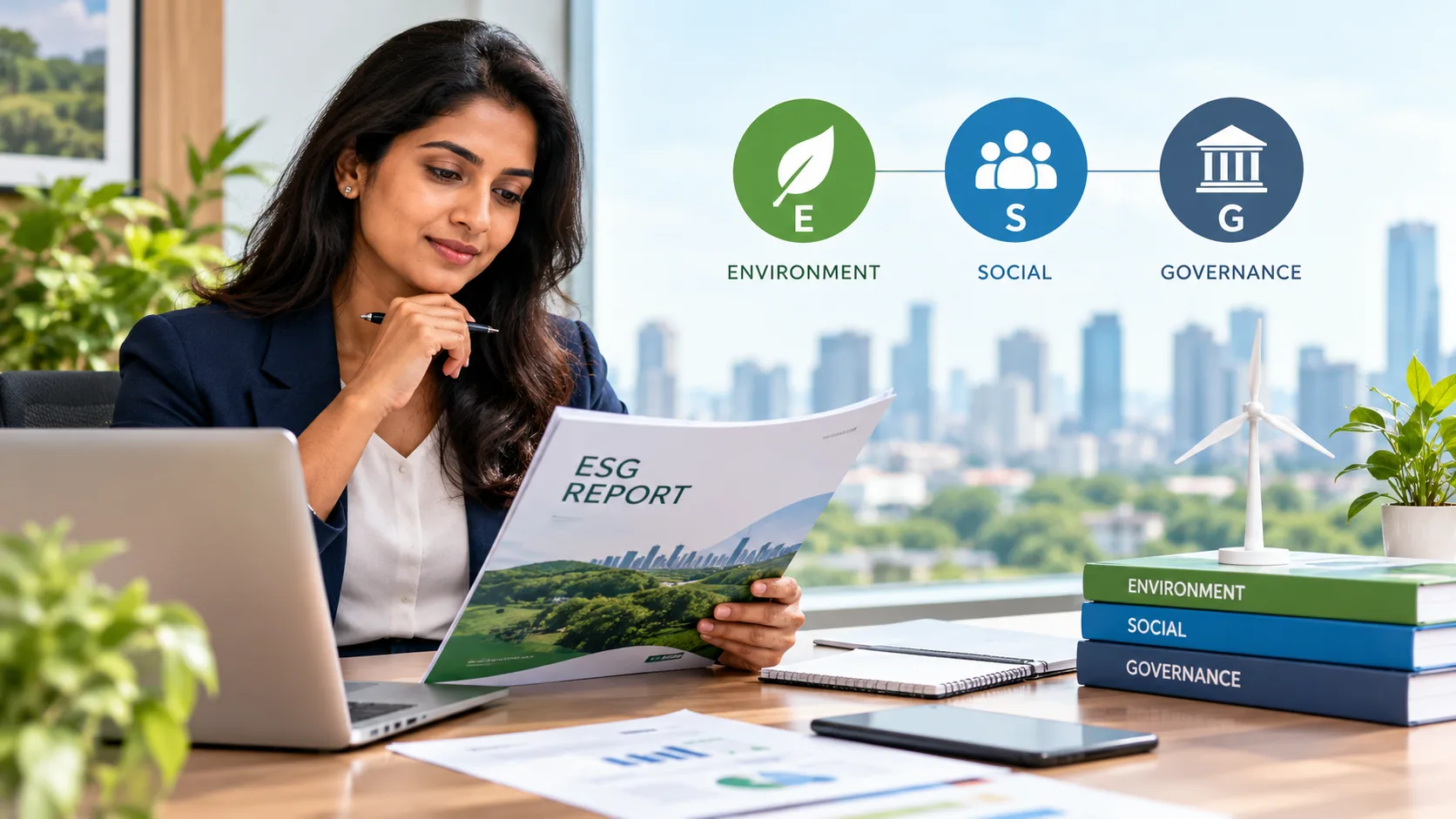
ESG stands for Environmental, Social and Governance. An ESG report explains how a business manages its impact, responsibilities and risks across these three areas.
Environmental reporting covers energy consumption, emissions, water use and waste management. Social disclosures include employee safety, diversity, wellbeing and supply chain practices. Governance focuses on board structure, business ethics, transparency and risk management.
The aim is to support claims with measurable information. A company should report what it has achieved, where it falls short and what it plans to improve.
Why Does ESG Reporting Matter in India?
There are three main reasons.
First, regulatory compliance. The Securities and Exchange Board of India (SEBI) requires the top 1,000 listed companies by market capitalisation to submit a Business Responsibility and Sustainability Report (BRSR).
Second, investor expectations. Investors may assess ESG disclosures when evaluating a company's risks, business practices and long-term prospects.
Third, business relationships. Large buyers, lenders and international customers may ask suppliers for sustainability data before making commercial decisions.
Even companies outside the mandatory reporting group can benefit from preparing their ESG data early.
What Is BRSR and How Does It Work?
BRSR is SEBI's reporting framework for responsible business practices. It covers general company information, governance policies and performance against the nine principles of the National Guidelines on Responsible Business Conduct.
SEBI also introduced BRSR Core, which focuses on selected sustainability indicators and assurance requirements for covered companies.
Requirements and timelines can change, so companies should check the latest SEBI circulars before preparing their disclosures. Businesses working with international stakeholders may also consider frameworks such as GRI and IFRS sustainability standards, depending on their reporting needs.
How Do You Prepare an ESG Report?
Start by checking what your company already tracks.
Step 1: Assess the gaps
Compare existing records and policies with the applicable reporting requirements. Identify missing data, unclear responsibilities and areas where documentation needs improvement.
Step 2: Identify material issues
Not every ESG issue has the same importance for every business. A steel manufacturer may prioritise emissions and worker safety, while a technology company may focus on data privacy and employee retention.
Step 3: Collect reliable data
Bring information together from departments such as finance, HR, operations and legal. Assign responsibility for each data point and use a consistent method to measure performance.
Step 4: Verify and present the findings
Check the figures and obtain third-party assurance where required. Then present the results through clear headings, charts and concise explanations. Readers should be able to understand the findings without working through pages of technical language.
What Mistakes Should Companies Avoid?
Late data collection can create gaps in the final report. Leaving the work to one department can also lead to incomplete disclosures because ESG information sits across the business.
Companies should avoid overstating their achievements or ignoring supply chain impacts. Honest reporting, clear targets and year-on-year comparisons make disclosures more useful.
Final Thoughts
ESG reporting in India requires more than preparing a document at the end of the financial year. Companies need reliable data, clear responsibilities and an accurate account of their performance.
Start with a gap assessment, identify the issues that matter to your business and build a regular data collection process. A clear, evidence-based report helps companies meet applicable requirements and communicate their sustainability performance with greater confidence.