
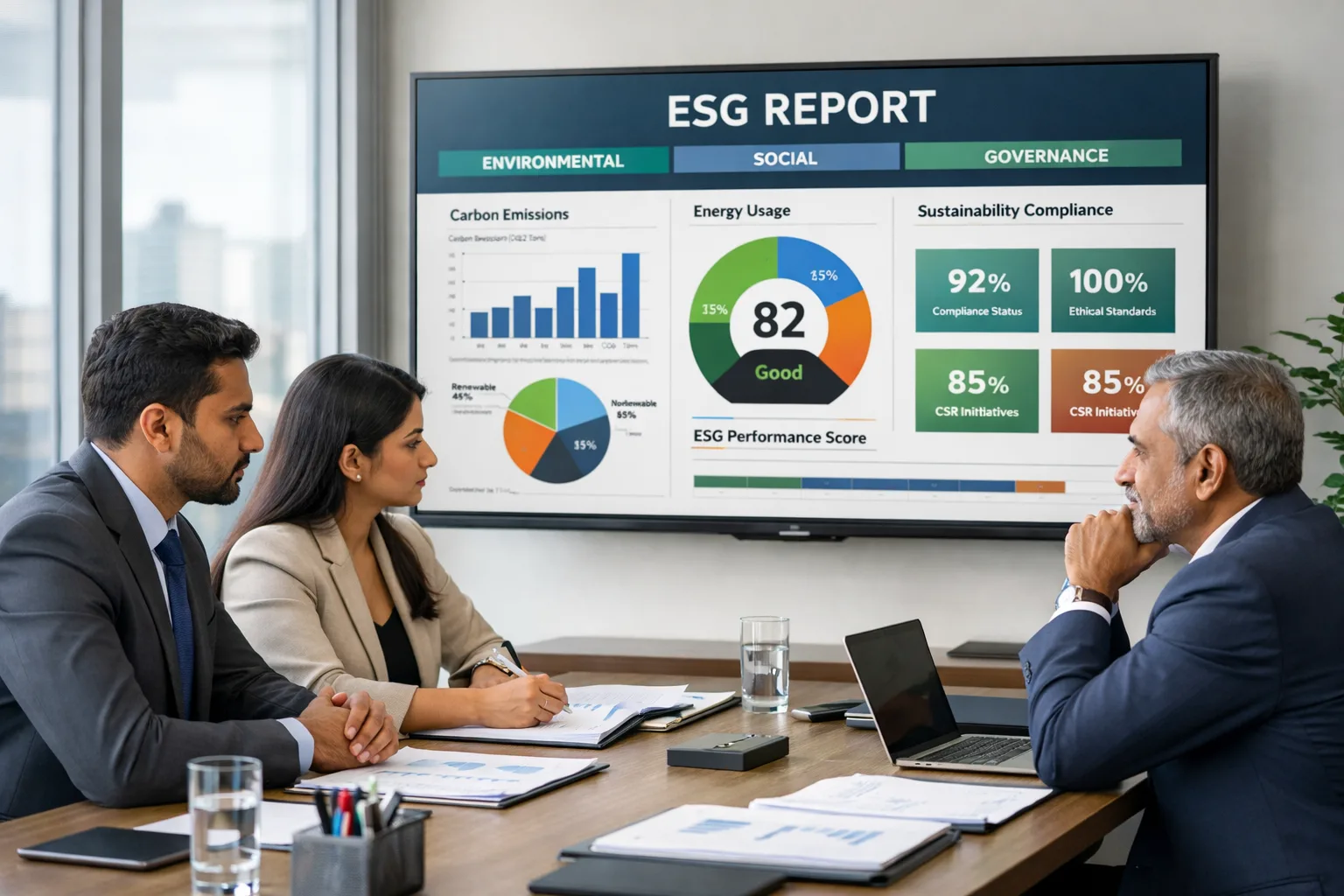
The corporate landscape in India has shifted. The voluntary nature of ESG reporting in India has evolved into a mandatory requirement for organizations. Your annual disclosures for the 2026-27 period require you to demonstrate your claims because your current approach only relies on your statements.
SEBI has established specific requirements that organizations must meet through their precise data handling and effective communication strategies. The BRSR or Business Responsibility and Sustainability Report framework requires you to understand its details (since it affects your ability to maintain investor trust and comply with regulations).
The 2026 ESG Scene: Moving From Voluntary Disclosure to Mandatory Assurance
The transition to BRSR Core represents the most significant change for large Indian entities. By the financial year 2026-27, the top 1000 listed companies must provide reasonable assurance for their disclosures. That means your data must undergo scrutiny similar to that in financial audits. You cannot rely on broad estimations.
Value chain transparency has also become a priority. The reporting boundaries now extend beyond your immediate operations. You must track the environmental and social performance of your top 250 value chain partners. This shift forces you to engage deeply with suppliers to gather accurate data on their carbon footprint and labour practices.
Indian reporting standards are now aligning with global benchmarks. Whether it is the Global Reporting Initiative (GRI) or the International Sustainability Standards Board (ISSB) frameworks, such as IFRS S1 and S2, the goal is interoperability. International investors look for consistency. If you align your BRSR data with these global expectations, you improve your access to international capital.
Primary Compliance Requirements for BRSR Reporting
A materiality assessment is your first step. You need to identify which environmental, social, and governance issues actually affect your business value. This process involves talking with your stakeholders and assessing your industry risks. It helps you focus your resources on the factors that drive long-term trust.
Data traceability is the backbone of a successful report. You should establish internal controls for the nine BRSR Core attributes. That makes your data "assurance-ready." When an auditor looks at your water consumption or employee turnover rates, they should see a clear trail from the raw data to the final number in the report.
Gap analysis helps you stay ahead of SEBI benchmarks. By using diagnostic tools, you can find where your current disclosures fall short of new requirements. This proactive approach prevents last-minute scrambles during the audit season. You should also move away from vague stories toward quantitative metrics. Measuring GHG emissions in tonnes of CO2 equivalent, or in energy intensity per unit of revenue, provides the clarity that regulators and analysts demand.
Making Design Work for Your ESG Communication
Design is a strategic tool, not just a way to make pages look pretty. Information design helps you turn complex ESG data into something readable. When you use charts to show diversity ratios or carbon intensity, you help investors quickly grasp your progress. Data-heavy reports often fail because they are too difficult to scan.
Narrative continuity connects your high-level corporate vision with your performance data. Your Chairman's statement should not feel like it belongs in a different book from your safety metrics. A well-designed report tells a single, cohesive story of stewardship. You are showing how your purpose leads to measurable outcomes.
The shift toward interactive digital reports is accelerating. Static PDFs are becoming less important than web-based modules. These platforms let your stakeholders click through specific data points that interest them. It makes the information more accessible and useful for different audiences. Brand alignment is also vital. Your sustainability narrative must reinforce your corporate identity. If your ESG report looks and feels like your brand, it builds more credibility than a generic template.
How to Prepare an Audit-Ready ESG Report
The only way to achieve consistent data results is for teams from various departments to collaborate. Your organization needs to unite its Finance, HR, and Safety departments. The departments produce conflicting reports when they operate independently and do not share their information. The heads of these departments hold regular meetings to guarantee that BRSR data maintains consistent standards.
You must use standardized methodologies for all your calculations. Your organization needs to apply established procedures, including the GHG Protocol, to protect your numeric data during external evaluation. Your organization can minimize reputational damage by implementing this practice.
Stakeholders must be involved in the process because it now requires documentation. You need to create documentation that shows your interactions with investors and employees along with members from your local community. The report demonstrates your commitment to listening to people who are vital for your business success by including those insights.
The Value of Strategic Reporting Partnerships in 2026
Expertise across the entire reporting cycle is a significant advantage. A 360-degree approach covers everything from initial research and content development to high-fidelity design. It ensures that the technical data and the creative narrative are developed in tandem rather than as afterthoughts.
The organization needs to employ professionals who hold Integrated Reporting and BRSR certification in 2026. The experts possess knowledge about SEBI requirements. This enables them to assist you in understanding the 2026-27 regulations. They provide technical oversight to keep you compliant.
Wrap up
Contemporary reporting relies significantly on technological advancements. Your complete reporting process can be improved through the use of specialized tools which provide impact assessment and digital adaptation capabilities. The system performs all necessary data collection tasks while you concentrate on developing your strategic plans. The use of these tools enables you to create a report which maintains precise content and meets its scheduled delivery time.
The current regulatory environment treats ESG reports as more than marketing documents. The document serves as a critical financial instrument. The achievement of success depends on combining precise data measurements with effective visual communication methods.
FAQs
How does BRSR Core differ from the standard BRSR framework?
BRSR Core operates as an element within the broader framework. It includes multiple elements. The system requires third-party auditor verification for all essential KPIs.
How can you ensure your ESG data is ready for audit?
Organizations must develop strong internal governance systems, along with comprehensive data-tracking systems. The implementation of standardized calculation methods (together with cross-departmental reviews) ensures that all data remains accurate & can be audited.
Why is design significant for an ESG report?
Design translates data into clear insights. Professional visualization helps you communicate your sustainability progress to investors as well as stakeholders effectively. This makes your report more than just a compliance document.