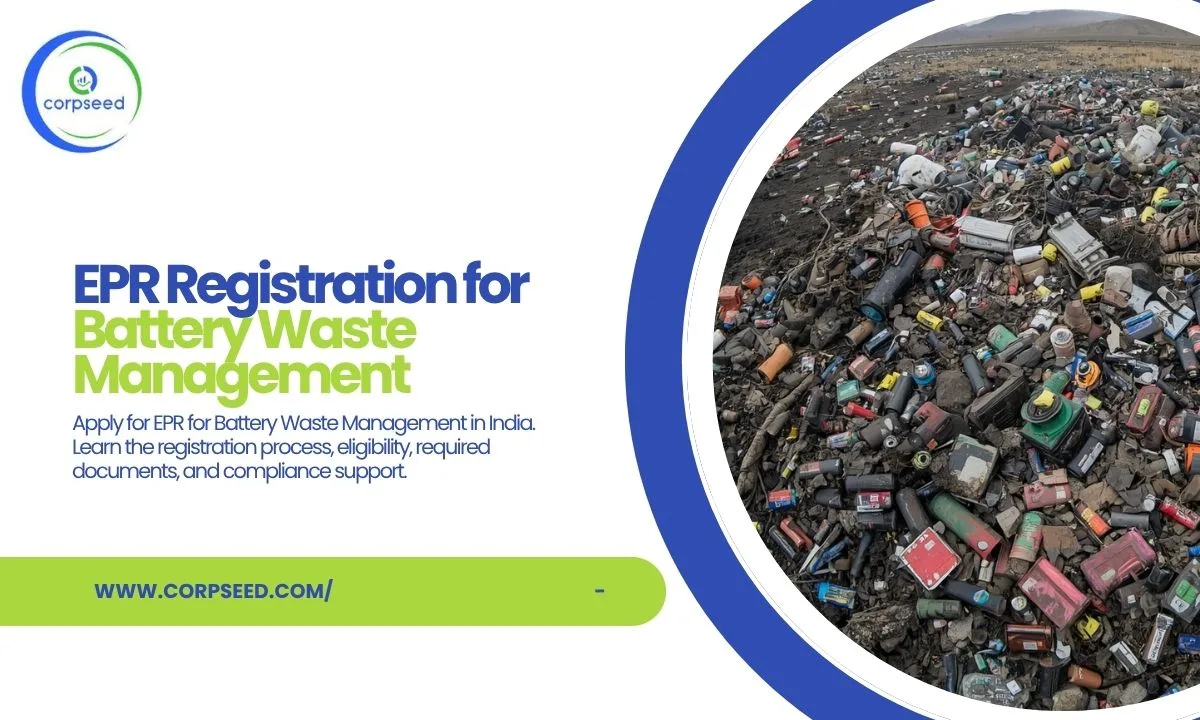
The demand for batteries in India is increasing rapidly due to the growth of electric vehicles, renewable energy, and electronic devices. However, improper disposal of used batteries can lead to serious environmental hazards. To address this issue, the government has made EPR registration for battery mandatory under the Battery Waste Management Rules, 2022.
If your business manufactures, imports, or sells batteries, complying with these rules is essential. Understanding epr battery waste management will not only help you meet legal requirements but also improve your brand’s sustainability efforts.
What is EPR Registration for Battery?
Extended Producer Responsibility (EPR) is a policy that makes producers responsible for the entire lifecycle of batteries, including their collection and recycling.
Under EPR registration for battery, businesses are required to:
- Collect used batteries from consumers
- Ensure safe recycling or disposal
- Meet annual recycling targets
This approach reduces environmental damage and promotes efficient waste management.
Legal Framework for EPR Battery Waste in India
The Battery Waste Management Rules, 2022, introduced by the Ministry of Environment, Forest and Climate Change (MoEFCC), regulate battery waste handling in India.
Key Highlights:
- Covers all battery types:
- Portable batteries
- Automotive batteries
- Industrial batteries
- Electric vehicle batteries
- Mandatory registration via Central Pollution Control Board (CPCB)
- Introduction of EPR certificates (recycling credits)
- Strict penalties for non-compliance
Reference Sources:
- Ministry of Environment, Forest and Climate Change (MoEFCC)
- Central Pollution Control Board (CPCB)
- NITI Aayog
Who Needs EPR Registration for Battery?
The following entities must obtain EPR registration:
Producers
- Manufacturers of batteries
- Brand owners selling batteries
Importers
- Businesses importing batteries or battery-powered products
Assemblers
- Companies integrating batteries into devices
Recyclers & Refurbishers
- Must register separately and generate EPR credits
Types of Batteries Covered Under EPR
EPR rules apply to all major battery categories:
- Portable Batteries (mobiles, laptops, gadgets)
- Automotive Batteries (vehicles)
- Industrial Batteries (UPS, telecom systems)
- EV Batteries (lithium-ion batteries)
Step-by-Step Process for EPR Registration for Battery
Step 1: Prepare Documents
Collect all required documents related to your business and products.
Step 2: Register on CPCB Portal
Create an account on the CPCB EPR portal.
Step 3: Submit Application
Fill in business details, upload documents, and provide battery-related data.
Step 4: Submit EPR Plan
Outline your strategy for battery collection and recycling.
Step 5: Application Review
CPCB reviews your submission and may ask for clarification.
Step 6: Approval & Certification
Once approved, your EPR registration is granted, typically valid for 5 years.
Documents Required for EPR Registration
- Company PAN (identity verification)
- GST Certificate (business registration proof)
- Import Export Code (required for importers)
- Certificate of Incorporation (CIN) or business registration proof
- Battery details (type, capacity, specifications)
- Authorized signatory ID proof
- Authorization letter (if applying through a consultant)
- Business address proof
- EPR plan for collection and recycling
EPR Targets and Compliance Requirements
Producers must meet annual recycling targets based on the quantity of batteries introduced in the market.
Key Responsibilities:
- Collect used batteries
- Ensure recycling through authorized recyclers
- Purchase EPR credits if targets are unmet
- File annual returns
Example:
If a company sells 1,000 batteries, it must ensure a fixed percentage is collected and recycled in future years.
EPR Certificates (Credits) Explained
EPR certificates are issued by authorized recyclers as proof of recycling.
How It Works:
- Producer purchases EPR credits
- Recycler processes battery waste
- CPCB tracks compliance digitally
This system ensures transparency in epr battery waste management.
Benefits of EPR Registration for Battery
Environmental Benefits:
- Reduces pollution
- Prevents hazardous waste leakage
- Promotes recycling
Business Benefits:
- Ensures legal compliance
- Enhances brand credibility
- Builds customer trust
Economic Benefits:
- Supports circular economy
- Encourages efficient resource use
Penalties for Non-Compliance
Failure to comply with EPR rules may result in:
- Environmental fines
- Suspension of operations
- Legal action
Authorities actively monitor compliance through digital systems.
Challenges in EPR Battery Waste Management
Common challenges include:
- Low consumer awareness
- Limited recycling infrastructure
- High compliance costs
- Complex regulatory procedures
These can be managed with proper planning and professional support.
Best Practices for EPR Compliance
- Partner with authorized recyclers
- Maintain accurate records
- Track targets regularly
- Use digital compliance tools
- Educate customers on safe disposal
Internal Resources
- EPR for Plastic Waste Management
- E-Waste Management Authorization
- Annual Compliance Services
FAQs on EPR Registration for Battery
1. What is EPR registration for battery?
It is a mandatory approval requiring businesses to manage battery waste collection and recycling.
2. Who is responsible for epr battery waste management?
Producers, importers, and assemblers are responsible.
3. How long does the registration process take?
Usually 15–30 working days, depending on application accuracy.
4. What happens if EPR targets are not met?
Businesses may face penalties or need to purchase additional EPR credits.
5. Is EPR mandatory for small businesses?
Yes, all businesses introducing batteries into the market must comply.
Conclusion
EPR registration for battery is essential for ensuring responsible disposal and recycling of batteries in India. It helps businesses stay compliant while contributing to environmental protection through effective epr battery waste management.
By following the correct process and maintaining compliance, companies can avoid penalties and build a sustainable brand.