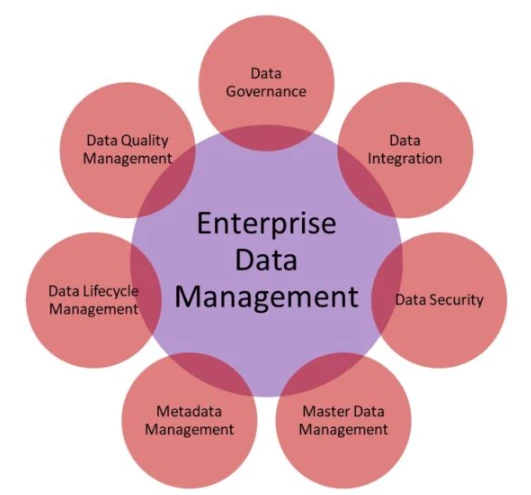
Data is the lifeblood of contemporary enterprises in the digital age. Every day, businesses produce enormous volumes of data, ranging from operational indicators to consumer interactions. But simply gathering data is insufficient. Businesses require efficient Enterprise Data Management (EDM) in order to derive meaningful insights and preserve a competitive edge. The strategic approach to managing, arranging, and leveraging data assets within a company is known as enterprise data management. Businesses may become fully data-driven thanks to its assurance of data accessibility, security, and correctness.
Understanding Enterprise Data Management
Enterprise Data Management involves the systematic handling of data throughout its lifecycle, from creation and storage to usage and disposal. It encompasses a wide range of practices, including data governance, data integration, master data management, and data security. The primary objective of Enterprise Data Management is to ensure that data is accurate, consistent, and secure, thereby enhancing decision-making and operational efficiency.
In today’s data-driven landscape, effective Enterprise Data Management is critical for organizations to manage data complexity and volume. It provides a centralized framework for data processing, integration, and governance, eliminating data silos and ensuring data consistency. By implementing robust Enterprise Data Management practices, organizations can maximize the value of their data assets and drive strategic growth.
Key Benefits of Enterprise Data Management
Enhanced Decision-Making
One of the most significant advantages of Enterprise Data Management is improved decision-making. By ensuring data accuracy and consistency, EDM provides a reliable foundation for business intelligence and analytics. Organizations can leverage real-time insights to make informed decisions, identify new opportunities, and respond swiftly to market changes.
Operational Efficiency and Cost Savings
By removing data silos and optimizing procedures, centralized enterprise data management lowers operational expenses and redundancies. By guaranteeing that workers have rapid, secure access to correct data, it also increases productivity by reducing errors and delays.
Data Security and Compliance
With the rise of data privacy regulations such as GDPR and CCPA, data security and compliance have become top priorities for businesses. Enterprise Data Management incorporates advanced security measures, including encryption, access controls, and audit trails, to protect sensitive information. It also ensures compliance with regulatory standards, reducing the risk of data breaches and legal penalties.
Customer Experience and Personalization
Effective Enterprise Data Management enables organizations to gain a 360-degree view of their customers by integrating data from various touchpoints. This comprehensive view allows businesses to personalize customer interactions, enhance customer experiences, and build stronger customer relationships.
Core Components of Enterprise Data Management
Data Governance
The cornerstone of enterprise data management is data governance. It entails creating guidelines, norms, and practices for data security, compliance, and utilization. By ensuring data integrity, accountability, and ethical use, data governance reduces risks and upholds customer confidence.
Master Data Management (MDM)
Master Data Management focuses on centralizing and standardizing critical business data entities, such as customer, product, and supplier information. By implementing MDM as part of Enterprise Data Management, organizations can eliminate data inconsistencies, improve data quality, and support business operations.
Data Integration and Data Warehousing
Data integration involves consolidating data from multiple sources into a unified platform, enabling seamless data analysis and reporting. Data warehousing stores this integrated data, supporting business intelligence and advanced analytics. These components are essential for Enterprise Data Management, ensuring data accessibility, consistency, and real-time insights.
Data Security and Privacy
A crucial component of enterprise data management is data security, particularly in light of the growing worries about cyberthreats and data breaches. To protect sensitive data, EDM systems include strong security features including audit logs, access limits, and data encryption. In addition, thorough data governance systems guarantee adherence to data protection measures.
Challenges in Enterprise Data Management
Despite its numerous benefits, Enterprise Data Management also presents challenges, including:
Data Silos and Integration Complexity: Integrating data from disparate systems can be challenging, leading to data silos and inconsistencies.
Data Quality Issues: Inaccurate or inconsistent data can impact decision-making and business outcomes.
Regulatory Compliance: Navigating complex data protection regulations requires comprehensive compliance strategies.
Change Management and Adoption: Implementing new data management practices may face resistance from employees, necessitating cultural change and training.
To overcome these challenges, organizations should:
Develop a Unified Data Strategy: Establish a centralized Enterprise Data Management framework to eliminate data silos and ensure data consistency.
Adopt Advanced Technologies: Leverage cloud-based EDM solutions for scalability, flexibility, and real-time data processing.
Implement Data Quality Measures: Use data cleansing, validation, and monitoring tools to maintain data accuracy and reliability.
Promote Data Literacy and Culture: Foster a data-driven culture by educating employees on data governance, security, and best practices.
The Role of Cloud and AI in Enterprise Data Management
The adoption of cloud technologies and artificial intelligence (AI) has significantly impacted Enterprise Data Management. Cloud-based EDM solutions provide scalability, flexibility, and cost-efficiency, enabling organizations to handle growing data volumes and complexity. They also support data analytics and AI initiatives, driving innovation and enhancing business agility.
AI-powered Enterprise Data Management tools can automate data integration, cleansing, and analysis, reducing manual efforts and enhancing productivity. Advanced AI algorithms can also detect data anomalies and predict trends, enabling proactive decision-making and risk management.
Conclusion:
Enterprise data management is now a strategic enabler of digital transformation rather than only a technical requirement. Organizations can gain a competitive edge, improve operational efficiency, and improve decision-making by putting strong EDM practices into place. Enterprise data management will become even more crucial as data volume and complexity continue to climb. To remain competitive, compliant, and data-driven, organizations need to invest in cutting-edge EDM solutions. Businesses can unleash the full potential of their data assets, spur innovation, and achieve sustainable growth by embracing cutting-edge technologies like cloud computing and artificial intelligence.
In conclusion, Enterprise Data Management is the key to building a data-driven organization that thrives in the digital age. By strategically managing data assets, businesses can transform challenges into opportunities, achieve operational excellence, and lead the way in a rapidly evolving digital landscape.