Water rescue and recovery operations require specialized equipment, rapid deployment, and precise coordination. Dive teams must be prepared to respond at a moment’s notice, often in unpredictable and hazardous environments. A well-designed dive unit trailer provides a centralized, mobile solution for storing, organizing, and transporting critical dive equipment efficiently and safely.
Unlike standard cargo trailers, a dive unit trailer is customized to meet the unique needs of public safety dive teams. It is specifically engineered to house diving gear, communication systems, lighting equipment, and recovery tools in a structured and accessible layout. This organization reduces response times and ensures teams are always mission-ready.
Purpose-Built Storage and Organization
Dive teams rely on a wide range of equipment, including scuba tanks, regulators, dry suits, wetsuits, helmets, ropes, sonar systems, and medical kits. Without a structured storage system, transporting this equipment can become disorganized and inefficient.
A professionally designed dive unit trailer includes tank racks, secure mounting brackets, adjustable shelving, slide-out trays, and labeled compartments. These features keep equipment protected during transit and allow team members to quickly locate what they need upon arrival at a scene. Organized storage also helps extend the lifespan of expensive gear by minimizing damage and wear.
Customization for Operational Needs
Every dive team has unique operational requirements depending on the types of missions they handle. Some focus on underwater search and recovery, while others specialize in swift water rescues or disaster response.
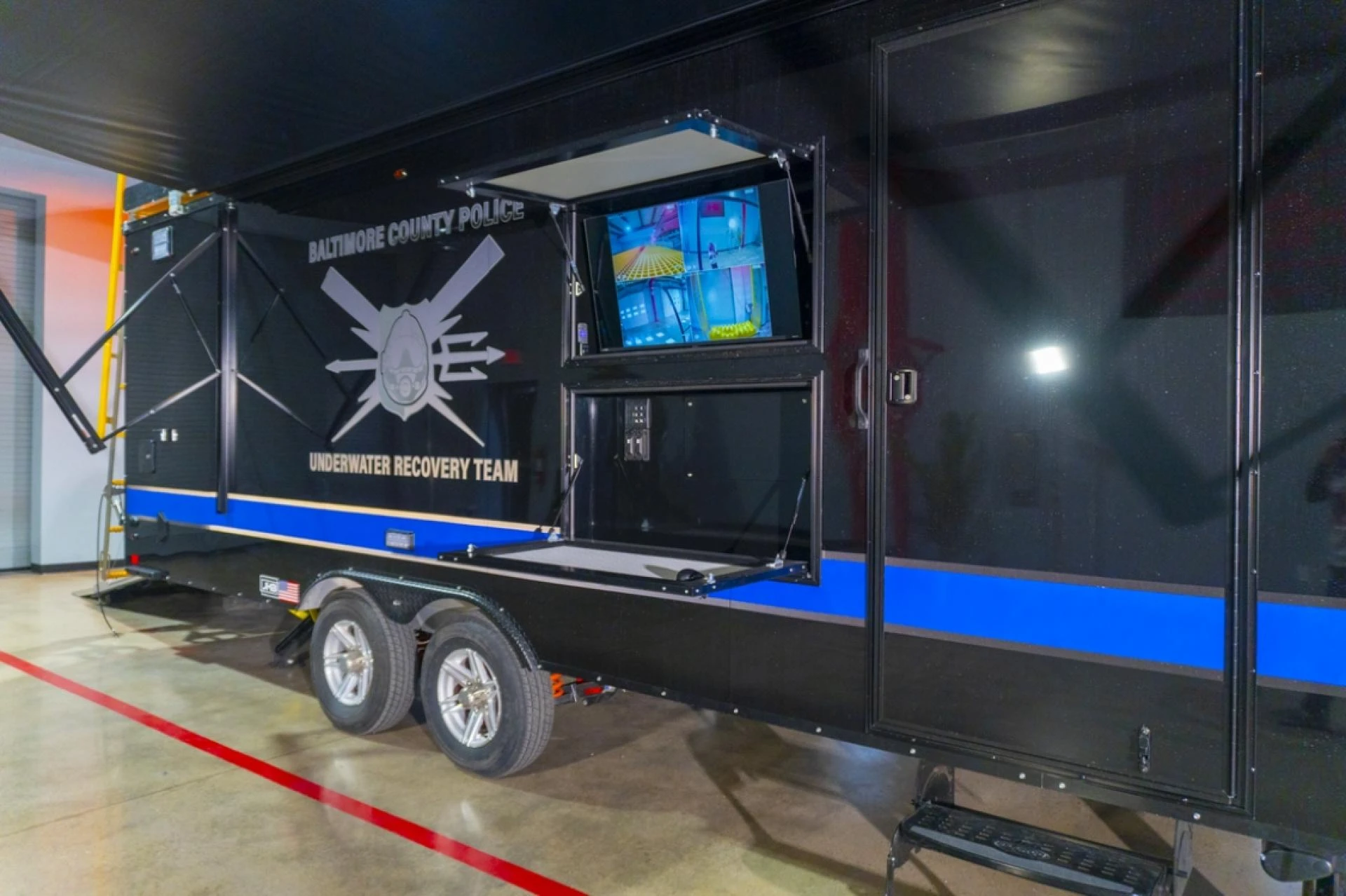
A customized dive unit trailer can include features such as onboard generators, LED lighting systems, battery charging stations, climate control, and even decontamination areas. Reflective striping and department branding can also improve visibility and professionalism during emergency responses. These custom features ensure the trailer supports both safety and efficiency in high-pressure situations.
Mobility and Rapid Deployment
Water emergencies can occur in remote lakes, rivers, coastal areas, or urban flood zones. Having a dedicated dive unit trailer allows teams to transport all essential equipment in one organized unit. This eliminates the need to load multiple vehicles and reduces setup time significantly.
With equipment pre-packed and secured, divers can begin preparation immediately upon arrival. Faster deployment improves operational effectiveness and increases the chances of successful rescue or recovery efforts.
Long-Term Investment and Reliability
Investing in a dive unit trailer offers long-term benefits for emergency response agencies. It protects costly equipment, improves team coordination, and enhances overall readiness. Durable construction ensures the trailer can withstand harsh weather, rough terrain, and frequent use.
Over time, the improved organization and efficiency provided by a dive unit trailer contribute to safer operations and reduced equipment replacement costs.
Frequently Asked Questions (FAQs)
1. What is a dive unit trailer used for?
A dive unit trailer is used to transport, store, and organize specialized dive and water rescue equipment for emergency response teams.
2. Can a dive unit trailer be customized?
Yes, most dive unit trailers are fully customizable with storage systems, lighting, power supplies, and other mission-specific features.
3. What equipment is typically stored in a dive unit trailer?
Common equipment includes scuba tanks, dive suits, sonar devices, ropes, communication tools, medical supplies, and recovery gear.
4. Is a dive unit trailer suitable for small departments?
Absolutely. Both large and small agencies benefit from improved organization, faster deployment, and enhanced equipment protection.