
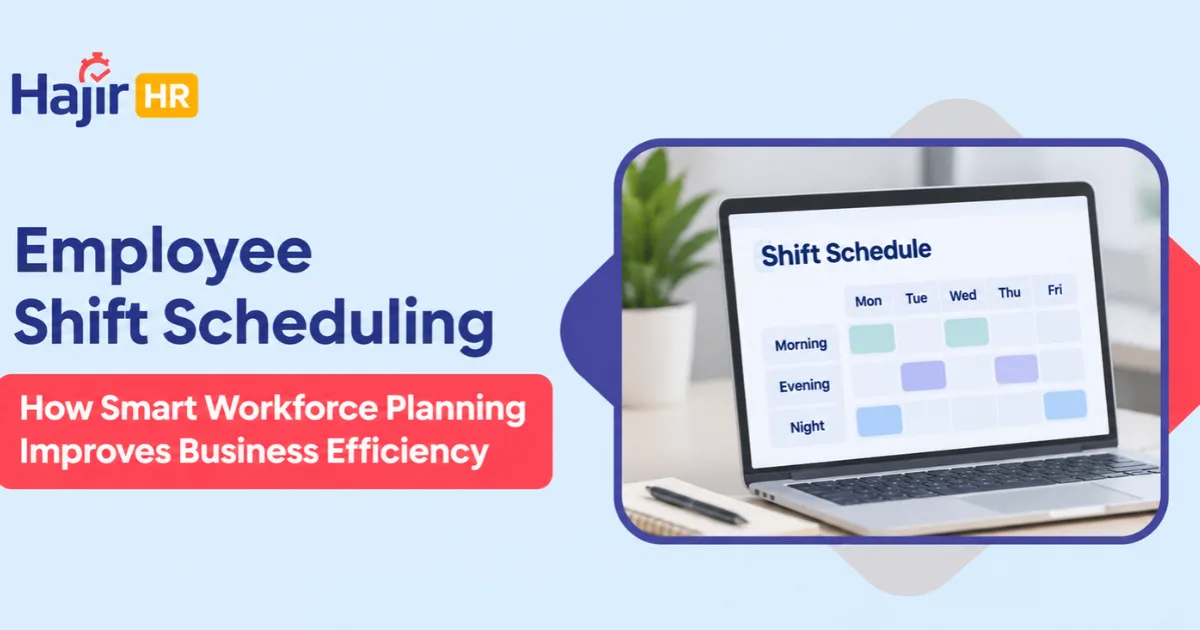
Managing employees across different shifts can be challenging, especially for businesses that operate throughout the day. From assigning morning and evening shifts to tracking attendance and handling last-minute changes, HR teams have many responsibilities to manage.
When these activities are handled manually, mistakes and confusion can easily occur.
This is where smart employee shift scheduling makes a difference. With proper planning and the right HR technology, businesses can organize employee schedules, manage working hours and improve overall workplace efficiency.
Let's explore why employee shift scheduling matters and how businesses can manage it more effectively.
What Is Employee Shift Scheduling?
Employee shift scheduling is the process of assigning working hours to employees based on business requirements, employee availability and workload.
For example, a company that operates from 6 AM to 10 PM may divide its working hours into three shifts:
- Morning Shift: 6 AM – 2 PM
- Evening Shift: 2 PM – 10 PM
- Night Shift: 10 PM – 6 AM
Managers assign employees to these shifts to ensure that daily operations continue smoothly.
A well-organized shift schedule helps employees understand their working hours and allows managers to maintain proper workforce coverage.
Why Is Employee Shift Scheduling Important?
Imagine managing a company with 50 employees working in different departments and shifts. Keeping track of everyone's working hours, availability and attendance can quickly become complicated.
Without proper scheduling, businesses may face employee shortages, overlapping shifts and unnecessary overtime.
Here are some reasons why effective shift scheduling is important.
1. Better Workforce Management
A proper shift schedule helps managers assign the right number of employees to each shift. This ensures that important business activities continue without unnecessary interruptions.
2. Improved Employee Productivity
When employees know their working hours in advance, they can prepare their daily activities accordingly. Clear schedules also reduce confusion and improve coordination.
3. Reduced Scheduling Errors
Manual scheduling can lead to duplicate assignments, missed shifts and incorrect working hours. A structured scheduling system helps reduce these common mistakes.
4. Better Work-Life Balance
Employees need sufficient time to manage their personal and professional responsibilities. Providing schedules in advance helps them plan their routines more effectively.
5. Easier Attendance Monitoring
When shift schedules are connected with attendance records, managers can compare planned working hours with actual attendance more easily.
Common Challenges of Manual Employee Shift Scheduling
Many businesses still use Excel sheets, paper records or messaging applications to prepare employee schedules.
Although these methods may work for smaller teams, they become difficult to manage as organizations grow.
Some common challenges include:
Scheduling Conflicts
Assigning the same employee to overlapping shifts or forgetting existing schedules can create unnecessary problems.
Last-Minute Changes
Employees may request leave, shift swaps or schedule adjustments. Managing these changes manually can be time-consuming.
Attendance Tracking Difficulties
Managers may struggle to identify late arrivals, absences and differences between scheduled and actual working hours.
Increased Administrative Work
HR teams often spend considerable time preparing schedules, updating records and communicating changes.
Limited Visibility
When different departments maintain separate schedules, managers may find it difficult to get a complete picture of workforce availability.
These challenges can affect both employee satisfaction and business operations.
How HR Software Simplifies Employee Shift Scheduling
Modern HR software helps businesses organize employee schedules through a centralized digital system.
Instead of maintaining multiple spreadsheets, HR teams can manage important workforce information in one place.
Here are some ways technology makes shift management easier.
1. Centralized Shift Planning
Managers can organize employee schedules and maintain a clear overview of different shifts and departments.
2. Easy Schedule Management
A digital scheduling system makes it easier to update working hours and manage schedule changes.
3. Attendance Integration
Connecting attendance records with shift schedules helps businesses monitor employee working hours and identify attendance-related issues.
4. Better Employee Coordination
When employees have access to their relevant schedule information, they can stay informed about their assigned shifts and working hours.
5. Organized Workforce Records
Keeping employee schedules and attendance information organized makes it easier for HR teams to review workforce activities.
Best Practices for Effective Employee Shift Scheduling
Using HR software is helpful, but businesses also need proper scheduling policies.
Here are six practical ways to improve employee shift management:
1. Prepare Schedules in Advance
Share employee schedules early so everyone has enough time to plan their work and personal commitments.
2. Consider Employee Availability
Review approved leave requests and employee availability before assigning shifts.
3. Distribute Work Fairly
Avoid assigning inconvenient shifts repeatedly to the same employees. Maintain a balanced and fair scheduling approach.
4. Establish Clear Shift Policies
Define rules for shift changes, overtime, attendance and shift-swapping requests.
5. Monitor Attendance Regularly
Review attendance records to identify recurring delays, absences and scheduling problems.
6. Use Digital HR Solutions
Consider using HR management software to simplify scheduling, attendance tracking and employee information management.
How Integrated HR Software Supports Workforce Management
As businesses grow, managing employee information through separate tools can become increasingly complicated.
An integrated HR management system helps bring important HR activities together, making daily workforce management more organized.
For example, businesses can manage:
- Employee information and records
- Attendance and time tracking
- Employee shift management
- Leave and holiday management
- Payroll processing
- HR reports and analytics
Platforms such as HajirHR provide HR and payroll management features that help businesses manage these activities through a centralized system.
By connecting different HR functions, businesses can reduce repetitive administrative work and maintain better visibility of their workforce.
This can be particularly useful for organizations managing multiple departments, branches or employee shifts.
The Future of Employee Shift Management
Workforce management is becoming increasingly technology-driven. Businesses are moving away from manual spreadsheets and adopting digital solutions to manage everyday HR activities.
As organizations continue to grow, the demand for better scheduling, attendance monitoring and workforce coordination will also increase.
Digital HR solutions can help businesses manage these responsibilities more efficiently while allowing HR teams to focus on employee development and organizational growth.
Conclusion
Employee shift scheduling is not simply about assigning working hours. It is about ensuring that the right employees are available at the right time while maintaining a productive and organized workplace.
Poor scheduling can create confusion, increase administrative work and affect employee satisfaction. However, proper planning and modern HR technology can make workforce management much easier.
For businesses looking to improve daily operations, investing in an organized shift management process is an important step toward better workforce efficiency.
About HajirHR
HajirHR is an HR and payroll management software platform that helps businesses manage employee information, attendance, shift management, payroll and other HR activities.
Explore more at https://hajirhr.com/.
Managing employees across different shifts can be challenging, especially for businesses operating throughout the day. From assigning working hours to tracking attendance, HR teams have many responsibilities.