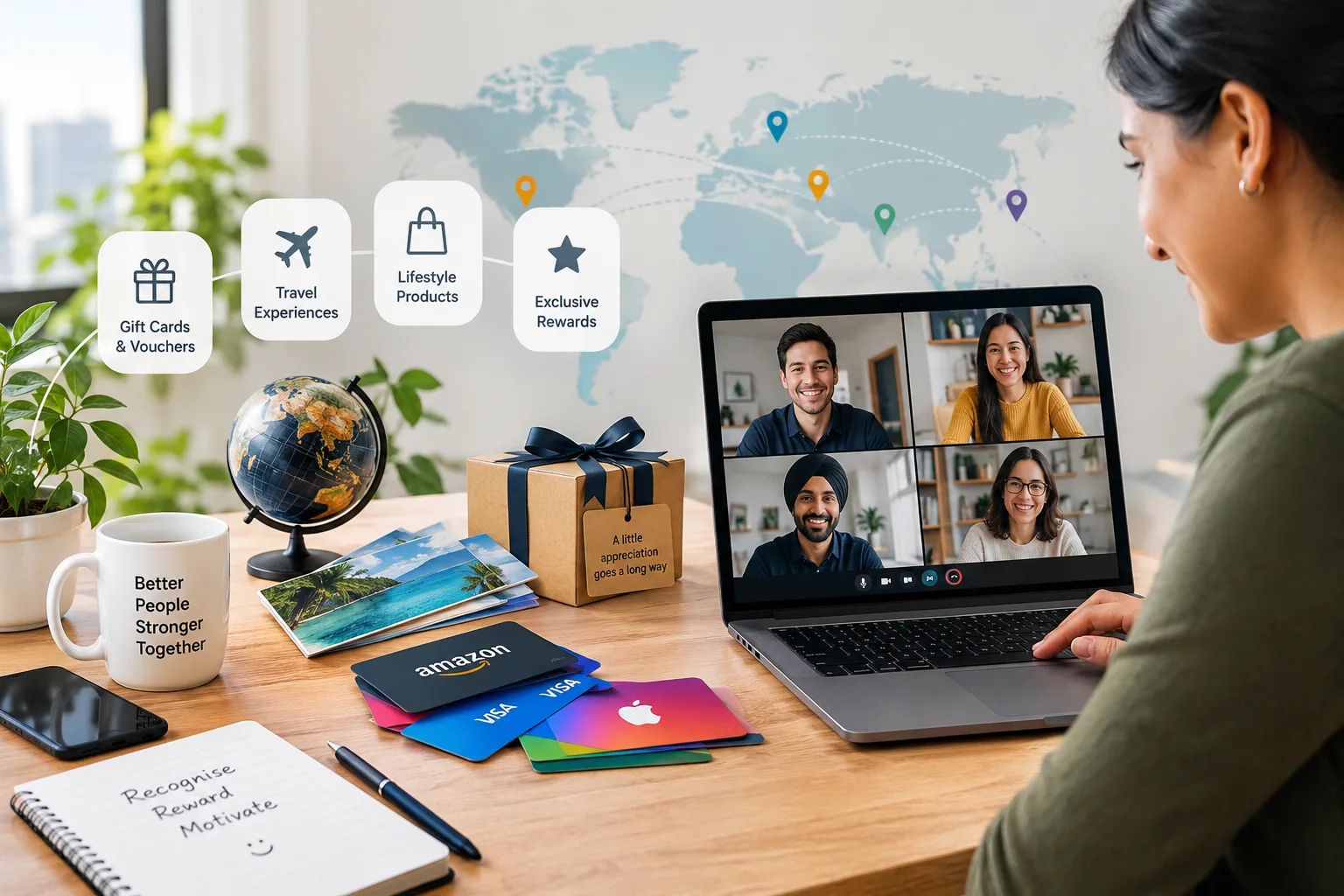
An Employee Rewards Program Built Around Moments That Matter
Most companies already say thank you to their people. The trouble is when, how, and whether anyone remembers it a week later.
A gift card at year end, a plaque at the town hall, a “great job” email buried under forty others. None of it is bad. But it rarely changes how someone feels on a Tuesday afternoon, which is where motivation lives or dies.
A good employee rewards program fixes that. It makes appreciation regular, personal, and easy for managers to give, without turning HR into a full-time gift-shopping department. That’s what we’ve built at Loylogic, and here is how it works.
Why most employee rewards programs fade within a year
Launch day is always exciting. There’s an announcement, a catalogue, maybe a small party. Then reality arrives.
Managers forget to use the platform. Rewards feel generic, so people stop caring. In global companies, a reward that delights someone in Dubai can mean nothing to a colleague in Johannesburg. Meanwhile HR is juggling three vendors, four contracts, and a spreadsheet nobody trusts.
We see the same patterns again and again:
- Recognition only happens at big milestones. Anniversaries and annual awards matter, but they are a handful of days in a 365-day year.
- Rewards are the same for everyone. One catalogue, one currency, one idea of what “valuable” means.
- The tools are clunky. If giving recognition takes ten clicks, busy managers skip it.
- Nobody measures what happens next. Without data, the program is a cost line rather than a business tool.
None of these problems come from a lack of goodwill. They come from design.
What a good employee reward program actually does
Strip away the software and the buzzwords, and a reward program that works does a few simple things well.
It recognizes effort close to the moment it happens. Praise given the same week lands very differently from praise given next quarter.
It lets people choose. Some want travel, some want shopping vouchers, some want to donate or save up for something bigger. Choice turns a reward from “something the company gave me” into “something I wanted.”
It works across borders without extra effort. Local relevance matters, and so does consistency. Employees in different countries should feel equally valued, even when what they pick is completely different.
It gives leaders something to look at. Who is being recognized, who isn’t, which teams are thriving, and where engagement is quietly slipping.
The evidence backs this up. Research from Gallup and Workhuman found that employees who received high-quality recognition on the job were 45% less likely to have left that job between 2022 and 2024. For any business wrestling with turnover, that is hard to ignore.
The science behind it: 100 Moments That Matter
Plenty of programs are built on instinct. Ours starts with research.
Loylogic has partnered with workplace culture expert Tamra Chandler to bring her 100 Moments That Matter framework into our platform. The idea is straightforward: recognition shouldn’t be left to chance or limited to a calendar of obvious occasions. There are many moments in an employee’s working life that deserve acknowledgment, and most go unnoticed.
Think about the first week in a new role. A difficult project that finally lands. A colleague who stepped in when someone was out sick. Coming back from parental leave. Hitting a personal goal nobody else knew about.
The framework maps these moments and gives organizations a structured, science-backed way to respond to them. Instead of asking managers to “recognize more,” it shows them what to recognize and when. That is a far easier ask.
Gabi Kool, Loylogic’s Chief Executive, and Tamra Chandler dig into the thinking in an episode of our podcast, Rewarding Conversations. They talk about why traditional programs often fall short, especially for multinational organizations, and what it takes to move beyond transactional rewards. It’s worth a listen if you’re weighing up your own approach.
Ultimate: one platform for rewards across every market
Good ideas still need good delivery. That is where Ultimate, our Points as a Service platform, comes in.
Ultimate handles the practical side of running an employee rewards program: issuing points, managing the catalogue, and delivering rewards across countries. HR teams get one system instead of a patchwork of vendors. Employees get a reward experience that feels local, even when the program is run centrally.
In practice, that means you can:
- Automate recognition tied to milestones, from work anniversaries to project wins.
- Let peers and managers send points and appreciation in a few taps.
- Offer rewards that reflect regional tastes, not a one-size-fits-all list.
- Run everything from a single dashboard, with consistent reporting across regions.
Behind it sits more than twenty years of experience. Loylogic was founded in 2005 and has delivered more than $1 billion in rewards, working with consumer brands across airlines, hotels, banking, telecom, and more. We know how to deliver rewards at scale, and we apply that same infrastructure to the people inside your business.
Employee rewards and recognition programs: what to measure
A program you can’t measure is a program you can’t defend when budgets get tight. So decide early what success looks like.
A few measures worth tracking:
- Participation. What percentage of employees give or receive recognition each month? Low numbers usually point to a usability problem or a manager-adoption problem, not an employee one.
- Distribution. Is recognition spread across teams, locations, and levels, or concentrated among a few people? Uneven recognition is often an early warning sign.
- Retention. Compare turnover among regularly recognized employees with the rest of the workforce.
- Engagement scores. Pulse surveys before and after launch will show whether sentiment is shifting.
- Reward redemption. What are people choosing? The answer tells you a lot about what your workforce values.
Review these quarterly, not annually. Small adjustments made early are far cheaper than a full relaunch later.
Most effective employee rewards and recognition programs share one trait: leadership uses the data. When executives look at the dashboards and ask questions, managers notice.
It isn’t just employees: partners deserve rewards too
Many of our clients ask a natural follow-up question. If this works for staff, what about the people outside the building who sell, distribute, or support your products every day?
Resellers, distributors, agents, and installers influence revenue just as much as your own team, yet they are often the least engaged group in the business. They work with several brands at once, and your product is competing for their attention.
A well-run channel rewards program gives them a reason to choose you first. The mechanics are similar to employee programs: clear goals, timely rewards, and a simple experience. The difference is the audience and the commercial objective.
Our channel loyalty platform uses the same technology that powers our employee programs, so you can run both from one place if you wish. Whether you want to reward partners for hitting sales targets, completing training, or growing accounts, a channel partner loyalty program built on Ultimate keeps incentives consistent across regions and easy to administer.
How to get started
You don’t need to overhaul everything at once. Most successful rollouts follow a simple path:
- Pick your starting point. One region, one business unit, or one type of recognition. Small and well-run beats large and messy.
- Define the moments. Using the 100 Moments framework, choose the ten or fifteen that matter most to your culture.
- Set up rewards people want. Ask employees. You’ll often be surprised.
- Train managers first. They make or break the program. Give them short, practical guidance and make the first few recognitions easy.
- Review and expand. After a quarter, look at the numbers, fix what’s clunky, and widen the rollout.
Frequently asked questions
How is an employee rewards program different from a recognition program? Recognition is the act of acknowledging someone’s contribution. Rewards are the tangible things that often come with it, such as points, vouchers, or experiences. The best programs combine both, so people feel seen and get something they value.
Can one program work for employees in different countries? Yes, provided it’s designed for it. A central platform keeps administration simple, while localized catalogues and content keep rewards relevant in each market.
How long before we see results? Participation and sentiment usually move first, often within the first few months. Retention and performance effects take longer and are best judged over a year or more.
Can we use the same platform for partners? Yes. Loylogic can support employee and partner programs on the same technology, so you aren’t managing separate systems.
Ready to make appreciation a habit?
If your current approach feels dated, inconsistent, or hard to manage across countries, we’d be glad to talk. Tell us about your team and your goals, and we’ll show you how a modern employee rewards program can work for your business.