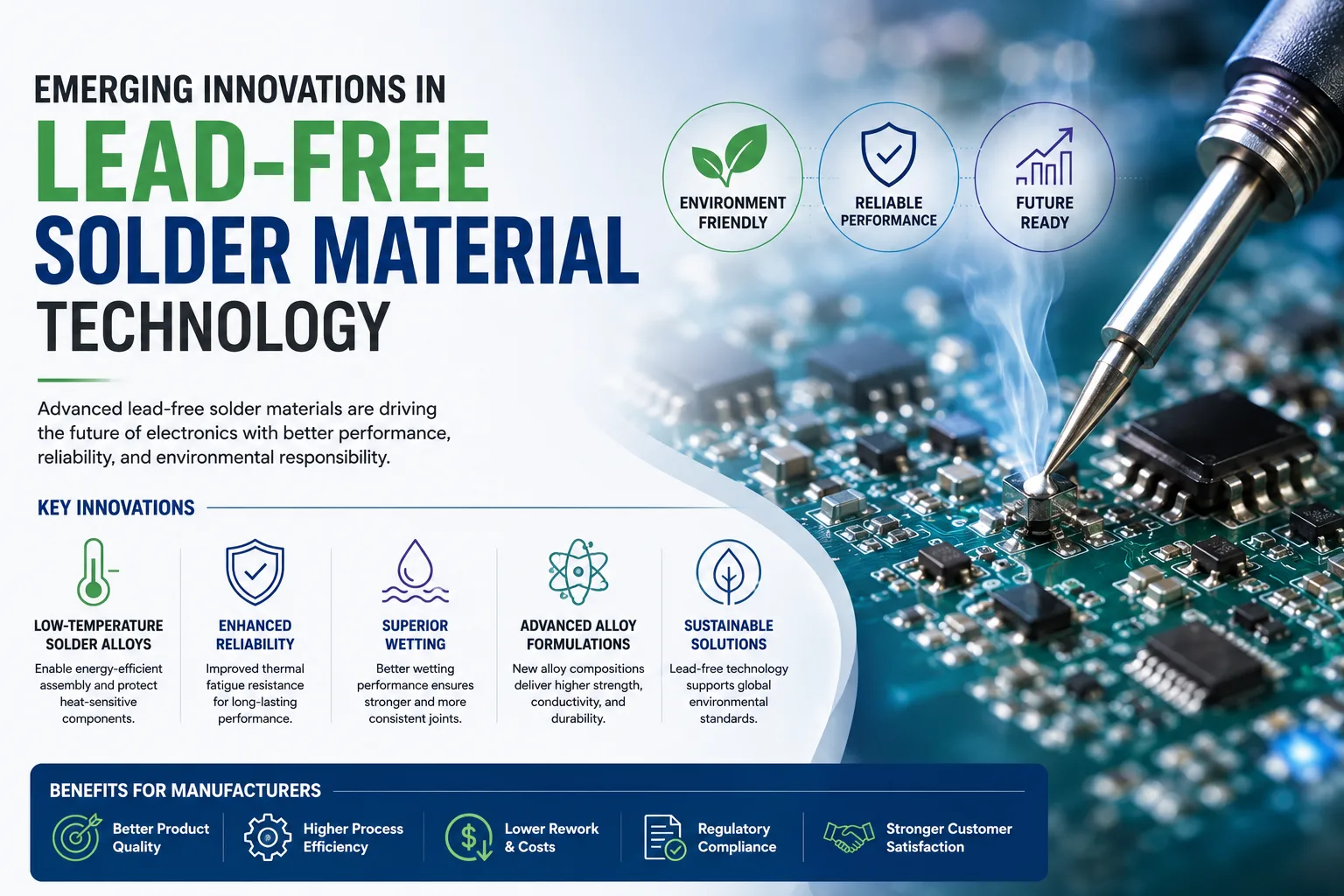
The electronics industry continues to evolve rapidly. As devices become smaller, faster, and more powerful, manufacturers need reliable joining materials that can meet strict performance standards. This demand has driven significant advancements in lead-free solder material technology.
Today, lead-free solder materials play a critical role in electronics, automotive systems, renewable energy equipment, and industrial manufacturing. These innovations help companies improve product quality while meeting environmental regulations.
Why the Industry Is Moving Toward Lead-Free Solder Materials
Environmental concerns and global regulations have accelerated the shift away from traditional lead-based solders. Manufacturers now prefer lead-free alternatives that deliver strong performance without the environmental risks associated with lead.
Modern lead-free solder materials offer:
- Better environmental compliance
- Improved workplace safety
- Reliable electrical conductivity
- Strong mechanical performance
- Long service life
As industries adopt sustainable manufacturing practices, demand for advanced lead-free solder solutions continues to grow.
Key Innovations in Lead-Free Solder Material Technology
1. Advanced Tin-Silver-Copper (SAC) Alloys
Tin-Silver-Copper alloys remain one of the most widely used lead-free solder materials. Recent developments have improved their strength, thermal stability, and resistance to fatigue.
These enhanced alloys perform well in:
- Automotive electronics
- Industrial control systems
- Consumer electronics
- Telecommunications equipment
Manufacturers benefit from stronger solder joints and improved reliability under demanding operating conditions.
2. Low-Temperature Lead-Free Solder Materials
One of the biggest innovations involves low-temperature solder technology. These materials require less heat during assembly, which helps protect sensitive electronic components.
Benefits include:
- Reduced energy consumption
- Lower production costs
- Less thermal stress on components
- Improved manufacturing efficiency
Low-temperature solder materials are becoming increasingly popular in advanced electronics manufacturing.
3. Improved Thermal Fatigue Resistance
Electronic devices often experience repeated heating and cooling cycles. These temperature changes can weaken solder joints over time.
New lead-free solder material formulations offer enhanced thermal fatigue resistance. This innovation helps maintain strong connections and extends product life, especially in automotive and industrial applications.
4. Better Wetting Performance
Good wetting allows solder material to spread evenly across metal surfaces. Improved wetting technology helps manufacturers achieve:
- Stronger solder joints
- Faster assembly processes
- Fewer production defects
- Higher product quality
Modern lead-free solder materials now provide better wetting characteristics than many earlier formulations.
5. Nano-Enhanced Solder Technology
Researchers are exploring the use of nanoparticles to improve solder performance. These materials can enhance:
- Mechanical strength
- Electrical conductivity
- Thermal performance
- Joint reliability
While still developing, nano-enhanced solder technology represents an exciting future direction for the industry.
Growing Demand from the Automotive Sector
Electric vehicles and advanced driver assistance systems have increased the need for high-performance lead-free solder materials.
Automotive manufacturers require solder solutions that can withstand:
- Extreme temperatures
- Continuous vibration
- High electrical loads
- Long operating life
Innovative lead-free solder technologies help meet these requirements while supporting safer and more reliable vehicle electronics.
How Manufacturers Benefit from Modern Lead-Free Solder Materials
Businesses that adopt advanced lead-free solder materials can achieve several advantages:
- Higher production efficiency
- Better product reliability
- Reduced rework and repair costs
- Compliance with international standards
- Improved environmental performance
These benefits make lead-free solder technology an important investment for modern manufacturers.
Kothari Metsol: Supporting the Future of Solder Technology
As a trusted supplier of soldering materials, Kothari Metsol continues to support industries with high-quality solder solutions designed for evolving manufacturing needs.
Our product range helps manufacturers achieve:
- Consistent soldering performance
- Reliable electrical connections
- High-quality finished products
- Compliance with modern industry requirements
With years of industry experience, Kothari Metsol remains committed to delivering dependable solder materials for diverse industrial applications.
Conclusion
Innovation continues to transform lead-free solder material technology. From advanced SAC alloys and low-temperature formulations to nano-enhanced materials, manufacturers now have access to solutions that offer better performance, reliability, and sustainability.
As electronics and automotive technologies advance, the role of high-quality lead-free solder materials will become even more important. Companies that invest in modern solder solutions can improve product quality, reduce manufacturing challenges, and stay competitive in a rapidly changing market.
For reliable lead-free solder solutions, manufacturers can trust Kothari Metsol to deliver quality, consistency, and industry expertise.