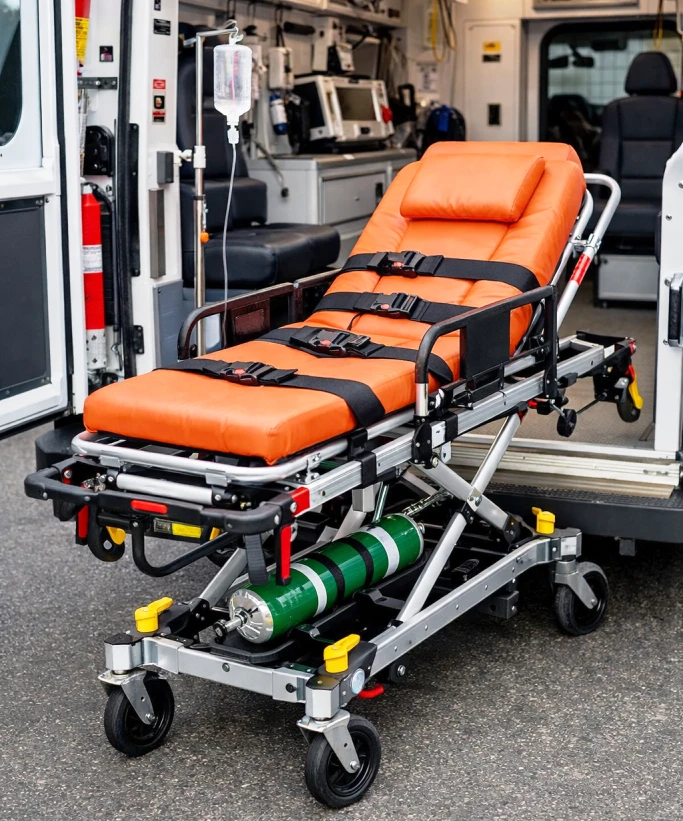
An emergency ambulance stretcher trolley is an essential medical device used for transporting injured, sick, or immobile patients safely from one place to another. It plays a crucial role in emergency medical services, hospitals, and ambulance operations. During accidents, disasters, or sudden health emergencies, patients often cannot move on their own. In such situations, stretcher trolleys provide a safe and comfortable method for transferring patients to ambulances, emergency rooms, or other treatment areas. Let us discuss, an emergency ambulance stretcher trolley for patient.
Importance of Emergency Ambulance Stretcher Trolley
In emergency situations, time is critical. Medical teams must move patients quickly while ensuring safety and comfort. The ambulance stretcher trolley is designed specifically for rapid patient transport. It helps paramedics and healthcare professionals transfer patients efficiently without causing additional injury.
These trolleys reduce the physical strain on medical staff while lifting and transporting patients. Modern stretchers are built with wheels, folding legs, and adjustable height systems that allow medical personnel to easily load and unload patients into an ambulance. As a result, patient handling becomes faster, safer, and more efficient.
Emergency stretcher trolleys are commonly used in ambulances, hospitals, trauma centers, clinics, and disaster rescue operations. They are designed to handle various emergency conditions such as road accidents, cardiac emergencies, trauma cases, and patient transfers between hospital departments.
Design and Construction
Ambulance stretcher trolleys are usually constructed using high-strength materials such as aluminum alloy or mild steel. These materials provide durability while keeping the stretcher lightweight for easy handling. The lightweight structure allows medical staff to move the stretcher quickly during emergencies.
The trolley typically consists of a strong frame, a padded mattress platform, foldable legs, and four wheels or castors. The mattress is often covered with waterproof material to maintain hygiene and make cleaning easier. The frame is designed to support heavy loads, usually ranging from 150 kg to 250 kg depending on the model.
The structure is designed to fit easily inside ambulances. Many stretchers also include locking systems that secure the trolley to the ambulance floor during transportation, preventing movement and ensuring patient safety.
Key Features
Modern emergency ambulance stretcher trolleys come with several advanced features that improve patient care and ease of use.
1. Adjustable Backrest
Most stretcher trolleys include an adjustable backrest that can be raised between 0° and 65° or higher. This allows patients to lie flat or sit in a semi-upright position depending on their medical condition.
2. Folding Legs Mechanism
The legs of the stretcher automatically fold when the trolley is loaded into the ambulance and unfold when it is removed. This design allows smooth loading and unloading with minimal effort.
3. Safety Side Rails
Side rails are installed on both sides of the stretcher to prevent the patient from falling during transport. These rails can usually be folded down when transferring the patient to a hospital bed.
4. Locking System
Most stretcher trolleys include locking mechanisms that keep the trolley stable during loading, unloading, or movement. Some models also feature brakes on the wheels for additional safety.
5. Patient Safety Straps
Safety belts or straps are attached to secure the patient to the stretcher. These straps prevent unnecessary movement during ambulance travel.
6. Smooth Mobility Wheels
Heavy-duty wheels or castors allow smooth movement across hospital floors, corridors, and outdoor surfaces. Many models include shock-absorbing wheels and directional control for better maneuverability.
Advanced Models and Technology
With the advancement of medical technology, modern ambulance stretchers are becoming more sophisticated. Some advanced models are equipped with hydraulic or electric lifting systems. These systems allow the stretcher to raise or lower automatically, reducing physical strain on medical personnel.
Electric stretcher trolleys may include battery-powered lifting mechanisms that allow smooth and controlled movement at the push of a button. These models also have manual backup systems to ensure operation even during power failure.
Some stretchers are also equipped with additional features such as IV poles, oxygen cylinder holders, and adjustable patient positioning systems. These features enable medical staff to provide basic treatment while transporting the patient.
Applications in Healthcare
Emergency ambulance stretcher trolleys are used in many healthcare environments. Their primary purpose is patient transport, but they also support various medical procedures.
In ambulance services, stretcher trolleys are used to move patients from accident sites to medical facilities quickly and safely. The trolley ensures that the patient remains stable during transportation.
In hospital emergency departments, stretcher trolleys are used to transfer patients from the ambulance to treatment rooms or operating theaters. They also assist in moving patients between diagnostic units such as radiology, laboratories, and intensive care units.
In disaster and rescue operations, these stretchers play a vital role in transporting injured individuals from hazardous environments to medical care.
Advantages of Ambulance Stretcher Trolleys
Emergency stretcher trolleys offer many advantages in patient transportation. First, they provide a safe and stable platform for patients who cannot move independently. The padded mattress and adjustable positions ensure patient comfort during transport.
Second, these trolleys improve efficiency for medical staff. Features such as wheels, folding legs, and hydraulic lifting systems reduce the effort required to handle patients. This helps medical teams respond quickly during emergencies.
Third, stretcher trolleys enhance patient safety. Safety rails, belts, and locking mechanisms prevent accidental falls or injuries while the patient is being moved.
Finally, the durable construction of these devices ensures long-term reliability even under demanding medical conditions.
Maintenance and Hygiene
Maintaining proper hygiene is very important for medical equipment. Ambulance stretcher trolleys must be cleaned and disinfected regularly to prevent the spread of infections. The mattress covers are usually waterproof and easy to wipe with disinfectant solutions.
Healthcare facilities also perform regular inspections to ensure that wheels, brakes, and locking mechanisms function properly. Proper maintenance increases the lifespan of the equipment and ensures safe patient transport.
Conclusion
The emergency ambulance stretcher trolley is a vital piece of equipment in modern healthcare and emergency medical services. It ensures the safe, efficient, and comfortable transportation of patients during critical situations. With its durable construction, safety features, and advanced technology, the stretcher trolley helps medical professionals save time and reduce risks during patient handling.
As healthcare technology continues to evolve, stretcher trolleys are becoming more advanced, incorporating electric lifting systems, improved safety features, and ergonomic designs. These innovations continue to enhance patient care and improve the efficiency of emergency medical services worldwide.
In summary, the ambulance stretcher trolley is not just a transport device but a life-supporting tool that plays a key role in emergency medical response and patient care.