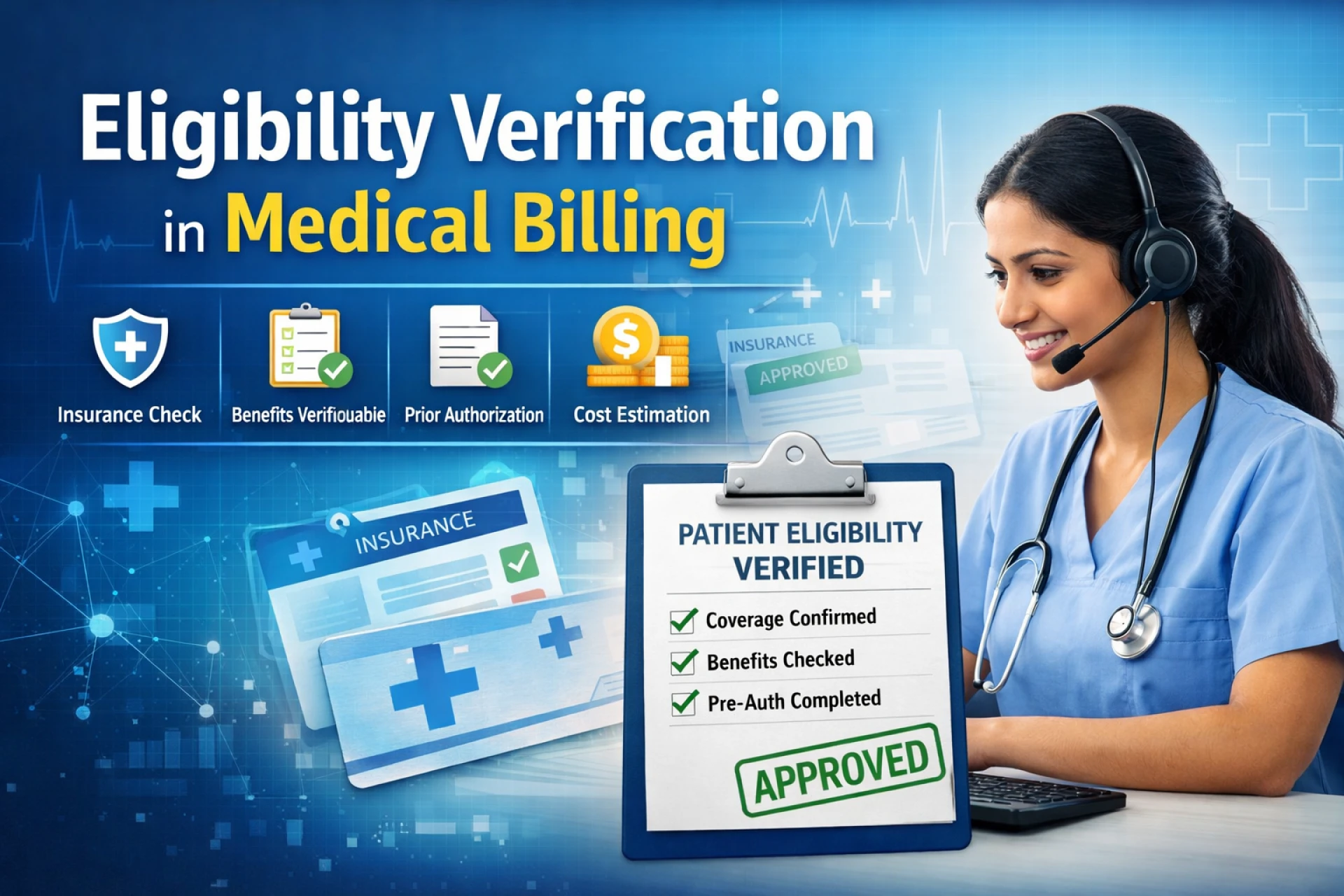
The healthcare industry depends heavily on accurate billing and efficient revenue cycle management. One of the most important steps in this process is eligibility verification in medical billing, which ensures that a patient’s insurance coverage is valid before medical services are provided. Without proper verification, healthcare providers may face claim denials, delayed payments, and financial losses.
Today, many healthcare organizations rely on professional medical billing companies in Mohali and other outsourcing hubs to manage this process efficiently. These companies specialize in revenue cycle management (RCM) services, helping providers streamline billing operations while improving reimbursement rates.
In this blog, we will explore the eligibility verification process in medical billing, understand the role of EVBV in healthcare, and discuss how companies like Networth RCM are contributing to the growing medical billing industry.
What is Eligibility Verification in Medical Billing?
Eligibility verification in medical billing is the process of confirming whether a patient’s health insurance policy is active and determining the benefits covered under that plan. This step is typically completed before a patient receives treatment to ensure that the healthcare provider will be reimbursed by the insurance company.
During eligibility verification, billing professionals confirm details such as:
- Insurance coverage status
- Policy validity dates
- Copay and deductible amounts
- Coinsurance responsibilities
- Referral or authorization requirements
When the eligibility verification process in medical billing is done correctly, it reduces the chances of rejected or denied claims.
Understanding EVBV in Medical Billing and Healthcare
In healthcare billing terminology, EVBV in medical billing refers to Eligibility Verification and Benefits Verification. It is a combined process where the billing team not only confirms the patient’s insurance status but also reviews the specific benefits available under the policy.
Similarly, EVBV in healthcare helps providers determine whether a specific procedure or treatment is covered by the patient’s insurance plan.
For example, EVBV can reveal:
- Whether a particular treatment is covered
- If prior authorization is required
- How much the patient must pay out-of-pocket
- Whether the provider is in-network or out-of-network
By performing EVBV in medical billing, healthcare providers can avoid billing errors and provide clear financial information to patients before treatment.
Steps in the Eligibility Verification Process in Medical Billing
The eligibility verification process in medical billing involves several structured steps that help ensure accurate billing and reimbursement.
1. Patient Information Collection
The first step is gathering the patient’s personal and insurance details. This information typically includes:
- Patient name and date of birth
- Insurance provider name
- Policy number and group ID
- Contact information
Accurate data collection is essential for smooth eligibility verification in medical billing.
2. Insurance Coverage Verification
After collecting patient details, billing professionals verify insurance coverage through different methods, such as:
- Insurance company portals
- Clearinghouses
- Electronic data interchange (EDI) systems
- Direct communication with insurance representatives
This step confirms whether the patient’s policy is active and valid.
3. Benefits Verification
Next, the billing team reviews the patient’s insurance benefits. This part of EVBV in healthcare helps determine:
- Deductible balance
- Copayment amount
- Coinsurance percentage
- Coverage limitations
Benefits verification ensures that providers understand the patient’s financial responsibilities.
4. Authorization Requirements
Certain treatments require prior authorization from insurance companies. During the eligibility verification process in medical billing, billing professionals check whether approval is needed before performing a procedure.
5. Documentation and Confirmation
The final step involves documenting the verified information in the healthcare provider’s system. Patients are also informed about their expected costs and insurance coverage.
Importance of Eligibility Verification in Medical Billing
Proper eligibility verification in medical billing offers several advantages to healthcare providers and patients.
Reduced Claim Denials
Incorrect or incomplete insurance information is a common reason for claim denials. Verification helps ensure that claims are submitted with accurate details.
Faster Payments
When billing information is correct from the beginning, insurance companies process claims faster, improving cash flow for healthcare providers.
Better Patient Communication
Patients appreciate knowing their financial responsibilities in advance. EVBV helps healthcare providers offer transparent pricing information.
Improved Revenue Cycle Management
By preventing billing errors, eligibility verification plays a major role in effective revenue cycle management.
Role of Medical Billing Companies in Mohali
Over the past decade, medical billing companies in Mohali have become an important part of the global healthcare outsourcing industry. Mohali has emerged as a hub for healthcare RCM services because of its skilled workforce and advanced technology infrastructure.
A typical medical billing company in Mohali provides services such as:
- Eligibility verification and EVBV in medical billing
- Medical coding
- Claim submission and tracking
- Payment posting
- Denial management
- Accounts receivable follow-up
By outsourcing these services, healthcare providers can focus on patient care while experts handle complex billing processes.
Networth RCM and Its Role in Medical Billing
One of the growing service providers in this industry is Networth RCM. The company focuses on providing comprehensive revenue cycle management solutions for healthcare providers.
Services offered by Networth RCM include:
- Eligibility verification in medical billing
- Insurance benefits verification
- Claim processing and submission
- Denial management and appeals
- Accounts receivable management
Because of its growing presence in the healthcare outsourcing industry, many people are curious about topics like RCM net worth, RCM company net worth, and even the RCM owner's net worth behind successful revenue cycle management firms.
Understanding RCM Net Worth and Industry Growth
The global revenue cycle management industry has grown significantly over the last few years. With increasing healthcare costs and complex insurance policies, more hospitals and clinics are outsourcing billing operations to RCM companies.
This growing demand has led to discussions around topics such as:
- RCM company net worth
- RCM net worth in the healthcare outsourcing market
- Financial success and RCM owner net worth of leading service providers
Although private companies may not always disclose exact financial figures, the overall RCM industry is valued in billions of dollars and continues to expand rapidly.
Why Healthcare Providers Choose Outsourcing
Healthcare providers often partner with a medical billing company in Mohali for several reasons.
Cost Savings
Outsourcing reduces the cost of hiring and training in-house billing staff.
Industry Expertise
Professional RCM teams understand complex insurance regulations and billing requirements.
Improved Accuracy
Experienced billing specialists perform accurate eligibility verification in medical billing, reducing claim errors.
Scalability
Outsourcing allows healthcare organizations to handle increasing patient volumes without expanding internal operations.
The Future of EVBV in Healthcare
The future of EVBV in healthcare is closely connected with technology. Automation tools, artificial intelligence, and integrated healthcare software are transforming the way eligibility verification is performed.
Modern healthcare systems now use:
- Automated insurance verification tools
- Real-time eligibility checks
- AI-based claim analysis
- Integrated electronic health record (EHR) systems
These technologies help billing teams complete the eligibility verification process in medical billing more quickly and accurately.
Conclusion
Eligibility verification in medical billing is a crucial step in ensuring smooth healthcare operations and financial stability for providers. By confirming insurance coverage and benefits before treatment, healthcare organizations can reduce claim denials, improve patient satisfaction, and strengthen their revenue cycle management processes.
The growing role of medical billing companies in Mohali, along with RCM providers like Networth RCM, highlights the increasing importance of professional billing services in the healthcare industry. As the industry expands, discussions around RCM company net worth, RCM net worth, and RCM owner net worth reflect the rapid growth and financial potential of the revenue cycle management sector.
With advancements in automation and digital healthcare systems, the future of EVBV in medical billing will continue to enhance efficiency, accuracy, and transparency in the healthcare billing process.