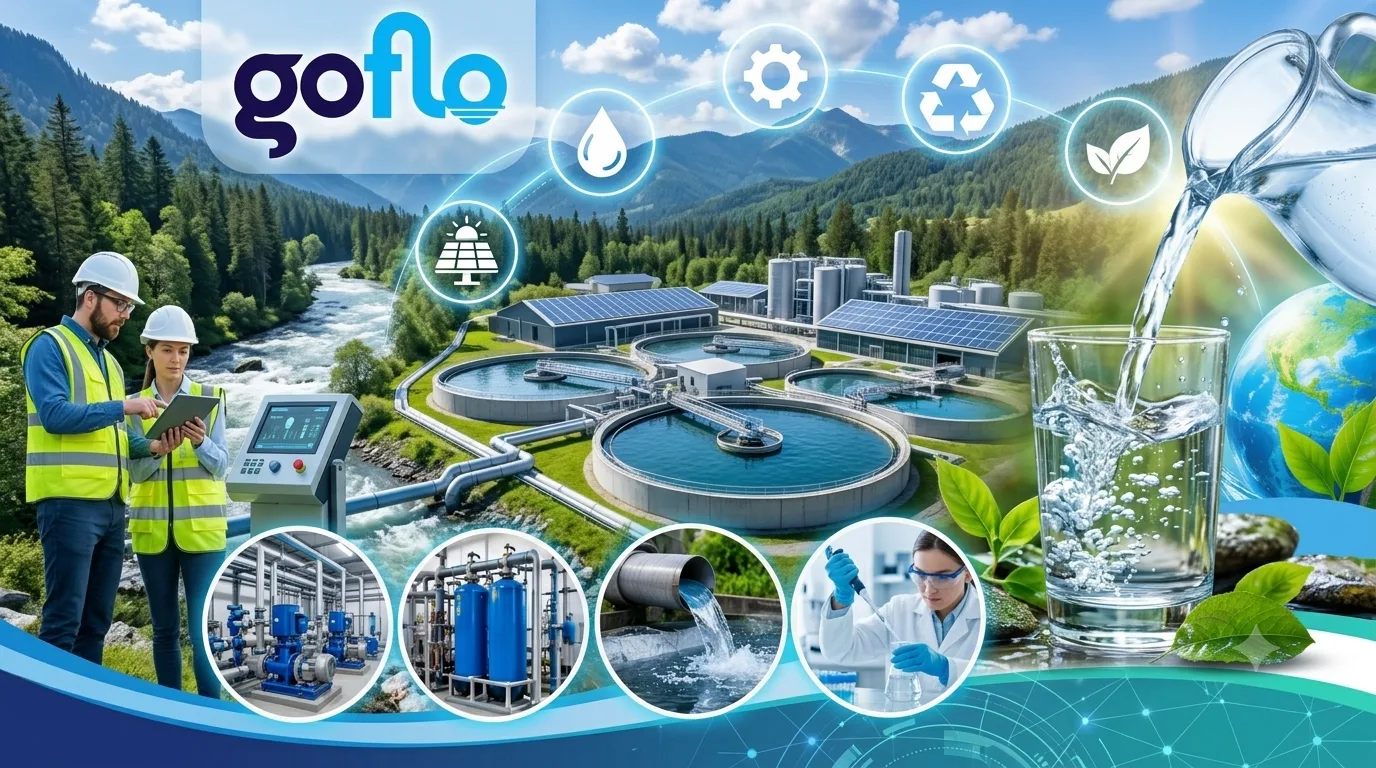
Water is a highly valuable resource and is utilised by individuals, within agriculture and by both the public and private sectors. Water is increasingly being utilised and there is also growing concern about both the effects of pollution and changes within our environment. Therefore, it is vital that we both continue to ensure good water quality and also seek to minimise wastage.
By implementing suitable technologies, organisations and even communities can work to enhance water quality and promote sustainable water practice through Efficient Water Treatment.

Importance of Efficient Water Management
As well as continuing urban and industrial development, the need for high quality water is also increasing. Poor quality water and chemical pollution can impact upon rivers, lakes and groundwater. Thus, good water management is crucial at all stages of water use.
Whilst efficient water management does include improving water quality, it also encompasses minimising water use, avoiding pollution and reusing water. Through implementing good water management, organisations can therefore further optimise their water use and decrease reliance on fresh water.
Modern Water Quality Improvement Techniques
As the quality of water can differ depending on its origin, so too should the chosen technique for enhancing quality in line with the envisaged use for that water.
1. Filtration
Water can be filtered to eliminate a variety of materials such as solids. Sand, activated carbon and/or dedicated filters can be used, depending on the desired outcome. Filtering can thus aid enhancement of water quality and facilitate further processing.
2. Membrane Technology
Membranes allow for the removal of impurities from water. Commonly, ultra-filtration and reverse osmosis are applied to remove particular contaminants. Again, the most appropriate technique will depend on the target water quality and the nature of the original water.
3. Biological Water Treatment
Biological processing of effluent involves microbes decomposing biodegradable organic material. This method is frequently utilised within wastewater treatment and can assist in minimising the organic content of water, either for subsequent discharge or re-use.
4. Chemical Processing and Disinfection
Various chemical techniques can be employed to manipulate water pH, to assist in coagulation and to manage microbial growth. Moreover, disinfection can be beneficial in minimising the presence of deleterious microbes. The most appropriate technique will again rely on the water's origin, together with the aims and quality standards for the water in question.
Contributing to Sustainable Water Practice through Conservation
Alongside efficiently managing water quality, it is also key to minimise water use. Water Conservation Techniques can be implemented by individuals, organisations and industry in order to optimise water utilisation.
Examples of such techniques are:
- Rainwater collection – for re-use in non-drinking situations.
- Leak detection and repair – so as to avoid unnecessary water loss.
- Water re-use – of suitably processed effluent for example in horticulture, for cleaning and for cooling.
- Installation of water efficient apparatus – to minimise water use.
- Water use measurement – in order to recognise where water use could be optimised.
By integrating water conservation and suitable processing techniques, organisations can work to both further minimise fresh water use and enhance overall water efficiency.
Promoting Sustainable Industry Water Practice
Industry utilises water for a wide range of functions including production, machine cleaning and cooling. As previously noted, the necessary water quality can differ substantially depending on the industry. Consequently, the relevant water treatment should be customised to meet an industry's specific needs.
In some cases, industry effluent can be processed and then re-used, rather than simply being disposed of following initial use. Appropriately re-using processed water can therefore assist in minimising both fresh water and effluent use.
Furthermore, ongoing monitoring, alongside servicing and continual process refinement, can all aid in ensuring that water processing is consistently functioning well. These actions can thus promote more sustainable industry water practice.
Environmental Advantages of Enhanced Water Processing
In addition to assisting in the protection of water environments, good water processing can also provide environmental benefits. Prior to discharge, processing can minimise the extent to which polluted water enters natural water environments. Similarly, processing effluent for suitable re-use can alleviate pressure on fresh water supplies.
Further, enhanced water management can aid in:
- Minimising the discharge of unprocessed water.
- Enhancing the protection of water environments.
- Encouraging more sustainable natural resource practice.
- Minimising fresh water use by facilitating re-use.
- Raising awareness regarding both water quality and conservation.
Achievement of these outcomes will be influenced by the type of processing technology, environmental factors and the original water quality. Good planning and monitoring are thus fundamental.
Planning for Efficient Long-Term Water Management
Initially, it is necessary to recognise the water supply and identify its proposed use. Analysis of water can additionally be undertaken to ascertain the water's impurity levels and to decide on any necessary processing.
Organisations should also evaluate aspects such as processing capability, requirements and servicing needs, as well as future water demand. Well-planned water processing can therefore facilitate enhanced water quality management.
Equally, regular reviews are valuable. They can highlight issues, analyse processing effectiveness and ascertain if revisions are required in light of evolving water needs.
Working towards a Secure Water Environment
Good water quality, sustainable water practice and re-use all play an important role in developing a secure water environment. Efficient Water Treatment can therefore be used to enhance water quality. Likewise, water conservation can motivate both individuals and organisations to minimise superfluous water use through Water Conservation Techniques.
Through implementing suitable processing and sustainable water practice, industry and communities can work to further protect fresh water supplies. Continual commitment to good water processing, conservation and re-use can thus help to foster both an enhanced and more efficient water environment for future generations.