The demand for single-dose detergent products, including laundry pods and dishwasher capsules, keeps rising across global consumer markets. Many detergent manufacturers make a common mistake: they only focus on buying a single pod packaging machine, ignoring the supporting processes needed for stable mass production. A qualified laundry pod production system is not just one standalone device, but a coordinated combination of materials, machinery, quality control and post-packaging workflows.
Raw material matching is the foundation of stable production. Water-soluble PVA film and liquid detergent formula are the two core raw materials for making laundry pods, and their compatibility directly decides the final yield. Even high-quality packaging equipment cannot solve problems caused by mismatched raw materials.
For example, some detergent formulas contain high levels of glycerin or surfactants, which may affect the sealing performance of PVA film. If the film and formula are not tested together in advance, finished pods may leak, bubble or tear during storage. Before building the full production line, factory owners should run small batch trials to verify raw material adaptability. This step helps avoid heavy losses after large-scale equipment installation.
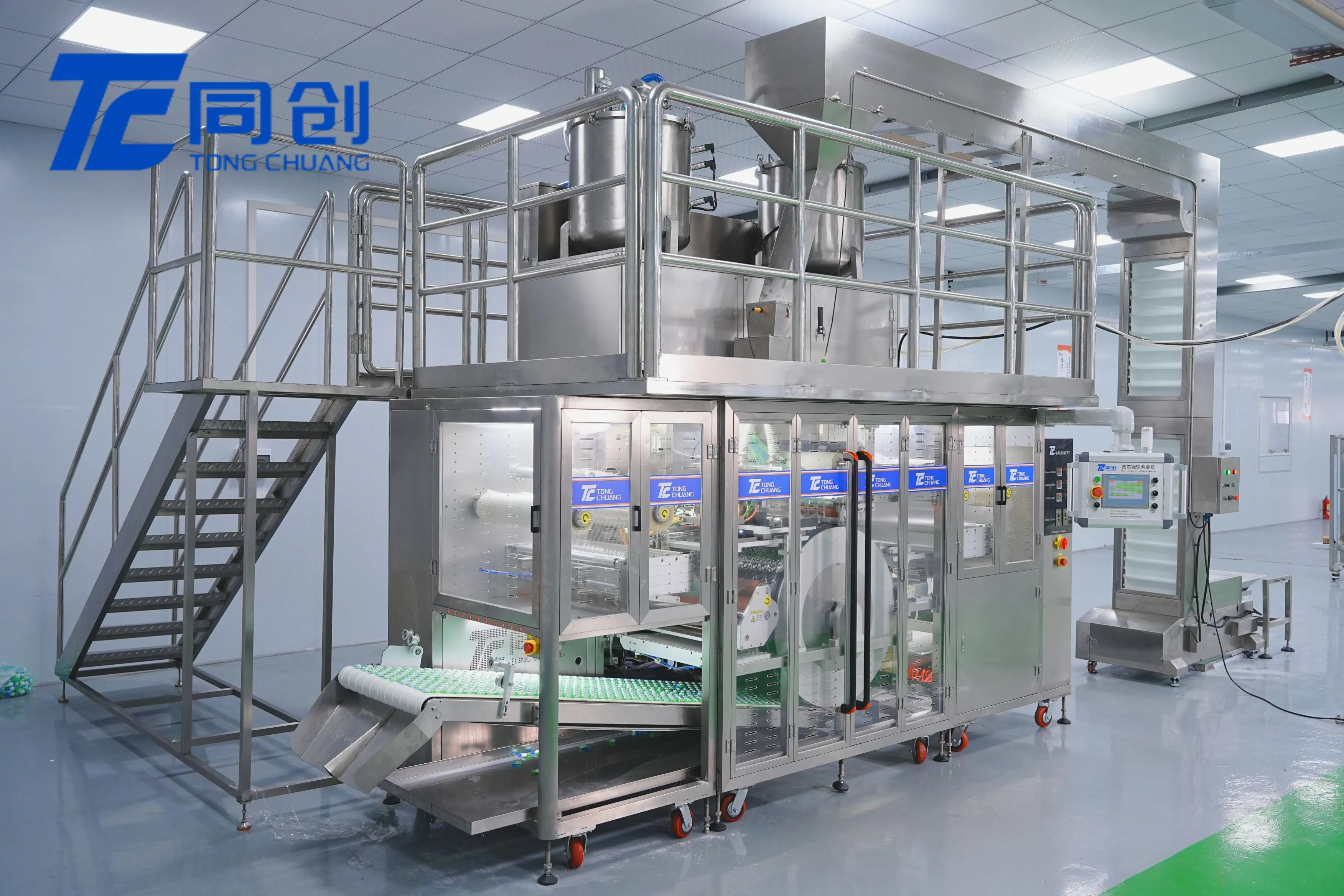
The core packaging equipment completes four key steps automatically: film feeding, cavity forming, liquid filling and heat sealing & cutting.
First, the PVA film is transported and pre-heated to form small cavities according to preset pod sizes. Next, the dosing system fills the precise volume of detergent liquid into each cavity. Then a second layer of PVA film covers the top, and heat sealing bonds the two layers tightly. Finally, the cutting unit separates individual finished pods.
Every parameter here matters: sealing temperature, pressing time and filling accuracy must be adjustable to match different pod specifications. If you want to understand how the whole production system works together, you can refer to this practical guide: [how laundry pod packaging equipment builds a full manufacturing solution] . A machine with fixed parameters will struggle if the factory plans to launch multiple pod sizes in the future.
After the laundry pods are formed and inspected, they still need secondary packaging: counting, bagging, carton filling and case sealing. A frequent bottleneck happens when the main pod machine runs fast, but the downstream cartoning equipment cannot keep up. Unbalanced line speed creates product stacking and reduces overall output.
When designing a full solution, production managers need to calculate the hourly capacity of every connected machine. The speed of secondary packaging equipment should match the output of the pod packaging host, to maintain continuous and smooth production.
Building a complete laundry pod production solution is a systematic project, instead of simply purchasing individual machines. Raw material tests, core packaging processes, online quality checks and matched back-end packaging all work together to guarantee stable, high-yield manufacturing. Manufacturers need to evaluate the whole workflow rather than focusing only on machine speed.