
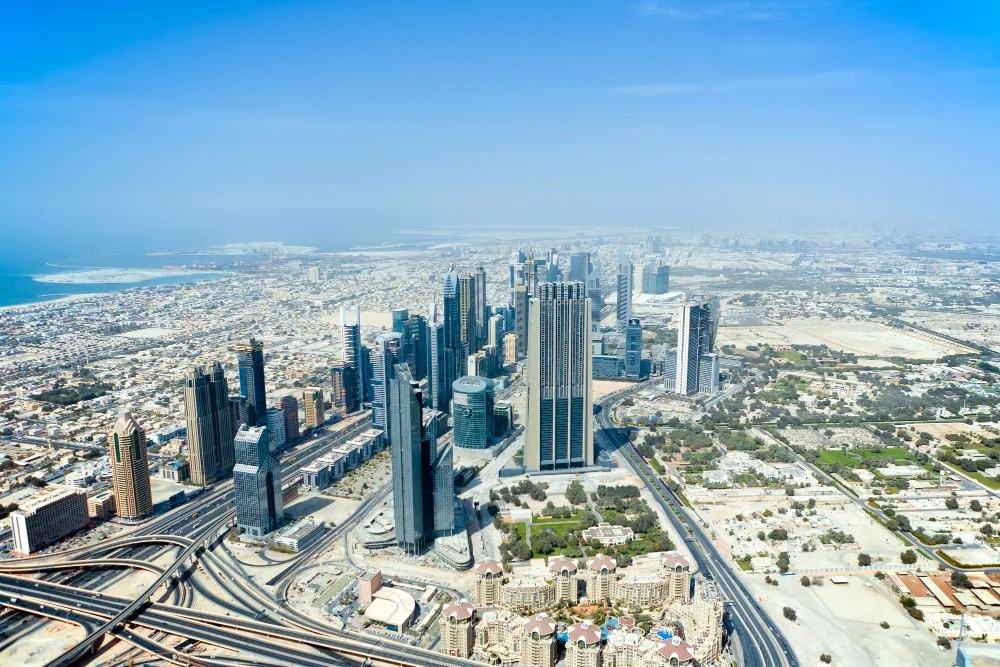
Long-term investing works very differently from short-term property flipping. Buyers who enter a market for durable growth usually care less about temporary excitement and more about demand fundamentals, location quality, rental resilience, regulatory clarity, and the broader economic direction of the city. In 2026, dubai real estate investment continues to attract this kind of buyer because Dubai is pairing strong market activity with a long-term policy push. Dubai Land Department has linked the sector’s future to the Dubai Real Estate Sector Strategy 2033, which aims to increase transactions, international investment, and the sector’s contribution to the wider economy.
For long-term investors, that matters. A market becomes more attractive when growth is supported by public strategy, active demand, and a more transparent real estate ecosystem. Dubai Land Department has also continued to highlight innovation, governance, and digital real estate systems as part of the market’s future direction, which adds another layer of confidence for buyers thinking beyond the next one or two years.
Start With a Long-Term Objective, Not a Short-Term Trend
The first strategy in dubai real estate investment is to define the purpose of the asset clearly. Long-term growth usually comes from disciplined selection, not from chasing whatever area is getting the most attention at the moment. A buyer focused on stable rental income may choose differently from a buyer focused on capital appreciation. Someone buying for future personal use may value community quality more than headline yield.
This step sounds basic, but it shapes everything that follows. When your investment goal is clear, it becomes easier to decide the right budget, location, property type, and holding period. Long-term success usually begins with asking the right question: what should this property do for me over the next five to ten years?
Choose Locations With Real Everyday Demand
Long-term growth is strongly linked to location quality. In Dubai, that usually means looking beyond glossy marketing and focusing on practical demand drivers such as employment access, transport links, schools, healthcare, retail convenience, and community livability. A property tends to perform better over time when people genuinely want to live there, not only when investors want to trade it.
This is especially relevant in a city that keeps expanding. Some locations are driven by lifestyle, some by business proximity, and some by family demand. The best long-term dubai real estate investment strategy is usually to choose an area where tenant or end-user demand feels durable, because durable demand supports both rental stability and resale value.
A good long-term location often offers:
- Strong road and metro connectivity
- Access to business districts
- Schools, healthcare, and daily conveniences nearby
- A well-maintained community environment
- Continued relevance even as new supply enters the market
Prioritise Rental Strength, Even If Appreciation Is the Main Goal
Some investors say they are buying only for appreciation, but rental strength still matters. A property with healthy rental demand can support cash flow, reduce vacancy pressure, and make the asset more resilient during different market cycles. Dubai Land Department reported that registered tenancy contracts in 2025 rose 6 percent in volume and 17 percent in value compared with 2024, reaching 1.38 million contracts with a total value of AED 126.4 billion. That is a strong signal that the rental side of the market remains highly active.
This matters for long-term investors because income helps support patience. A property that rents consistently is easier to hold through market shifts than one that depends entirely on future resale gains. That is why one of the smartest dubai real estate investment strategies is to choose assets that work on both levels. They should have appreciation potential, but they should also make sense as rental assets.
Think in Terms of Net Return, Not Just Sale Price
Long-term growth is not only about buying in the right place. It is also about understanding total ownership economics. Many investors focus too heavily on entry price and ignore transfer fees, service charges, furnishing costs, maintenance reserves, and possible vacancy periods. That weakens planning.
A better strategy is to calculate the full cost of ownership before buying. Dubai remains attractive to many international investors partly because ownership economics are relatively straightforward compared with markets that impose annual property taxes, while Dubai’s official property ownership and visa frameworks remain clear and investor-facing.
For long-term dubai real estate investment, cleaner cost planning supports better decisions. A property with slightly lower gross yield can sometimes be the better long-term asset if the building is better managed, the service charges are more sustainable, and the tenant demand is more dependable.
Balance Ready Property and Off-Plan Based on Your Timeline
A strong long-term strategy does not always mean choosing one type of asset. Some investors prefer ready property because it allows immediate inspection, faster possession, and quicker rental activation. Others choose off-plan projects because phased payments and lower entry pricing may create better appreciation potential over time.
The right choice depends on the investor’s timeline and risk comfort.
Ready property may work well when the goal is:
- Immediate or near-immediate rental income
- Clear visibility on the actual asset
- Lower uncertainty on handover and finishing
- Faster use of the property as a live investment asset
Off-plan property may work well when the goal is:
- Spreading payments over time
- Entering newer communities early
- Targeting value growth closer to handover or after completion
- Building exposure to future supply in growth corridors
For dubai real estate investment, both approaches can support long-term growth. What matters is choosing the one that fits the investor’s holding strategy instead of buying based on hype.
Follow Policy Direction, Not Just Market Noise
One reason Dubai attracts long-term investors is that the market is increasingly being shaped by visible public strategy. Dubai Land Department has said the Dubai Real Estate Sector Strategy 2033 is designed to increase the value of transactions, expand international investment, and strengthen the sector’s role in the economy. Dubai’s D33 economic agenda is also built around making the city one of the world’s top places to live, invest, and work.
This is useful for investors because public direction often influences private confidence. Markets tend to look stronger over time when regulation, infrastructure, technology, and investment goals are moving in the same direction. That does not guarantee every area will perform equally well, but it does strengthen the long-term case for dubai real estate investment as a market, not just as a collection of individual projects.
Use Data Before You Commit
Long-term investing should be evidence-led. Dubai Land Department’s open real estate data and rental systems are important because they give investors more visibility into transactions, rents, developers, brokers, and market activity. The broader push toward PropTech and digital governance also reflects Dubai’s effort to make the market easier to analyse and navigate.
That means buyers can build better strategies by studying:
- Historical transaction activity in the area
- Rental levels and occupancy patterns
- Project pipeline and future supply
- Developer quality and delivery track record
- Community maintenance standards
Good long-term dubai real estate investment decisions are rarely rushed. The more data-backed the choice, the stronger the holding strategy tends to be.
Focus on Quality of Asset, Not Just Quantity of Units
Some investors make the mistake of trying to accumulate units quickly. For long-term growth, asset quality matters more than simply owning more doors. A well-located, well-managed, tenant-friendly property can outperform multiple weaker assets over time.
This is especially true in Dubai, where buyers have many options across apartments, townhouses, villas, and branded or lifestyle-led developments. The best long-term strategy is often to own properties that remain desirable through changing market conditions. Quality shows up in construction, layout, community planning, maintenance, and everyday usability.
A strong long-term asset often has:
- Practical layout and liveable design
- Reliable building or community management
- Good natural demand from tenants or end users
- Reasonable ongoing costs
- Strong resale appeal across buyer groups
Use Residency Benefits as Part of the Strategy
For many international buyers, long-term growth is not only financial. The investment may also be part of a wider life strategy. The UAE’s official Golden Visa framework states that property-related investment can support long-term residence, and Dubai Land Department’s investor visa services continue to reflect that connection between property ownership and residency planning. Official DLD guidance for real estate investor Golden Visa applications refers to a property value threshold of AED 2 million, subject to conditions.
This matters because it changes how some buyers think about dubai real estate investment. They are not only buying for rent or appreciation. They are also buying for mobility, long-term presence, family planning, or business expansion. When a property serves more than one purpose, investors are often more willing to hold it longer, which naturally aligns with long-term growth strategies.
Diversify Across Strategy, Not Just Across Units
Diversification does not always mean buying many properties at once. It can also mean diversifying your approach. One investor may combine a yield-focused apartment with an appreciation-led off-plan asset. Another may begin with a tenant-friendly ready property and later add a family-oriented community home with stronger long-term resale appeal.
Dubai’s evolving market structure is also creating new access models. Dubai Land Department’s tokenisation initiative, including its Phase II secondary-market pilot announced in February 2026, shows the market is experimenting with regulated fractional access and broader participation models.
Traditional direct ownership remains the core of the market, but this wider innovation culture signals that dubai real estate investment is becoming more flexible over time. For long-term investors, that means there may be more ways to build exposure intelligently as the market matures.
Be Patient With the Holding Period
The most important long-term growth strategy is patience. Real estate rarely delivers its best results to buyers who want immediate perfection. The strongest outcomes usually come from sound asset selection, steady holding discipline, and the ability to let rental income and market growth work together over time.
Dubai’s current market signals support that patient approach. DLD’s 2026 updates continue to describe a market shaped by governance, technology, strong rental activity, and long-term strategy rather than pure speculation.
That does not mean every purchase will automatically perform well. It means the wider environment rewards careful investors who think in years, not weeks.
Final Thoughts
The smartest dubai real estate investment strategies for long-term growth are built on clarity, research, and discipline. Investors who do well over time usually know why they are buying, choose locations with real demand, pay attention to rental strength, study total ownership costs, and stay patient enough to let the asset mature.
Dubai remains attractive for this kind of strategy because the city continues to combine active demand with visible policy direction. The rental market stayed strong through 2025, the public sector continues to push long-term real estate strategy, and the market is becoming more digital, transparent, and globally relevant.
For buyers who want more than a short-term win, that combination makes Dubai one of the most compelling property markets to study seriously in 2026.
FAQ
What is the best long-term dubai real estate investment strategy?
The strongest long-term strategy is usually to buy in a location with durable demand, good connectivity, and strong tenant or end-user appeal. The asset should match the investor’s goal, whether that is income, appreciation, personal use, or a mix of all three.
Should long-term investors in Dubai focus more on yield or appreciation?
A balanced approach is often stronger. Rental income helps support holding power, while appreciation supports long-term wealth growth. DLD’s 2025 tenancy data suggests Dubai’s rental side remains highly active, which is why many investors prefer properties that can perform on both fronts.
Is off-plan property good for long-term dubai real estate investment?
It can be, especially for buyers who are comfortable waiting and want phased payment structures or future appreciation potential. The right choice depends on the project, developer credibility, location, and the investor’s time horizon.
How important is government strategy for long-term property growth in Dubai?
It is important because visible policy direction can strengthen confidence. Dubai Land Department’s Real Estate Sector Strategy 2033 and the wider D33 agenda both point to long-term efforts to expand transactions, investment, and economic relevance.
Do residency benefits matter in long-term dubai real estate investment planning?
Yes, especially for international buyers. Official UAE and DLD guidance shows that qualifying real estate investment can be linked to long-term residence pathways, which makes the asset more valuable for buyers thinking beyond pure returns.