
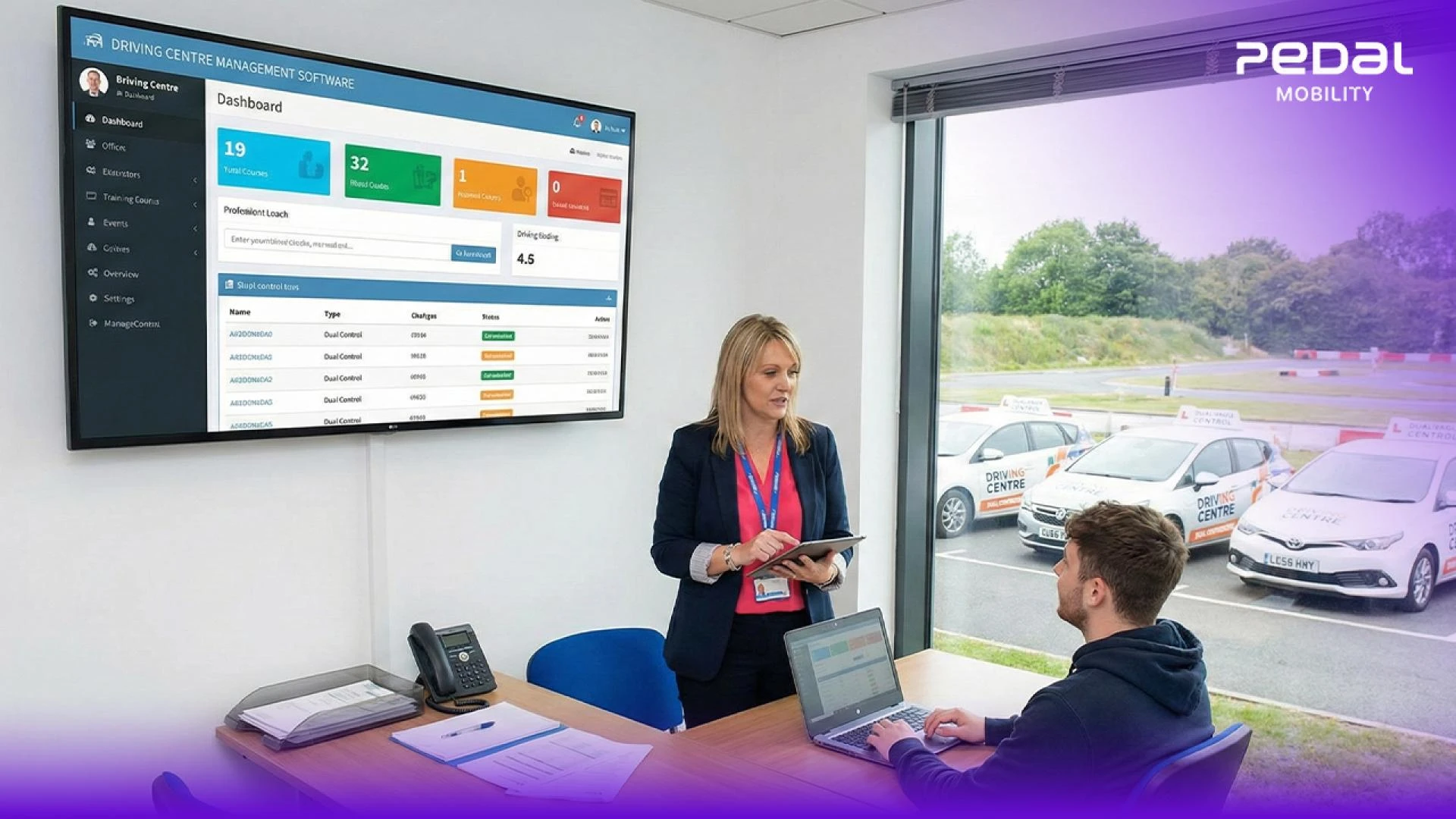
Driving education across the UAE and wider GCC is entering a new phase shaped by data, accountability, and digital oversight. Regulators are no longer focused only on outcomes such as pass rates or license issuance. They are increasingly interested in how training is delivered, monitored, recorded, and audited. In this environment, driving centres are expected to operate with transparency, consistency, and measurable control.
As regulatory frameworks become more data-driven, driving centre management software is emerging as a critical foundation for compliance and operational resilience. It enables training institutions to move beyond fragmented processes and align daily operations with evolving regulatory expectations.
The Shift Toward Data-Driven Regulation
Across the region, transport authorities and licensing bodies are adopting digital governance models. These models rely on structured data to ensure that driver training meets safety standards, instructional consistency, and audit requirements. Manual logs, paper files, and disconnected tools struggle to support this shift.
Regulators increasingly expect driving centres to demonstrate accurate attendance tracking, verified training hours, instructor accountability, assessment readiness, and historical records that can be reviewed when needed. Data is no longer a byproduct of operations. It is a core requirement.
For driving centres, this means that operational systems must be designed to capture, organize, and retrieve information reliably and in real time.
Why Traditional Operational Models Fall Short
Many driving centres still operate using a mix of spreadsheets, paper files, phone-based scheduling, and standalone applications. While these methods may function at a small scale, they introduce risk and inefficiency as regulatory scrutiny increases.
Common challenges include inconsistent data entry, limited visibility into learner progress, difficulty producing audit-ready reports, and delays caused by manual reconciliation. When information is spread across multiple systems or physical files, verifying accuracy becomes time-consuming and error-prone.
In a data-driven regulatory environment, these gaps can lead to compliance issues, operational slowdowns, and reduced trust with authorities.
What Driving Centre Management Software Enables
Driving centre management software addresses these challenges by centralizing operational data and standardizing workflows across the training lifecycle. Instead of relying on manual coordination, centres gain structured systems that support both daily efficiency and regulatory alignment.
A centralized platform allows learner records, instructor schedules, vehicle usage, attendance logs, and assessment data to exist within a single controlled environment. This structure ensures consistency in how information is captured and reduces the risk of missing or conflicting records.
From a regulatory perspective, this level of organization makes oversight simpler and more reliable. From an operational perspective, it reduces administrative burden and improves decision-making.
Supporting Compliance Through Structured Data
One of the most important roles of driving centre management software is its ability to support compliance without adding complexity. Automated data capture ensures that required information is recorded as part of normal operations rather than as an afterthought.
Attendance can be logged digitally. Training hours can be tracked automatically. Instructor assignments and vehicle usage can be verified through system records. When audits or reviews are required, reports can be generated quickly using verified data rather than being reconstructed manually.
This approach reduces compliance risk while allowing centres to focus on training quality rather than paperwork.
Improving Operational Efficiency at Scale
Beyond compliance, structured data unlocks operational efficiency. Management teams gain visibility into capacity utilization, instructor performance, learner progression, and scheduling patterns. These insights help centres allocate resources more effectively and reduce inefficiencies.
For example, data-driven scheduling can minimize idle time for instructors and vehicles. Progress tracking can identify learners who need additional support earlier in the process. Performance metrics can highlight training modules that require refinement.
As centres grow in size or operate across multiple locations, centralized software ensures that standards and processes remain consistent across the organization.
Meeting Learner Expectations in a Regulated Environment
Learners today also expect transparency and digital access. While regulatory needs drive much of the demand for structured data, learner experience benefits as well.
Digital records allow learners to view schedules, track progress, and receive timely updates. Clear documentation builds trust and reduces confusion. When systems are aligned, learners experience smoother journeys from enrollment to assessment.
Importantly, these improvements do not compromise regulatory control. Instead, they strengthen it by ensuring that learner-facing features are built on top of verified operational data.
Enabling Long-Term Adaptability
Regulatory frameworks continue to evolve as mobility strategies, safety priorities, and digital governance models mature. Driving centres need systems that can adapt to new reporting formats, data requirements, or oversight mechanisms without major disruption.
Driving centre management software provides this adaptability by offering configurable workflows and scalable data structures. As regulations change, centres can update processes within the system rather than redesign operations from scratch.
This flexibility is essential in regions where transport authorities actively refine policies to align with smart city and road safety initiatives.
The Role of Platform-Based Ecosystems
The most effective implementations treat management software not as a standalone tool but as part of a broader digital ecosystem. Learner applications, instructor tools, administrative dashboards, and regulatory reporting functions work together within a unified platform.
Pedal Mobility supports this ecosystem approach by enabling centralized control across driver training operations while maintaining flexibility for different operational models. The emphasis is on structure, data integrity, and scalability rather than isolated features.
This platform mindset helps driving centres future proof their operations in a regulatory environment that increasingly values data quality and transparency.
Conclusion
A data-driven regulatory environment demands more than basic digital tools. It requires structured systems that integrate compliance, operations, and performance management into everyday workflows.
Driving centre management software provides the foundation for this transformation. By centralizing data, standardizing processes, and enabling audit-ready reporting, it allows driving centres to operate with confidence, efficiency, and regulatory alignment.
As oversight frameworks continue to mature across the UAE and GCC, driving centres that invest in data-driven operational platforms will be better positioned to deliver consistent training outcomes, maintain compliance, and adapt to the future of driver education.