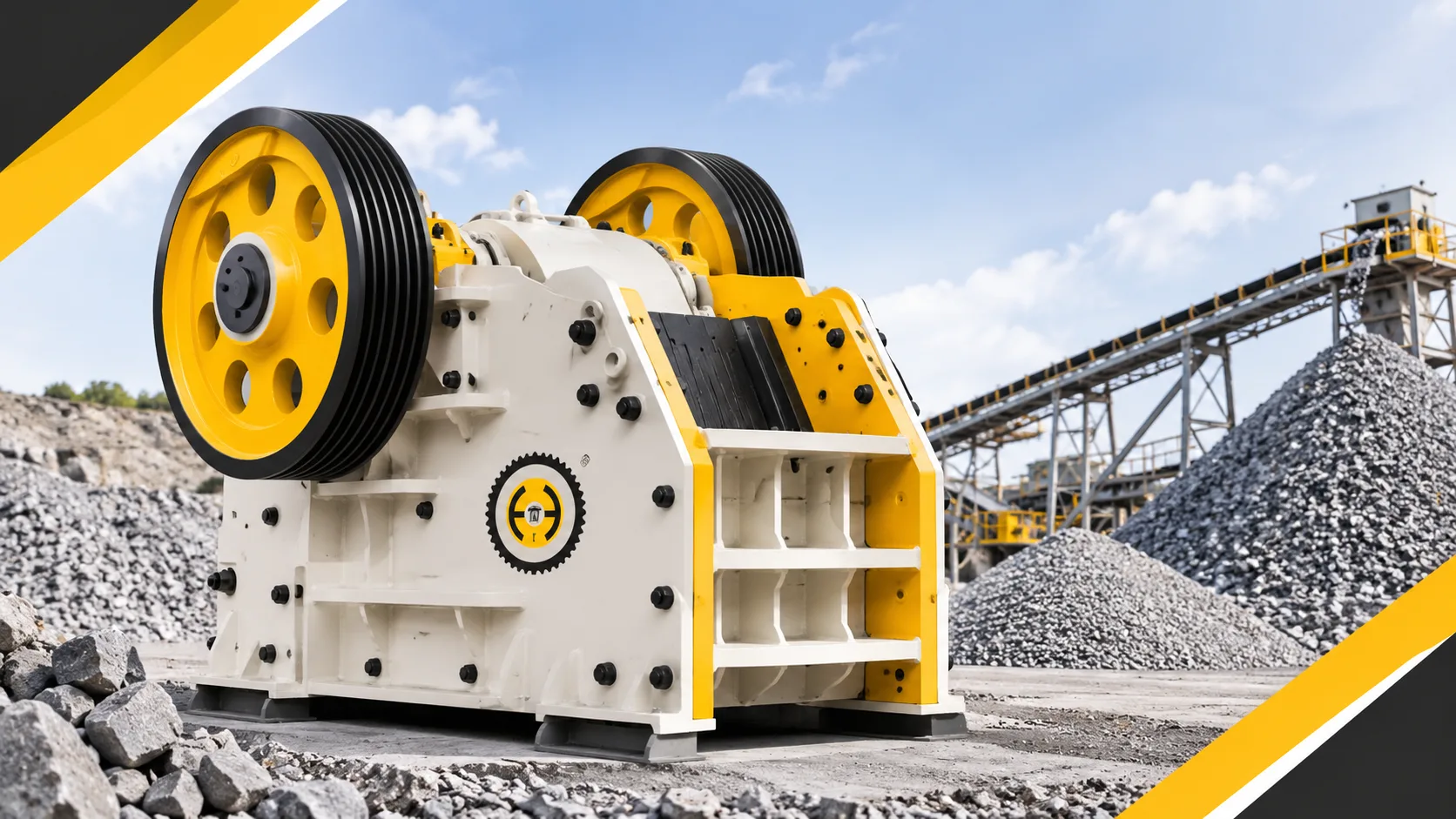
The crushing process plays an important role in mining, quarrying and construction industries. Choosing the right machine helps maintain production quality and handle different types of materials. A Double Toggle Jaw Crusher is widely used for primary crushing because of its strong construction and ability to process hard and abrasive materials.
This machine works through a mechanical arrangement that uses two toggle plates to create the crushing movement. Its design helps deliver consistent crushing performance in demanding working conditions. It is commonly used in stone crushing plants where durability and reliable operation are important.

Understanding the Working of a Double Toggle Jaw Crusher
A double toggle jaw crusher uses two toggle plates connected between the swing jaw and the machine frame. The movement of the eccentric shaft creates pressure on the movable jaw, allowing it to crush large rocks against the fixed jaw.
The toggle mechanism transfers the crushing force and supports the jaw movement during operation. This arrangement makes the machine suitable for applications that require strong crushing action and dependable performance.
Important Features of Double Toggle Jaw Crushers
One of the main features of this crusher is its heavy-duty structure, which supports continuous operation in industrial environments. Its crushing mechanism is suitable for handling hard stones and other challenging materials.
The jaw plates are important wear components that come into direct contact with the material. A properly designed toggle plate jaw crusher mechanism also helps maintain the required jaw movement during the crushing cycle.
Depending on the machine design, lubrication arrangements, adjustable discharge settings and suitable jaw plate materials can help improve operational reliability.
Double Toggle Grease Jaw Crusher and Oil-Lubricated Models
Jaw crushers are available with different lubrication arrangements to meet operating requirements. A Double Toggle Grease Jaw Crusher uses grease lubrication for its specified bearing and moving components. Oil-lubricated models use an oil-based lubrication arrangement to support the working mechanism.
The choice depends on machine design, operating conditions and maintenance requirements. Regular inspection and proper lubrication are important for maintaining equipment performance and extending component life.
Double Toggle vs Single Toggle Jaw Crusher
Both crusher types are used for primary crushing, but their mechanical arrangements are different. A double toggle jaw crusher uses two toggle plates, while a single toggle jaw crusher generally uses one toggle plate and a different jaw movement arrangement.
A Single Toggle Grease Jaw Crusher is another option for crushing applications where a grease-based lubrication system is preferred. The right machine depends on material hardness, required capacity, feed size and plant operating conditions.
Choosing the Right Double Toggle Jaw Crusher Manufacturer
Selecting the right equipment supplier is important for long-term plant performance. Buyers should consider machine construction, crushing capacity, spare parts availability, technical support and maintenance requirements before making a decision.
Experienced double toggle jaw crusher manufacturers can help customers select equipment according to their production needs. Working with a reliable manufacturer of double toggle jaw crusher also makes it easier to understand machine specifications and application requirements.
Explore Crushing Equipment from Mewar Hi-Tech
Mewar Hi-Tech offers crushing and screening solutions for industries involved in mining, quarrying and aggregate production. The company focuses on manufacturing equipment that supports demanding industrial applications.
Businesses looking for dependable crushing machinery can explore the range of products offered by Mewar Hi-Tech. Choosing the right Double Toggle Jaw Crusher with suitable technical specifications can help support consistent production and efficient material processing.