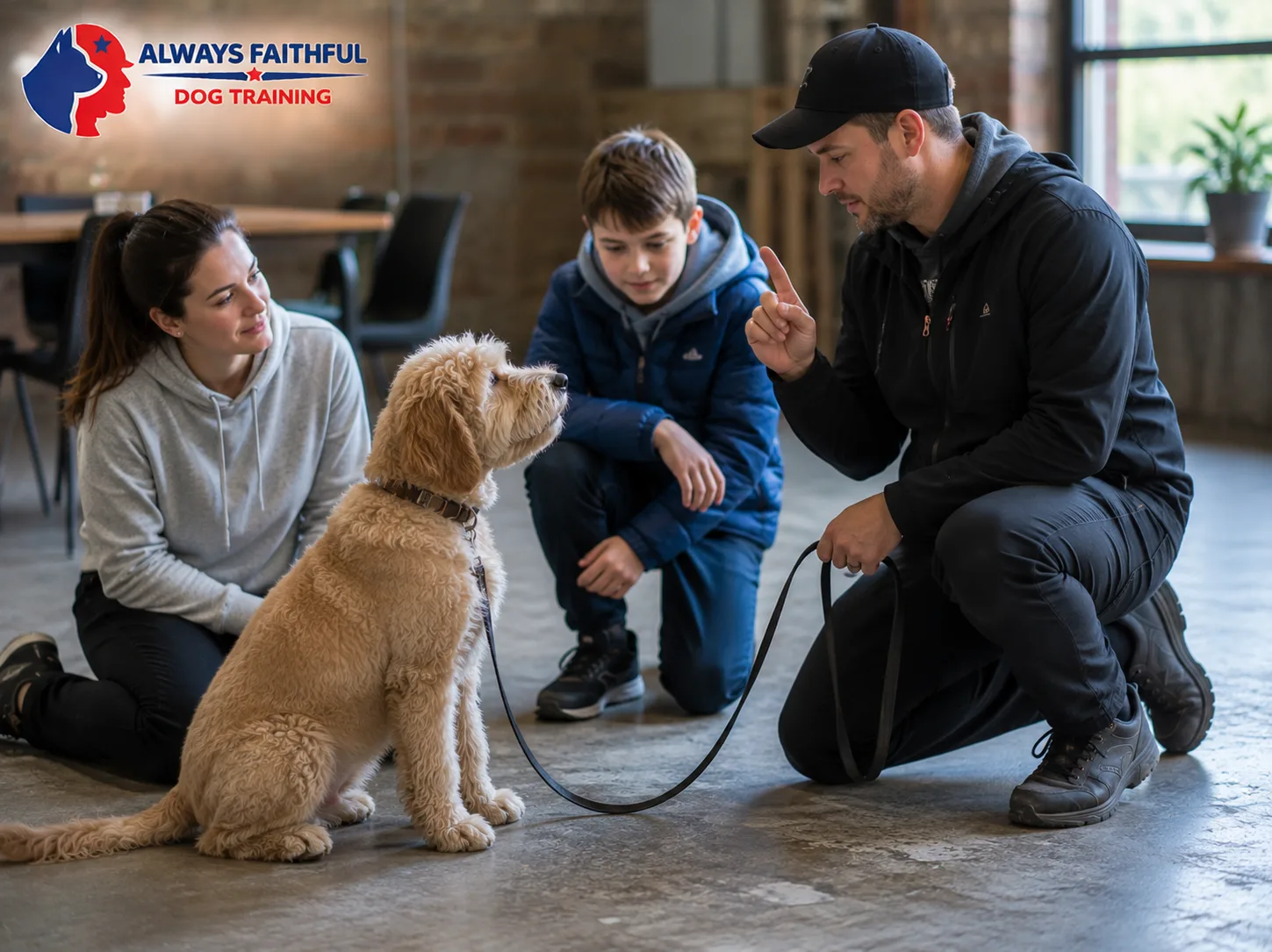
Having guests at home can reveal behaviors that owners rarely notice during ordinary routines. A dog may bark when the door opens, rush toward visitors, jump for attention, or become overly excited once someone enters the house. Working with a professional Dog Trainer can help owners understand why these reactions happen and how structured practice can create more appropriate responses. For people searching for Dog training Near me, the goal should not simply be finding a nearby service, but understanding the practical skills a dog needs to behave appropriately when unfamiliar people enter the home.
Why Visitors Can Change a Dog’s Behavior
A visitor introduces several changes at once. There may be a doorbell, footsteps outside, voices, movement near the entrance, and unfamiliar scents. For some dogs, these details create excitement. For others, they can trigger uncertainty or defensive behavior.
Dogs also notice how the people in the home respond. If everyone immediately becomes excited when the doorbell rings, the dog may learn that this sound predicts a major event. If people rush toward the door while talking loudly, the dog may mirror that energy.
Training can create a different pattern. Instead of allowing the arrival of a visitor to become chaotic, owners can establish predictable expectations that give the dog a clear behavioral framework.
Start With the Moment Before the Door Opens
One useful training opportunity happens before the visitor actually enters.
The dog can learn that the sound of a doorbell or knock does not automatically mean rushing toward the entrance. Owners can practice the sequence when there is no real guest waiting outside. A knock can be followed by a calm response from the handler, followed by a simple instruction for the dog.
This type of rehearsal separates the sound from the excitement of a real arrival.
A Dog Trainer may also help an owner recognize the difference between a dog that is excited and one that is becoming increasingly uncomfortable. Those situations require different approaches, which is why observing the dog's behavior rather than reacting only to barking is important.
Creating Space Around the Entryway
The front door can become one of the most stimulating areas in a house. Dogs may try to squeeze past people, jump against visitors, or position themselves directly in front of the entrance.
Teaching the dog to maintain an appropriate distance can make the entire interaction easier.
This does not necessarily mean forcing the dog into another room every time someone arrives. Instead, training can focus on teaching the dog where to remain and what behavior is expected while people move through the doorway.
Owners can practice with family members first. One person can approach the door while another works with the dog. Once the dog understands the basic expectation, the situation can gradually become more realistic.
The Difference Between Excitement and Anxiety
Not every difficult greeting means the same thing.
A dog that jumps, spins, and tries to greet everyone immediately may be responding to excitement. Another dog may bark, retreat, stiffen, or avoid direct contact because the visitor makes it uncomfortable.
These differences matter.
A calm greeting should not be built around forcing every dog to interact with every person. Some dogs benefit from having more distance and additional time to observe. Owners should pay attention to posture, movement, facial expression, and overall behavior before deciding what kind of training approach is appropriate.
This is also where searching for Dog training Near me can become more useful when the search leads to professional guidance that evaluates the individual dog's behavior instead of applying one identical routine to every situation.
Practice With Controlled Greetings
Real visitors are not always the best place to begin training.
Controlled practice allows owners to repeat the same situation without the pressure of an actual social event. A family member or trusted friend can act as the visitor. The person can approach slowly, pause, enter, sit down, and move around according to the training plan.
The dog gets an opportunity to experience each part of the interaction.
Over multiple sessions, the owner can work on specific behaviors such as remaining in place, waiting before approaching, keeping four paws on the floor, or responding to a handler's direction when the environment becomes more stimulating.
The objective is not to make every greeting identical. Instead, the dog learns that visitors are simply another part of everyday life and that calm behavior remains useful when people arrive.
Why Human Movement Matters
Dogs respond not only to the visitor but also to how humans move around them.
Someone bending over a dog, reaching quickly toward its head, waving their hands, or moving suddenly may produce a different reaction than someone standing calmly and giving the dog space.
Owners can improve greetings by managing their own movements as well. Visitors can be asked to avoid overwhelming the dog during the first few moments.
This gives the dog time to process the new person without unnecessary pressure.
A professional trainer can also demonstrate how handler positioning, leash management, timing, and body movement affect the dog's response. These details may appear minor, but they can influence how clearly the dog understands what is expected.
Building Reliable Behavior Beyond the Front Door
The same principles can be useful in other situations.
A dog may need to remain composed when someone approaches the owner in a driveway, when a delivery person comes to the house, or when a familiar guest walks into another room. Training becomes more reliable when the dog learns the underlying behavior rather than memorizing one exact sequence.
This is one reason structured practice should gradually include different people, movements, sounds, and environments.
The goal is to develop a response that remains useful when circumstances change.
When Professional Guidance Becomes Valuable
Some household greeting problems are straightforward, while others involve intense fear, aggression, or difficulty controlling the dog safely. In those cases, professional assistance can help owners identify what is happening and establish a safer training process.
A Dog Trainer can observe the interaction directly and identify details that an owner may overlook. The trainer can also help determine whether the dog needs more distance, clearer boundaries, better timing, or a gradual exposure plan.
Professional guidance is particularly valuable when attempts to correct the behavior have repeatedly increased excitement or tension.
Training should create clearer communication rather than simply suppressing visible behavior.
Turning Guest Arrivals Into a Learning Opportunity
Every visitor can become another opportunity for a dog to practice appropriate behavior.
Instead of viewing barking, jumping, or rushing toward the door only as annoying habits, owners can treat these moments as information. The dog's reaction shows where additional training may be needed.
With repetition, the arrival of another person can become less dramatic. The dog can learn that the door opening does not require immediate action and that following the handler's direction is more productive than reacting impulsively.
For owners researching Dog training Near me, this everyday approach can be especially useful because household behavior is often where training needs to function most reliably.
A Skill That Supports Everyday Life
A well-managed greeting is more than a convenience for visitors. It can help create a calmer household and give the dog clearer expectations during one of the most stimulating moments of the day.
Whether the dog is young, mature, highly energetic, or naturally cautious, training can focus on teaching practical responses that fit real household situations. A Dog Trainer can provide structure, while consistent practice at home helps turn that structure into a familiar routine.
For owners looking for Dog training Near me, focusing on real-life skills such as calm guest greetings can be a practical starting point. When dogs understand what behavior is expected when someone arrives, both the household and its visitors can experience a more predictable and manageable interaction.