
Table of Content
● Do I Need Roof Repair or Full Replacement in Portland?
● What Signs Tell You Your Roof Needs Repair or Replacement?
● What Visible Warning Signs Should You Never Ignore?
● Does Roof Age Matter More Than Damage?
● Repair vs Replacement — Which Option Makes More Sense?
● When Is Repair Enough and When Is Replacement Smarter?
● What Happens If You Delay Roof Work?
● Can Small Roof Problems Turn into Major Damage?
● Expert Tips for a Smooth Roof Repair or Replacement
● Quick Decision Guide: Repair or Replace Your Roof
● Get a Clear Answer About Your Roof
● FAQs
Key Insights
● Isolated damage on newer roofs usually means repair is enough.
● Roofs over ~20 years old often cost less to replace than repeatedly repair.
● Multiple leaks or widespread moss usually signal system failure, not surface damage.
● Delaying fixes can multiply costs up to 10–100× due to hidden structural damage.
● The smartest decision comes from evaluating age, damage spread, and material condition together.
Do I Need Roof Repair or Full Replacement in Portland?
Portland’s long rainy season exposes roof problems fast. A small leak or moss patch can signal anything from minor damage to full system failure, which makes knowing the difference critical for protecting your home and budget. In most cases, newer roofs with isolated issues need repairs, while older roofs showing widespread wear usually require replacement. This guide breaks down how to tell which situation you’re in, what local climate factors matter, and how to make the smartest decision before a small problem turns into a costly structural repair.
What Signs Tell You Your Roof Needs Repair or Replacement?
Roof damage rarely announces itself with a dramatic collapse. Most systems fail gradually, especially in Portland’s wet climate where moisture, moss, and temperature shifts quietly wear materials down. The key is pattern recognition. Is damage limited to one spot or spread across multiple slopes? Is the issue cosmetic, structural, or moisture-related? Localized problems usually mean repair works. Widespread deterioration signals system fatigue and points toward replacement. Understanding these signals early helps you act before minor deterioration escalates into structural damage or insulation failure.
What Visible Warning Signs Should You Never Ignore?
Watch for these high-priority indicators homeowners commonly miss:
● Granules in gutters: Signals shingles are losing their protective coating and nearing failure.
● Curling or cupping shingles: Indicates material fatigue and trapped moisture pockets.
● Moss buildup: Holds water against shingles and lifts edges, accelerating decay.
● Ceiling stains or attic dampness: Proof water has breached outer layers.
● Daylight through roof boards: Structural failure warning that requires immediate action.
Each of these signs tells you something different about severity. One isolated symptom may need repair. Multiple symptoms usually mean replacement is more cost-effective.
Does Roof Age Matter More Than Damage?
Age often outweighs visible damage in Portland roofing decisions. A roof rated for 30 years elsewhere typically lasts only 15–20 years here because constant moisture prevents full drying cycles.
Older shingles become brittle. Repairs can crack surrounding sections. That’s why patching aging roofs often fails sooner than expected.
Younger roofs behave differently. If damage is isolated, repairs usually hold. If the system is over 20 years old, replacement often delivers stronger long-term value.

Repair vs Replacement — Which Option Makes More Sense?
Choosing between repair and replacement comes down to scope, age, and system integrity. Isolated damage on a structurally sound roof usually makes repair the smarter investment. But when deterioration appears across multiple sections, repairs become temporary fixes rather than solutions.
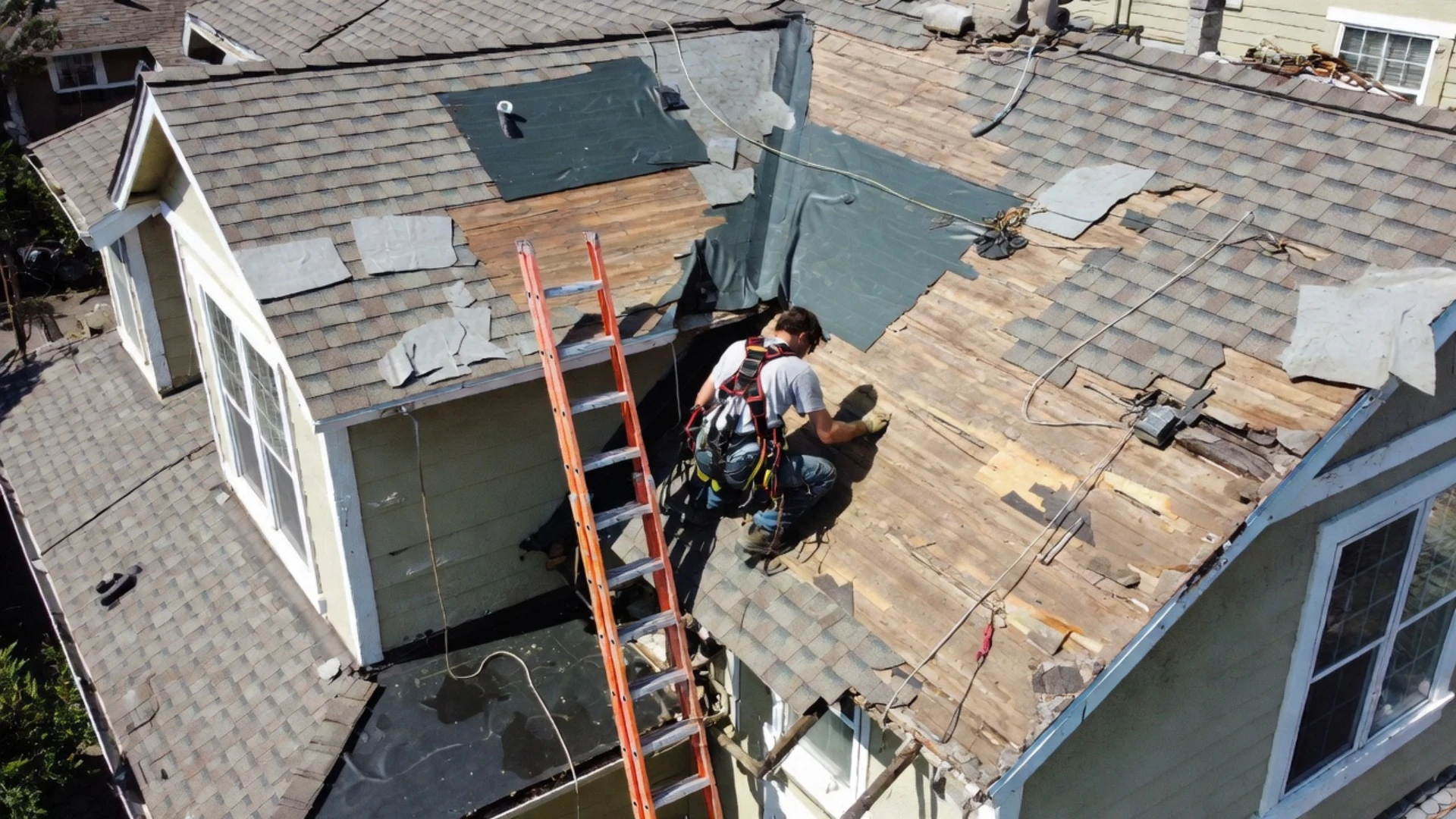
"A 10-year-old roof that leaks has a problem. A 22-year-old roof that leaks has a verdict. Age changes everything about how you interpret damage."- PDX Roofing and Siding Expert
In Portland’s moisture-heavy climate, widespread wear often signals deeper material fatigue. The right choice isn’t about the cheapest option today. Its about which option prevents repeat costs, protects structural components, and preserves your roof’s remaining lifespan.
Did you know?
Re-roofing and repair dominate U.S. roofing market activity at 80%+, driven largely by essential, non-discretionary replacements rather than elective upgrades. Severe weather is a major demand catalyst, generating an estimated 40 million sq. ft. of storm-related roof replacements each year. (Source: Punxsutawney Spirit, February 2025)
When Is Repair Enough and When Is Replacement Smarter?
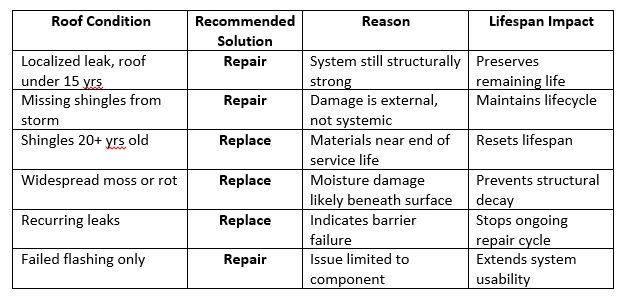
Use this rule: Repairs solve isolated problems; replacements solve system failure. If damage comes from a specific event like wind or falling debris, targeted fixes usually restore performance. But if shingles are brittle, leaks appear in multiple spots, or moss has spread across large sections, the roofing system has likely reached end-of-life. In those cases, replacement delivers better long-term value and prevents recurring repair bills.
Repair vs Replacement Decision Guide
"Isolated damage on a young roof is a maintenance call. The same damage on a roof with brittle shingles, granule buildup in the gutters, and 20-plus years of Pacific Northwest weather behind it is a system telling you it's done. Listening early saves thousands." -- PDX Roofing and Siding Expert
What Happens If You Delay Roof Work?
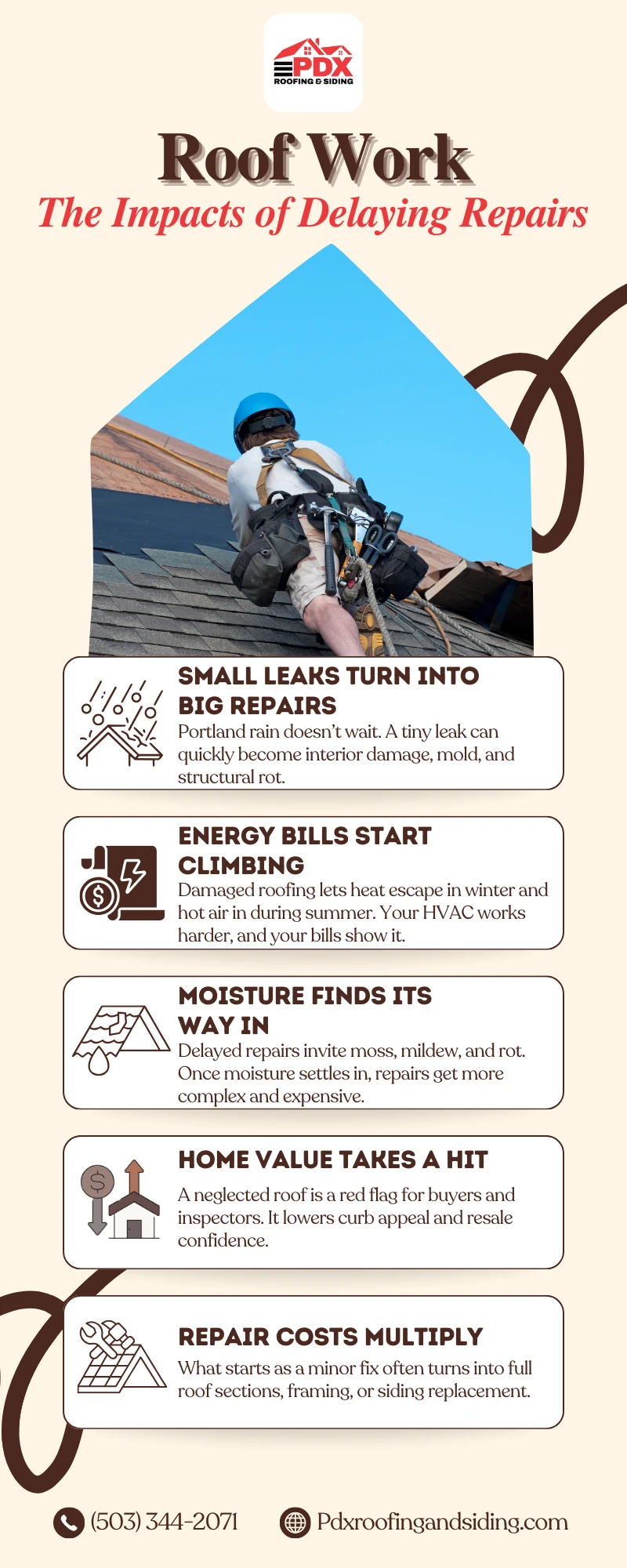
Putting off roof work might feel harmless, especially if the issue looks small. But in Portland’s long wet season, even minor damage gets hit with months of moisture pressure. Water doesn’t just sit on the surface. It seeps into insulation, wood decking, and framing. What starts as a simple repair can quietly expand into structural deterioration, mold growth, and rising energy costs. Acting early isn’t about urgency tactics. It’s about preventing a small maintenance job from turning into a major restoration project.
Can Small Roof Problems Turn into Major Damage?
Yes, and it happens faster than most homeowners expect. A single missing shingle or cracked seal lets water slip inside the system. Once moisture reaches insulation, it spreads and stays trapped. That damp environment accelerates wood rot and reduces insulation efficiency, sometimes increasing energy bills by $50–$200 per month.
Industry data shows every $1 of delayed roof repair can lead to $10–$100 in future damage costs. Small roof issues don’t stay small. They compound quietly until repairs become replacements.
Expert Tips for a Smooth Roof Repair or Replacement
● Ask the cause: Understand what led to the damage so the fix lasts.
● Get photo proof: Before-and-after images confirm work quality.
● Prep your space: Move cars and clear attic or yard areas.
● Confirm timeline: Know schedule and weather backup plans.
Quick Decision Guide: Repair or Replace Your Roof
If you’re unsure which direction your roof condition points to, use these indicators as a fast self-check. Most roofs clearly lean one way once you compare age, damage spread, and material condition. This isn’t a substitute for a professional inspection, but it helps you understand what your roof is likely telling you.
Signs Repair Is Enough
● Damage is isolated to one section
● Roof is under 15 years old
● Shingles are still flexible and intact
● Leak source is clearly identifiable
● No widespread moss or sagging areas
Signs Replacement Is Safer
● Roof is over 20 years old
● Problems appear in multiple areas
● Shingles are brittle, curling, or missing
● Moss growth is extensive
● Repairs are becoming frequent or costly
When most of your signs fall into one list, that’s usually the direction your roof investment should go. 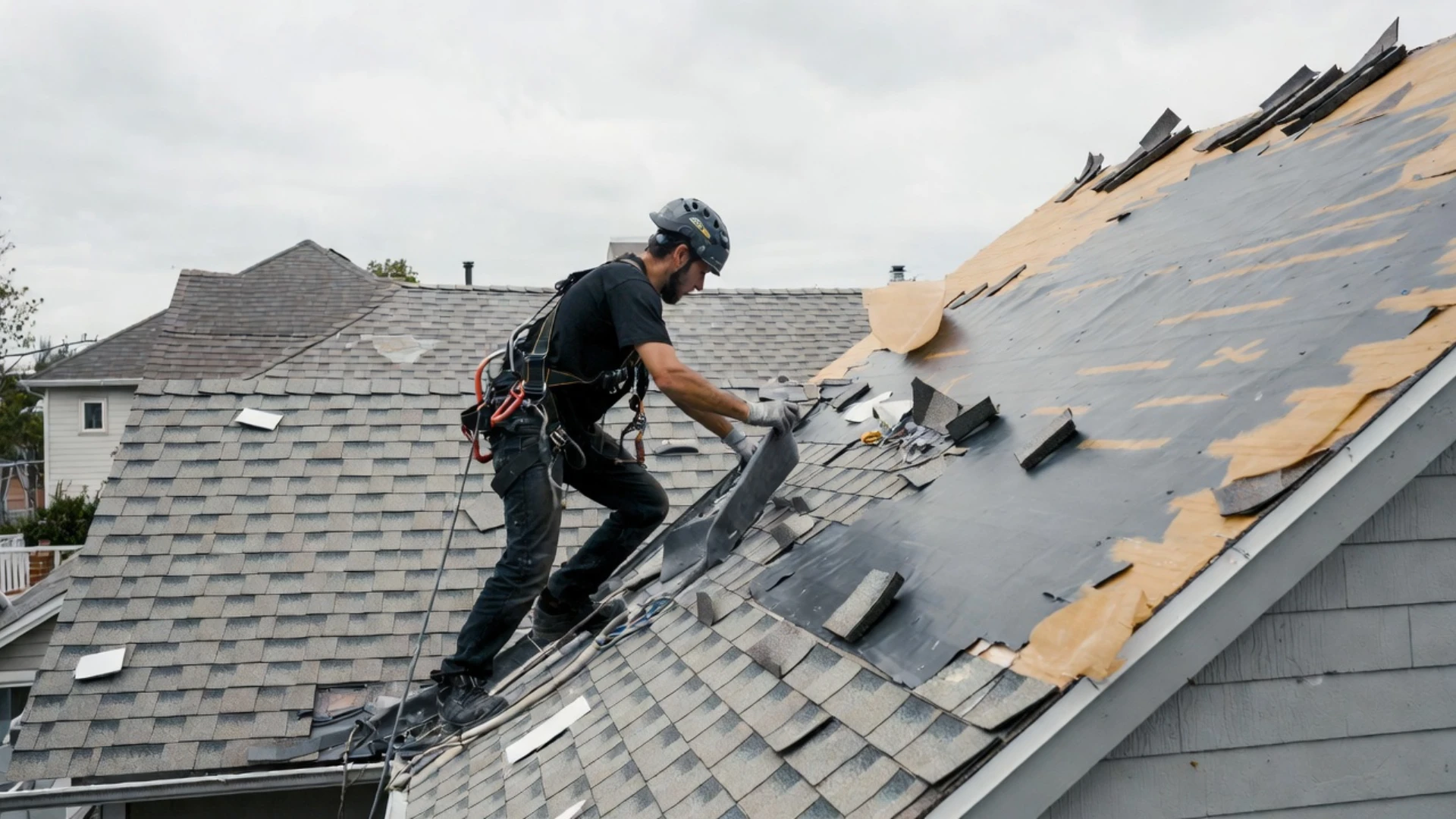
Get a Clear Answer About Your Roof
Not sure whether you need a repair or full replacement? Our team at PDX Roofing & Siding will inspect your roof, explain what we find, and recommend the most practical solution based on your roof’s condition and age. We focus on honest assessments so you can make the right decision for your home and budget.
Expert Services offered:
Free Estimates: We offer free estimates on all our services. Call now to schedule or request yours online:
FAQs
1. Can I replace only half my roof instead of the whole thing?
Yes, partial replacements are possible if one section is damaged and the rest is structurally sound. But mismatched aging can shorten overall lifespan, so contractors usually recommend this only when the remaining roof is relatively new.
2. Does homeowners’ insurance cover roof repair or replacement?
Insurance may cover damage caused by sudden events like storms or falling debris. It usually won’t cover age-related wear, neglect, or gradual deterioration.
3. What time of year is best for roof work in Portland?
Late spring through early fall is ideal because dry weather improves installation quality and reduces scheduling delays.
4. Will a new roof increase my home’s value?
Yes. A new roof can improve resale appeal and buyer confidence, often delivering strong return on investment in real estate transactions.
5. How long does a typical roof project take?
Most residential repairs take a few hours to a day. Full replacements usually take 1–3 days depending on size, weather, and structural condition.
Original Source: https://pdxroofingandsiding.com/do-you-need-full-roof-replacement-or-repair-portland/