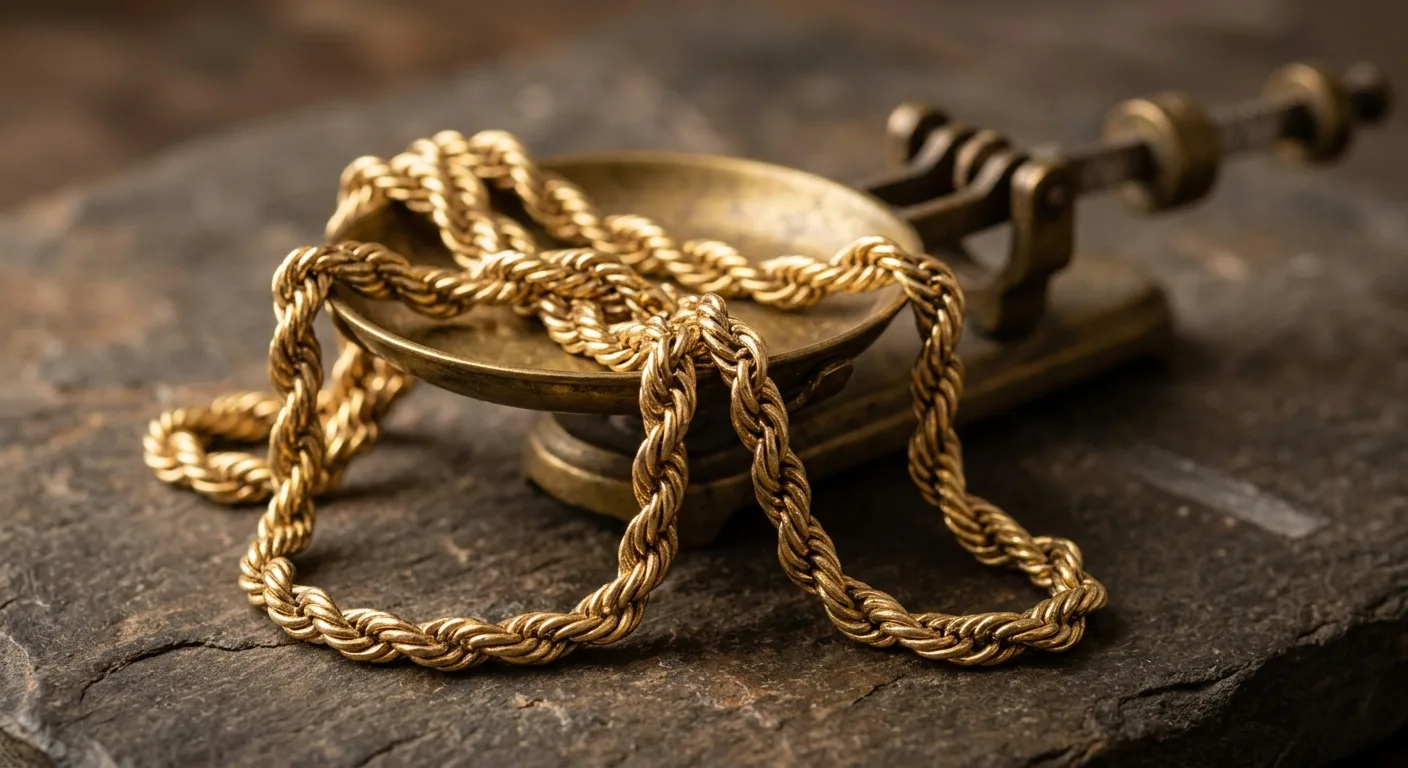
Gold chains generally do hold their value over time, since the underlying metal doesn't degrade and gold prices have trended upward across most long stretches of history. What fluctuates isn't the gold itself. It's how much of the original purchase price comes back at resale, which depends heavily on karat, weight, and where the chain gets sold.
Why the Metal Holds Value Even When the Price Tag Doesn't
Gold doesn't rust, corrode, or degrade under normal conditions. A chain bought decades ago still contains the same amount of gold today as the day it was made (assuming no repairs or alterations swapped out material). That part of the value question is settled. Physical gold content is permanent.
The part that trips people up is separating metal value from purchase value. A retail chain often costs more than its melt worth on day one, because the price includes craftsmanship, brand, and retail markup. That gap doesn't close by holding onto the piece longer. It's baked in from the moment of purchase.
Do Gold Chains Hold Their Value at Resale?
Here's where the real answer lives: do gold chains hold their value well enough to resell close to what was paid? Usually not at the original retail price, but often reasonably close to fair market value for the gold content, especially with higher karat pieces. A 14k chain purchased for style and worn daily will typically resell for its gold weight and purity, not its original sticker price.
This is a common source of disappointment. Someone spends real money on a well-made chain, wears it for years, then brings it in for appraisal expecting close to retail. What they get instead is a weight-and-karat quote. That's not the seller shortchanging anyone. That's simply how the resale gold market prices jewelry, based on scrap value unless the piece has recognized brand or collector demand attached to it.
What Actually Moves the Needle on Long-Term Value
A few factors matter more than people expect, and a few matter less.
Karat purity matters most. Higher karat gold contains more actual gold by weight, so it holds closer to spot price at resale. Weight matters just as much, since resale is almost always priced per gram or per ounce. Brand recognition matters occasionally, mostly with well-known jewelry houses where buyers pay a premium for provenance. Condition matters less than people assume, since most resale buyers melt jewelry down regardless of scratches or wear.
One thing that's genuinely debated among buyers and appraisers: whether design complexity adds any resale value at all, or whether it's purely a retail-side cost that disappears the moment the chain changes hands. Some specialty buyers do pay more for intricate or handmade work. Most general gold buyers don't distinguish it from a plain chain of the same weight.
A Practical Way to Think About Long-Term Ownership
Treat a gold chain's long-term value in two separate buckets: the metal, which reliably holds worth and tends to appreciate alongside gold prices, and the craftsmanship premium, which is mostly a sunk cost paid once at purchase. Understanding that split changes expectations at resale time, and honestly, it should.
That framing lines up with a broader argument some jewelers make about chains compared to bullion. The case for why buying gold chains is a smarter investment than buying gold bars rests partly on this same idea: a well-chosen chain carries the gold's value plus real, everyday wearability, something a bar sitting in a safe never offers.
Storage and Care Do Affect Practical Value
Physical gold value doesn't decay, but a neglected chain can still lose practical value through damage. Bent links, broken clasps, or missing sections reduce weight and can complicate resale. Basic care extends the useful life of a piece without costing much: keep chains away from chlorine and harsh chemicals, store them separately to avoid tangling and scratching, and get clasps checked periodically if the chain sees daily wear.
None of that changes the gold content, but it changes how easily a buyer or appraiser can assess the piece later, and a chain in good condition is simply easier to sell without haggling.
The Bottom Line for Anyone Holding a Chain
Gold chains hold value in the way that matters most long-term: the metal itself. What they don't reliably hold is the retail markup paid on day one. Anyone buying with resale in mind should prioritize karat and weight over design complexity, and anyone already holding a chain should think of it as a gold position with a wearable bonus, not the other way around.