
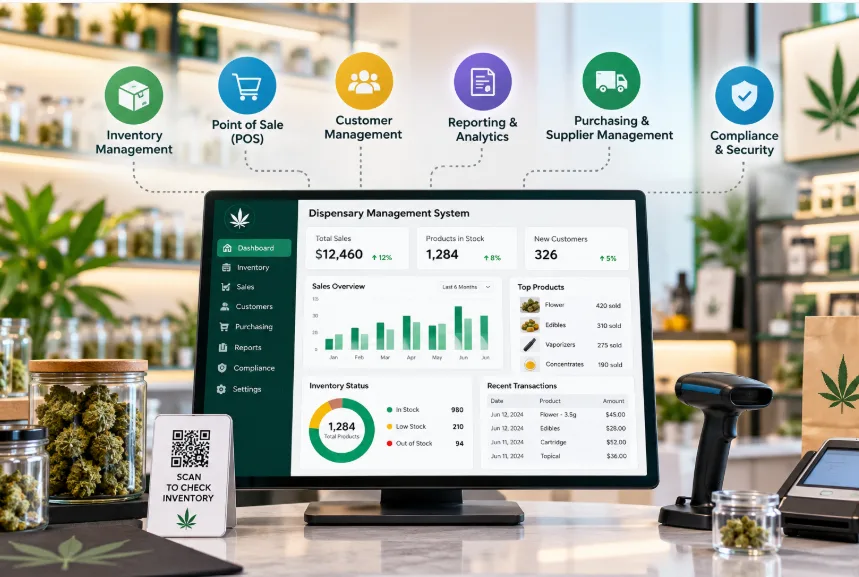
Managing a dispensary involves coordinating inventory, sales, customer information, staff activities, purchasing, and regulatory requirements. When these operations rely on disconnected tools or manual processes, businesses may experience inventory discrepancies, delayed reporting, and unnecessary administrative work. Dispensary management systems help bring these activities together through a centralized digital platform.
What Are Dispensary Management Systems?
Dispensary management systems are software solutions designed to manage the operational activities of a dispensary. Depending on the business model, these systems can support product management, inventory tracking, point-of-sale transactions, customer records, purchasing, reporting, and compliance workflows.
A centralized platform gives authorized staff access to relevant operational information while helping managers monitor activity across departments or locations.
Key Features of Dispensary Management Software
Inventory Tracking
Inventory tracking helps dispensaries monitor stock quantities, product movements, incoming supplies, and available items. Automated updates following sales and stock receipts can improve inventory accuracy and reduce discrepancies.
Point-of-Sale Integration
A dispensary POS system can connect sales transactions with inventory records, payment processing, and reporting. When a product is sold, the system can update its available quantity according to configured business rules.
Product and Supplier Management
Product management features help maintain product details, pricing, supplier information, and purchase records. These capabilities support more organized procurement and replenishment workflows.
Customer Relationship Management
Customer management features can maintain authorized customer profiles, purchase histories, preferences, and loyalty information. Businesses can use these records to improve service and coordinate customer interactions while following applicable privacy requirements.
Reporting and Analytics
Reporting tools can provide visibility into sales performance, stock levels, returns, purchasing trends, and operational exceptions. Managers can use these insights to identify fast-moving products, review slow-moving inventory, and make more informed purchasing decisions.
Why Dispensary Inventory Management Matters
Inventory is central to dispensary operations. Overstocking can tie up working capital, while stockouts may lead to missed sales and customer dissatisfaction.
An effective dispensary inventory management system can track stock movements from receiving through sale or adjustment. Depending on the requirements, it may also support batch tracking, expiration monitoring, cycle counts, low-stock alerts, and automated reorder recommendations.
These capabilities help staff identify discrepancies and maintain better visibility into available products.
Supporting Regulatory Compliance
Dispensaries may need to comply with licensing rules, product labeling requirements, transaction restrictions, age verification, and jurisdiction-specific reporting obligations.
Dispensary management software can incorporate configurable controls to support these processes. For example, it may provide permission-based access, transaction records, product traceability, license reminders, and connections to applicable regulatory systems.
The exact requirements vary by location and dispensary type, so compliance features should be configured around the relevant regulations and verified before deployment.
Integration With Existing Business Systems
A dispensary may already use accounting software, payment platforms, barcode scanners, supplier systems, or external reporting tools. Connecting these applications with the management platform can reduce duplicate entry and improve information consistency.
Integration requirements should define which system owns each data element, how updates are synchronized, and how failed transactions are handled.
Benefits of a Centralized Dispensary Platform
A properly configured system can help businesses:
- Reduce manual inventory updates.
- Improve sales and stock visibility.
- Simplify purchasing and replenishment.
- Coordinate staff activities.
- Improve operational reporting.
- Maintain more consistent product records.
- Support multi-location management.
- Strengthen traceability and compliance workflows.
Conclusion
Dispensary management systems help businesses coordinate inventory, sales, purchasing, customer information, and compliance activities in one connected environment. By combining inventory management, POS integration, reporting, access controls, and workflow automation, dispensaries can improve operational visibility and build processes that support their changing business needs.