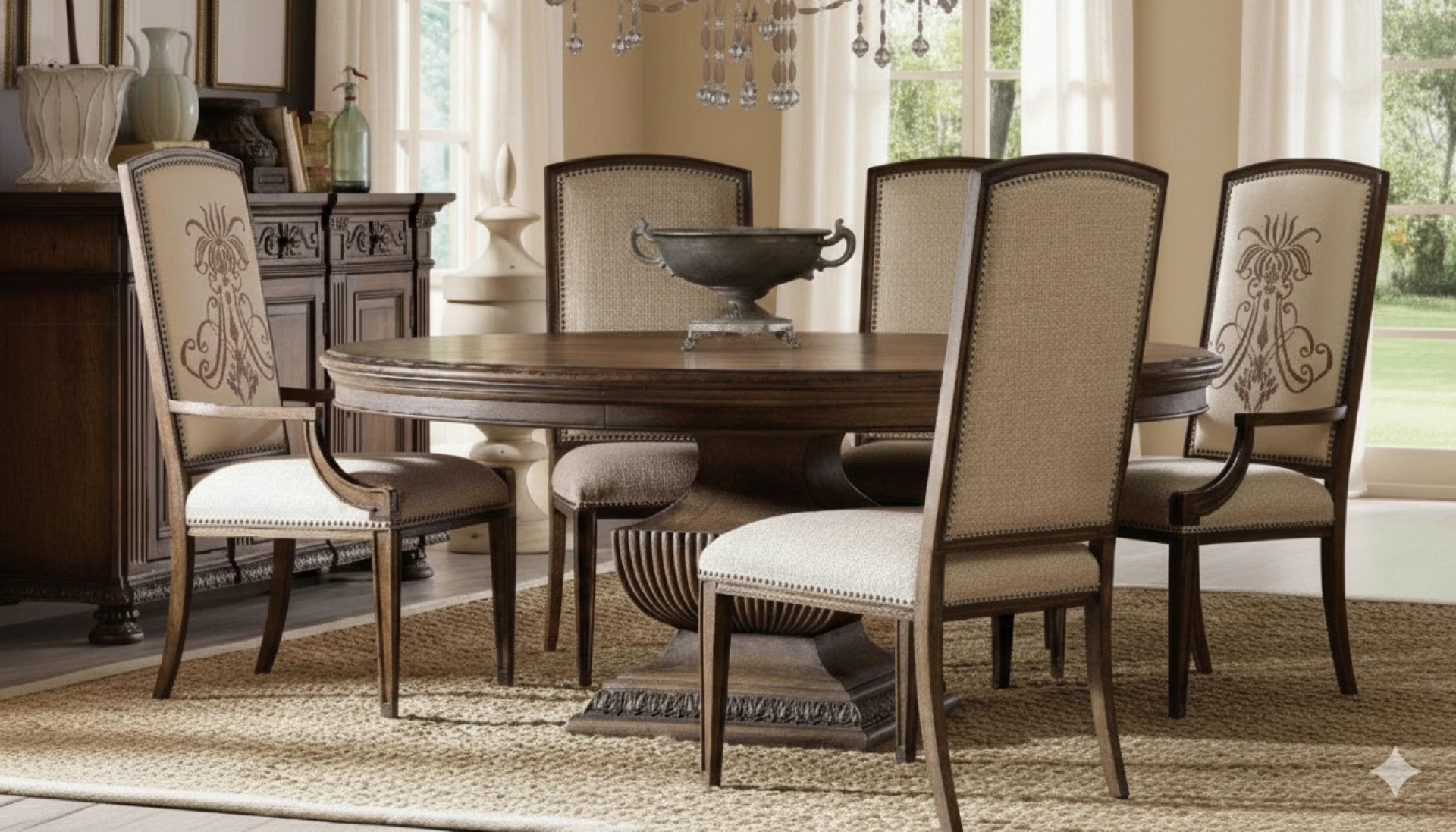
Of all the pieces in a home, none holds quite the same gravitational pull as the dining table. It is the stage for our most cherished rituals: the boisterous family dinners, the quiet morning coffees, the heartfelt conversations that stretch into the night. In our modern era of mass-produced, fast-fashion furniture, the choice of a dining table is more than a stylistic one; it is a declaration of values. And increasingly, those with an eye for enduring quality and a soulful narrative are turning away from the generic and towards the glorious realm of antique furniture, where history, craftsmanship, and character converge in a single, magnificent dining table design.

More Than Wood: The Soul of an Antique Table
An antique dining table is not merely a surface upon which to place a meal. It is a living artifact, a piece of history that has borne witness to generations of human experience. The gentle wear on the edge of a pedestal base, the soft patina earned from a century of polished hands and shared feasts, the faint ring of a long-ago wine glass—these are not flaws. They are the very essence of its charm, the whispers of stories embedded in the grain. Unlike its modern counterparts, which often prioritize a flawless, sterile perfection, an antique table celebrates a life well-lived. It brings a warmth and authenticity to a room that no new piece can hope to replicate.
A Journey Through Styles: Finding Your Era
The term "antique dining table" is a gateway to a breathtaking diversity of styles, each reflecting the aesthetics and social customs of its time. Understanding these key periods is the first step in finding a table that resonates with your own story.
- The Grandeur of the Victorian Era:For those who dream of dramatic, substantial presence, the Victorian table is a quintessential choice. Often crafted from rich, dark woods like walnut or mahogany, these tables are defined by their heaviness and ornate decoration. Think massive, turned legs, intricately carved pedestals featuring acanthus leaves or floral motifs, and expanses of gleaming, hand-polished wood. A Victorian extension table, with its robust leaves and mechanical weight, speaks to an age of formal dinners and opulent entertaining.
- The Refined Elegance of Georgian Design:Preceding the Victorian era, the 18th century was dominated by the serene proportions and classical influences of Georgian dining table design. Names like Thomas Chippendale, George Hepplewhite, and Thomas Sheraton defined this period. Tables are characterized by their elegance and balance. You'll find graceful, tapered legs often ending in a "spade" or "club" foot, inlay work using contrasting woods like satinwood or holly, and a overall sense of architectural harmony. A Georgian drop-leaf table, or a "Pembroke" table, offers incredible versatility and timeless sophistication.
- The Rustic Charm of Farmhouse and Country Tables:Not all antiques are formal. The country dining table design of the 18th and 19th centuries offers a more relaxed, robust aesthetic. Often made from local woods like pine, oak, or maple, these tables were built for durability and daily life. They feature simpler, sturdy turned legs, wide plank tops that show their age beautifully, and a warm, inviting patina. A rustic refectory table, with its trestle base and solid plank top, brings a sense of earthy, timeless stability to a space.
- The Advent of Arts & Crafts and Mission Styles:As a reaction to the industrial revolution and the excesses of Victorian ornamentation, movements like the Arts & Crafts (in the UK) and Mission (in the US) emerged. Led by visionaries like Gustav Stickley, this dining table design philosophy championed honesty in materials and construction. Tables from this period are rectilinear and solid, showcasing the beauty of quarter-sawn oak with its distinctive "tiger stripe" grain. The joinery—such as mortise and tenon joints—is often exposed, celebrating the skill of the craftsman. These pieces are the epitome of integrity and understated beauty.
Weaving the Past into the Present: The Art of Integration
The most common hesitation about incorporating an antique dining table is the fear that it will look out of place in a contemporary home. This is where the magic happens. The contrast between old and new can create a dynamic and deeply personal interior.
- Create a Focal Point:Let the table be the undeniable star of the room. Pair a stately Victorian pedestal table with minimalist, modern ghost chairs. The transparency of the chairs will highlight the table's solidity and intricate base without competing with it.
- Embrace Eclectic Mixing:A rustic French country table looks stunning surrounded by industrial metal chairs or sleek, upholstered benches. The mix of textures—old wood, cool metal, soft fabric—creates a layered, collected-over-time look that feels both curated and comfortable.
- Lighting as a Bridge:Use contemporary lighting, like a bold, linear suspension lamp or a cluster of modern pendants, above an antique table. The lighting acts as a stylistic bridge, tying the historical piece to the present-day space.
- Keep the Surroundings Simple:Allow the table's character to shine by keeping the walls, floors, and surrounding décor relatively neutral. A simple backdrop ensures the table remains the captivating centerpiece it was always meant to be.
In the end, choosing an antique dining table is an act of curation and connection. It is a decision to invest in a piece that has already stood the test of time, to honor the artistry of the past, and to provide a soulful, story-rich heart for your home for generations to come. It is not just a purchase; it is an adoption of history, a commitment to sustainability, and the beginning of your own chapter in its long, beautiful life.