
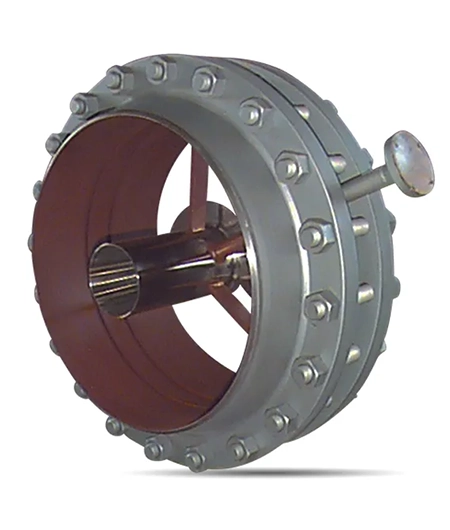
In high-pressure and high-temperature steam systems, maintaining precise temperature control is essential for operational safety, equipment protection, and process efficiency. Superheated steam is commonly used in power generation, chemical processing, refineries, food production, and other industrial applications. However, many downstream processes require steam at a controlled temperature closer to saturation.
A Desuperheater plays a critical role in achieving this balance. By injecting finely atomized cooling water into superheated steam, it reduces steam temperature to the desired setpoint. Yet, accurate temperature regulation depends not only on mechanical design but also on advanced control strategies. This article provides an in-depth look at desuperheater control principles, system components, and modern automation techniques used for precise steam temperature regulation.
The Importance of Accurate Steam Temperature Control
Steam temperature directly impacts:
- Turbine blade life and efficiency
- Heat exchanger performance
- Process consistency and product quality
- Piping integrity and material stress
- Overall plant safety
Excessively high temperatures can damage downstream equipment, while overcooling can produce wet steam, leading to erosion, corrosion, and reduced heat transfer efficiency. Therefore, implementing robust desuperheater control strategies is essential for stable and reliable plant operation.
Working Principle of a Desuperheater
A Desuperheater operates by spraying a controlled amount of cooling water into a superheated steam line. The injected water absorbs excess heat and evaporates, lowering the steam temperature.
Key elements involved include:
- Steam inlet line
- Water injection nozzle or atomizing system
- Temperature sensor (downstream)
- Control valve for water flow
- Control system (PID, PLC, or DCS)
The goal is to ensure complete evaporation of the injected water before the steam reaches downstream equipment.
Primary Control Strategies for Desuperheater Systems1. Feedback Temperature Control (Closed-Loop Control)
Feedback control is the most widely used method for regulating steam temperature.
How It Works:
- A temperature sensor measures steam temperature downstream of the desuperheater.
- The signal is sent to a controller.
- The controller compares actual temperature with the setpoint.
- The water control valve adjusts flow to correct any deviation.
Advantages:
- Simple and reliable
- Continuous correction of temperature errors
- Suitable for steady-load applications
Limitations:
- Time delay due to steam-water mixing and evaporation
- Slower response to sudden load changes
Proper tuning of the PID controller is essential to avoid oscillations and instability.
2. Feedforward Control Strategy
Feedforward control anticipates temperature changes before they occur. Instead of waiting for temperature deviation, it responds to changes in steam flow or pressure.
How It Works:
- Steam flow rate and pressure are continuously monitored.
- Based on mathematical calculations, required cooling water flow is predicted.
- The control valve adjusts water injection preemptively.
Benefits:
- Faster response
- Improved performance under fluctuating loads
- Reduced temperature swings
Feedforward control is especially beneficial in power plants, where steam demand varies rapidly.
3. Combined Feedforward and Feedback Control
For high-precision applications, industries often combine both strategies.
Why Combine?
- Feedforward handles rapid load variations.
- Feedback corrects residual errors.
Result:
- Superior temperature stability
- Minimal overshoot or undershoot
- Improved system reliability
This hybrid method is considered best practice in critical steam systems.
4. Cascade Control System
Cascade control uses two control loops working together:
Primary Loop:
Controls steam outlet temperature.
Secondary Loop:
Controls cooling water flow rate.
The secondary loop responds quickly to water pressure fluctuations, improving stability and reducing disturbances before they affect steam temperature.
Advantages:
- Faster corrective action
- Improved system dynamics
- Better disturbance rejection
Cascade control is ideal for systems where water supply conditions vary.
5. Adaptive and Advanced Control Systems
Modern plants increasingly use advanced control algorithms such as:
- Model Predictive Control (MPC)
- Adaptive PID control
- AI-based predictive systems
These systems analyze process behavior in real time and adjust control parameters automatically. They improve efficiency, reduce energy waste, and enhance long-term system performance.
Critical Factors Influencing Control Accuracy1. Proper Sensor Placement
Temperature sensors should be installed:
- At sufficient downstream distance for complete evaporation
- In areas with uniform flow
- Away from turbulence or stratification
Incorrect placement can cause false readings and unstable control.
2. Control Valve Sizing and Selection
A poorly sized valve can lead to:
- Hunting (continuous oscillation)
- Limited control range
- Excessive wear
The cooling water control valve must handle minimum and maximum flow requirements with precision modulation capability.
3. Nozzle and Atomization Quality
Effective atomization ensures:
- Rapid evaporation
- Uniform temperature distribution
- Prevention of water droplet carryover
High-performance nozzles produce fine droplets, improving mixing and heat absorption.
4. Steam Velocity and Mixing Distance
Adequate steam velocity promotes proper mixing and evaporation. Insufficient mixing distance may result in:
- Thermal shock
- Pipe erosion
- Wet steam formation
System design must account for correct downstream straight pipe length.
Common Challenges in Desuperheater ControlEven well-designed systems may encounter issues such as:
- Temperature oscillations due to improper PID tuning
- Incomplete evaporation at low steam loads
- Thermal fatigue from rapid temperature changes
- Water hammer caused by liquid carryover
Regular inspection, calibration, and controller optimization help minimize these problems.
To ensure long-term reliability and precision:
- Use combined feedforward and feedback control
- Optimize PID tuning parameters
- Ensure correct sensor installation
- Perform routine maintenance on control valves and nozzles
- Monitor steam quality continuously
- Implement advanced digital monitoring systems
These practices significantly enhance desuperheater performance and plant efficiency.
Desuperheater systems are widely used in:
- Power generation plants
- Oil and gas refineries
- Chemical processing facilities
- Food and beverage industries
- Pulp and paper manufacturing
- District heating systems
In each of these sectors, precise steam temperature regulation directly influences productivity, safety, and operational costs.
ConclusionAccurate steam temperature regulation is critical for maintaining equipment longevity, ensuring process stability, and optimizing energy efficiency. A properly engineered and intelligently controlled Desuperheater system can significantly improve plant performance by delivering stable, safe, and reliable steam conditions.
For industries seeking advanced steam temperature control solutions with precision engineering and dependable performance, Vytal Controls provides high-quality desuperheater systems designed to meet the demanding requirements of modern industrial applications.