Decentralized finance has reshaped how individuals and businesses interact with capital by removing intermediaries and replacing them with transparent, automated systems. Among the many applications within this ecosystem, lending and borrowing platforms have gained notable attention for their ability to offer liquidity, yield generation, and financial autonomy on a global scale. Entrepreneurs are increasingly drawn to these platforms as scalable digital ventures with low infrastructure overhead, while investors recognize their potential to deliver sustainable returns through innovative economic models. As blockchain adoption deepens, interest in decentralized lending solutions continues to grow across both emerging startups and established financial players.
Expanding Access to Global Capital Markets
Decentralized lending and borrowing platforms have fundamentally altered access to financial services by opening capital markets to participants regardless of location or institutional affiliation. Unlike traditional systems that impose geographic, regulatory, and credit-based restrictions, DeFi protocols operate on open blockchain networks. This structure enables entrepreneurs to build globally accessible platforms from inception and allows investors to tap into diverse liquidity pools. The result is a more inclusive and efficient financial environment where capital flows freely based on algorithmic rules rather than centralized discretion.
- Borderless financial participation: DeFi platforms allow users from different regions to lend or borrow assets without relying on local banking infrastructure. Entrepreneurs benefit from immediate exposure to international users, while investors gain access to geographically diversified activity that reduces reliance on single-market performance.
- Reduced dependency on intermediaries: Smart contracts replace banks and clearing entities, automating lending processes and lowering operational costs. This efficiency improves profit margins for platform operators and enhances yield potential for investors seeking streamlined financial models.
- Permissionless onboarding for users: Participation typically requires only a digital wallet, eliminating lengthy approval procedures. Faster onboarding accelerates liquidity growth, which is a critical factor for entrepreneurs building network-driven platforms and investors evaluating scalability.
- Increased financial inclusion: Users without access to conventional credit systems can unlock liquidity by collateralizing digital assets. This broader participation expands addressable markets and supports long-term ecosystem growth.
Attractive Yield Generation and Revenue Models
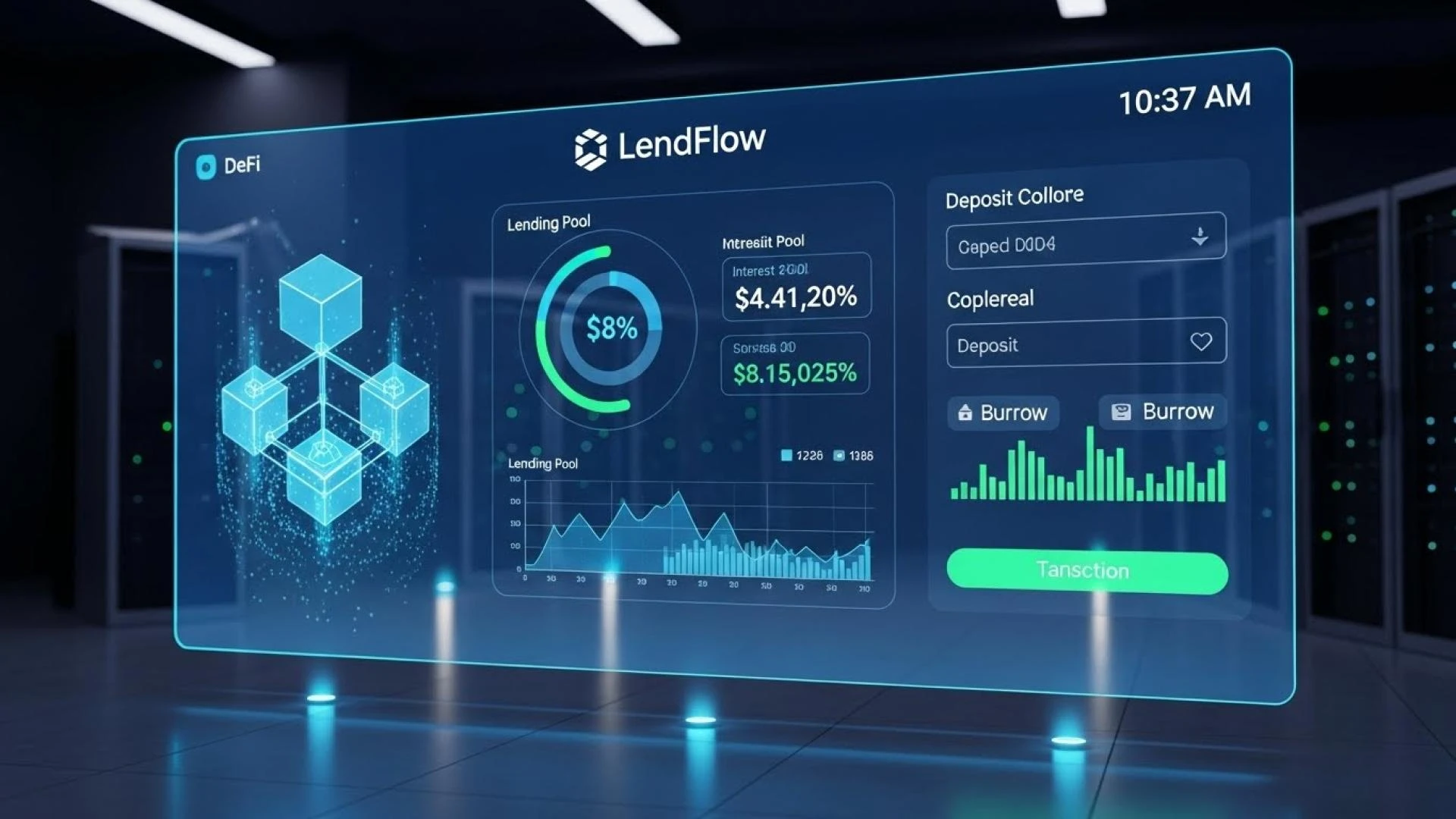
Yield generation is a central reason DeFi lending and borrowing platforms continue to attract strong interest from both founders and capital providers. These platforms introduce transparent, algorithm-driven mechanisms that distribute returns based on real-time market dynamics rather than fixed institutional policies. For entrepreneurs, this creates multiple monetization opportunities, while investors benefit from clearly defined income streams tied directly to protocol usage and liquidity demand.
- Interest-based income streams: Lenders earn returns from borrower interest payments, with rates adjusting automatically according to market conditions. This structure provides predictable yield mechanisms supported by transparent on-chain data.
- Protocol fees and incentives: Platforms collect fees from loan origination, repayments, and liquidations. These revenues support sustainable business models and allow investors to assess platform profitability beyond speculative token value.
- Dynamic risk-adjusted returns: Automated interest rate adjustments help balance liquidity supply and borrowing demand. This adaptability improves capital efficiency and strengthens long-term platform resilience.
- Token-based value accrual: Governance and utility tokens often reflect platform growth and usage. For investors, this alignment connects protocol success directly with asset appreciation.
Transparency and Trust Through Smart Contracts
Trust plays a decisive role in financial decision-making, and DeFi lending platforms address this requirement through transparent, code-based execution. Smart contracts define and enforce lending terms without subjective intervention, creating consistent and verifiable outcomes. Entrepreneurs leverage this transparency to build credibility quickly, while investors gain confidence through open access to operational data and immutable transaction histories.
- Open-source protocol design: Publicly available code allows independent audits and community review. This openness reduces information asymmetry and strengthens confidence in platform integrity.
- Automated enforcement of rules: Smart contracts manage collateral, interest, and liquidations automatically. This removes discretionary risk and ensures consistent application of lending conditions.
- Real-time visibility into operations: On-chain analytics provide continuous insight into reserves, loan volumes, and collateral ratios. Investors can monitor protocol health without relying on third-party reports.
- Immutable transaction records: Blockchain records create a permanent history of activity, supporting accountability and long-term trust among all participants.
Market Opportunities for Entrepreneurs and Startups
The evolving DeFi ecosystem presents significant opportunities for entrepreneurs seeking to build differentiated financial products. Lending and borrowing platforms often serve as foundational infrastructure within decentralized ecosystems, enabling multiple layers of innovation. With comparatively lower entry barriers and high demand for specialized solutions, defi lending and borrowing platform development has become a strategic focus for startups aiming to capture emerging market segments.
- Room for specialized lending models: Platforms can focus on niche assets such as NFTs, stablecoins, or tokenized real-world assets. Specialization enables differentiation and targeted user acquisition.
- Integration with broader DeFi ecosystems: Lending protocols often connect with exchanges, derivatives, and yield strategies. This interoperability increases platform visibility and transaction volume.
- Lower barriers to entry: Building decentralized protocols requires less capital than launching traditional financial institutions. This efficiency encourages experimentation and rapid innovation.
- Opportunities for strategic partnerships: Collaborations with wallets, blockchain networks, and fintech firms expand distribution and accelerate growth.
Technology and Security Innovations Driving Confidence
Ongoing technological advancement continues to strengthen confidence in DeFi lending platforms among investors and builders. Improvements in scalability, risk management, and security frameworks have reduced earlier concerns surrounding protocol reliability. Entrepreneurs investing in defi lending and borrowing platform development increasingly prioritize robust technical architecture to ensure long-term sustainability and user trust.
- Advanced collateral management systems: Modern platforms support diverse asset types and dynamic collateral thresholds. These features enhance risk control and improve capital efficiency.
- Enhanced security auditing practices: Regular audits, formal verification, and bug bounty programs reduce vulnerabilities. Strong security postures are essential for investor participation.
- Scalability through layer solutions: Layer-2 networks reduce transaction costs and congestion. Improved performance enhances user experience and platform adoption.
- Integration of reliable data oracles: Accurate price feeds ensure fair liquidation and interest calculations, supporting protocol stability.
Regulatory Evolution and Institutional Interest
Regulatory engagement with decentralized finance has progressed steadily, influencing investor sentiment and institutional participation. While frameworks continue to evolve, clearer guidance has reduced uncertainty for platforms and capital providers. As compliance tools mature, defi lending and borrowing platform development increasingly aligns with broader financial standards, encouraging participation from regulated entities.
- Gradual regulatory engagement: Governments and regulators are defining digital asset guidelines, offering clearer operational boundaries for platforms.
- Hybrid compliance models: Optional identity and reporting features allow platforms to serve both decentralized users and institutional clients.
- Growing institutional experimentation: Asset managers and fintech firms are testing DeFi lending use cases, signaling market maturity.
- Improved risk assessment standards: Advanced analytics enable better evaluation of protocol exposure and performance.
Conclusion
DeFi lending and borrowing platforms continue to gain traction because they combine financial efficiency, transparency, and global accessibility within a single digital framework. Entrepreneurs view them as scalable ventures capable of rapid innovation, while investors recognize their potential to generate sustainable, data-driven returns. As technology advances and regulatory clarity improves, these platforms are increasingly positioned as long-term components of the digital financial ecosystem. The sustained interest surrounding defi lending and borrowing platform development reflects a broader shift toward decentralized, trust-minimized financial infrastructure built for a global audience.