Key Takeaways
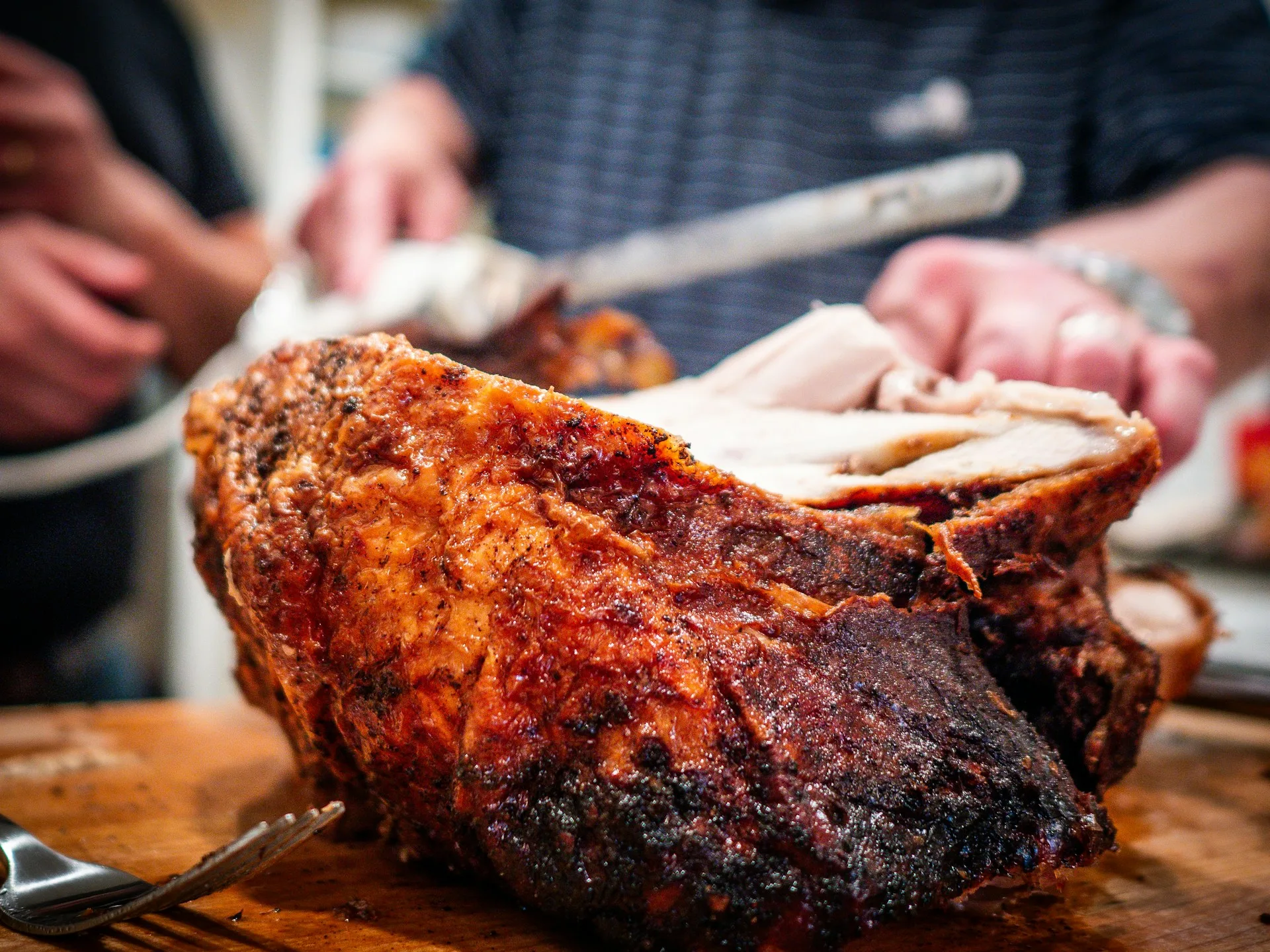
- Deep-fried turkey grew out of Louisiana’s crawfish-boil culture, where portable propane burners gave home cooks a powerful outdoor heat source they could adapt for frying.
- By the early 1980s, cooks in southwest Louisiana were deep-frying whole holiday turkeys seasoned with injected marinades and Cajun spices.
- Newspaper coverage, television demonstrations, and food-industry events helped turn deep-fried turkey from a regional curiosity into a nationwide Thanksgiving trend.
- Today, Cajun-style fried turkey is a widely recognized American holiday tradition, valued for its crisp exterior, juicy meat, and bold seasoning.
From classic Americana paintings to advertisements, we tend to think of cooking the Thanksgiving turkey as a fairly cut-and-dried process (but hold the dryness!): First, remove the stuff you don’t want, generously season the parts you do, then roast it in the oven until golden brown.
This has been the way to cook Thanksgiving turkey ever since cast-iron ranges with built-in ovens became common in American homes in the late 19th century. That is, until Louisiana changed the landscape by introducing the country to a new way to cook Thanksgiving turkey: deep frying.
Without Louisiana Crawfish Boils, There Would Be No Fried Turkey
Deep-frying turkey all started in the ‘70s with the growing popularity of portable propane burners for another Cajun favorite, crawfish boils.
These cookers ran on a portable propane tank and featured a metal burner that could hold aluminum pots of all sizes. With a stand sturdy enough to hold huge pots and the ability to reach high temperatures, they were perfect for boiling seafood.
But Cajun’s creativity knows no bounds, because boilers soon realized that crawfish wasn’t the only thing they could cook on their burners. They could swap water for cooking oil and fry fish and chicken, cutting the empty fuel tank in half and welding on handles to make a makeshift frying container. They also fashioned homemade harnesses to safely lower the bird into the oil.
Manufacturers noticed this unique solution. So these burners became known as both crawfish cookers and fish fryers.
From Casual Fish and Wings to the Prized Thanksgiving Turkey
Frying a turkey was the next natural step for home cooks. In December 1982, United Press International reported that daring cooks in the small southwest Louisiana town of Church Point were deep frying holiday turkeys whole.
Gone was the traditional, New England method of preparing Thanksgiving turkey by layering butter and aromatics, roasting, and resting the roasted poultry. Instead, these cooks created their own flavorful blends of Italian dressing, salt, pepper, and Cajun spices like cayenne. They injected this mixture into the bird days in advance for maximum flavor, then deep-fried it in lard.
Media Exposure Made Deep-Fried Turkey National
It was only a matter of time before deep-fried turkey caught on. Just one year later, another publication highlighted that the frying method was fast and prevented turkey from becoming as dry as it was when oven-roasted.
A few years later, a celebrity chef demonstrated frying a whole turkey on his PBS cooking show, which aired nationally.
Deep-Fried Turkey: An “Insult to Wholesome Food,” or the Next Big Cooking Method?
It’s believed deep-fried turkey really took off after a 1987 Newspaper Food Editors convention in New Orleans. Writers watched a turkey-frying demonstration up close, as several birds were fried the Cajun way. Of course, many of these editors wrote pieces describing the experience.
But not all pieces were positive. A press release from the National Turkey Federation declared that deep-fried turkey was “the ultimate insult to wholesome food.” To them, it carried too much risk of undercooking, and frying added far more fat than roasting.
As for other writers? They noted that deep-frying turkey was a sight (and taste) to behold. They also offered recipes for more curious readers who wanted to try deep-frying for themselves.
By the Early 1990s, Deep-Frying Soared in Popularity
Deep-frying turkey only got more popular in the 1990s. Recipes were featured in magazines. Turkey-frying was filmed for television shows. Even major publications like the New York Times wrote about deep-fried turkey, penning think pieces about the process, its results, and its surging popularity.
Americans couldn’t help but notice all the media attention. Demand grew. Frying equipment hit the retail shelves, right next to charcoal grills. And deep-fried Thanksgiving turkey migrated from Cajun country to the rest of the U.S.
Deep-Fried Turkey Is Now a Southern-Inspired, American Tradition
Deep-fried Thanksgiving turkey isn’t a niche anymore. People all over the country are forsaking oven-roasting in favor of frying, and not just in Louisiana. It’s become so popular, in fact, that some fast-food chains offer pre-cooked, Cajun-style turkey every Thanksgiving so fans can bring the famous Cajun kick to their holiday tables.
You’ll also find cooking magazines, social media influencers, and even television shows offering their own tips to achieve the best deep-fried holiday feast.
No matter which recipe you choose, you’re more than likely to discover why frying has become as much of a tradition as roasting, upon your first, juicy bite.