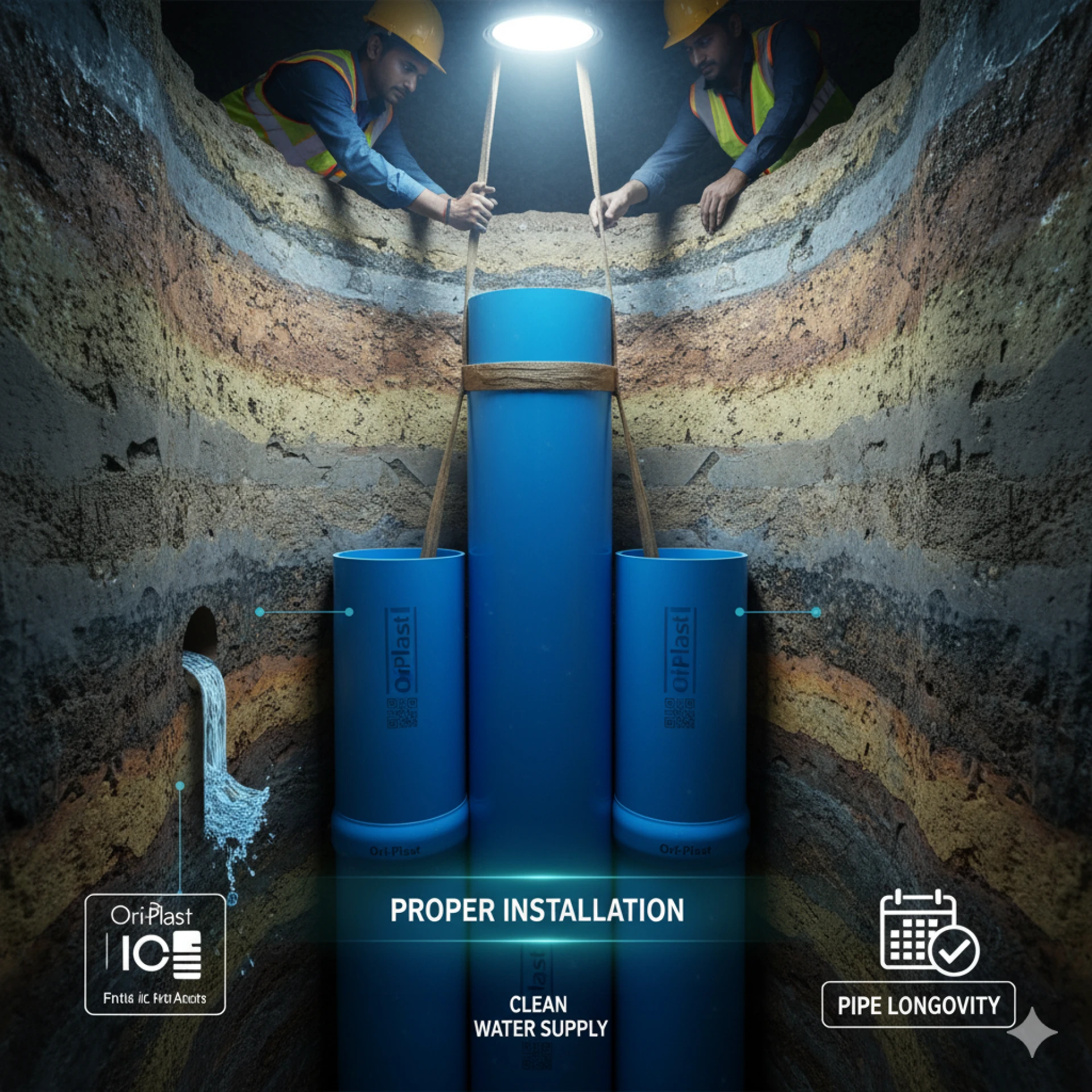
Accessing clean, reliable groundwater is a cornerstone of modern life, essential for agriculture, industry, and domestic use. The borewell system, a deep, narrow well drilled into the earth, is the gateway to this vital resource. However, the success and lifespan of this gateway depend entirely on its components, particularly the borewell and column pipes. While high-quality materials are the first step, their longevity is ultimately decided during installation.
Improper installation is the root cause of the most common and costly borewell failures. Issues like corrosion, cracking, blockages from sediment, and leaks don't just happen; they are often the direct result of cutting corners or a lack of technical precision. A compromised system not only risks a reduced water supply but can also lead to pump damage and, most critically, contamination of the water source.
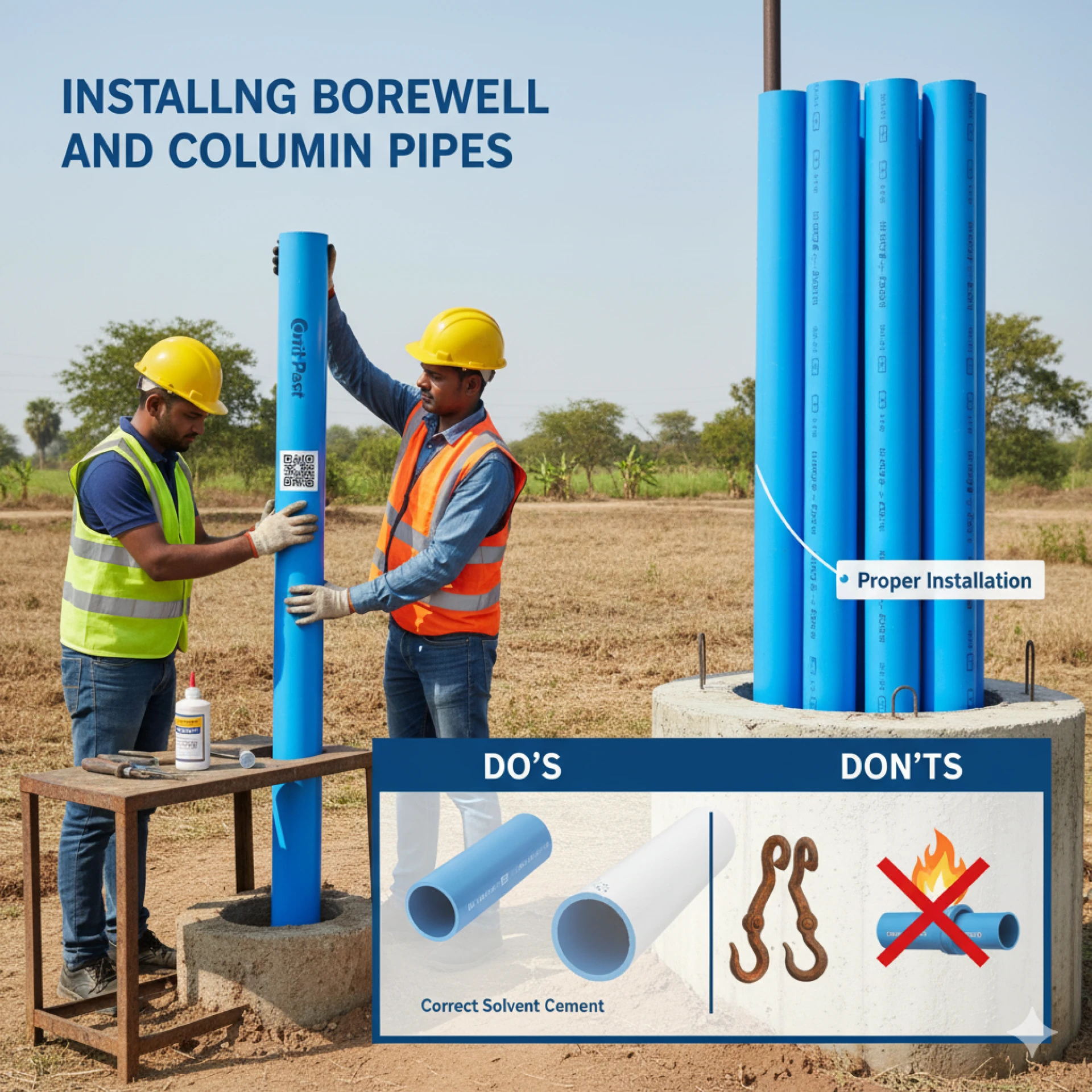
As a pioneer in PVC and PE pipes, Ori-Plast emphasizes that a "fit and forget" system is only achievable through a disciplined and correct installation process. This deep dive outlines the essential do's and don'ts for Installing Borewell and Column Pipes, ensuring your system achieves the Pipe Longevity and reliability it was designed for.
The "Do's": A Checklist for Flawless Installation
Following these fundamental rules is the best preventive measure against future problems and ensures the long-term integrity of your borewell.
DO: Prioritize Material Quality and Compatibility
- Use a Single Manufacturer: Always use pipes and fittings from the same manufacturer, such as Ori-Plast. This ensures that the materials, tolerances, and jointing mechanisms are perfectly compatible, creating a truly integrated and leak-proof system.
- Use High-Quality Materials: Select Borewell Casing Pipes and column pipes that are specifically designed for the application. High-quality uPVC is resistant to the corrosion and chemical damage that can be caused by aggressive soil and water, a common issue that degrades lesser materials.
- Inspect Before Use: Keep pipes and fittings in their original packaging until they are needed. Before installation, perform a visual inspection for any cracks or damage that may have occurred during transit.
DO: Insist on Meticulous Preparation
- Clean All Components: Remove all dirt, dust, and moisture from the pipe and fittings. Use a clean, dry cloth. Contaminants are the enemy of a strong, permanent joint.
- Cut Pipes Square: When pipes need to be cut, the cut must be as square (perpendicular) as possible. A crooked cut will prevent the pipe from seating fully into the fitting or socket, creating a weak spot that is prone to leaks and stress fractures.
- De-burr and Bevel: After cutting, use a de-burring tool or file to remove all burrs from the inside and outside of the pipe. Create a slight bevel (chamfer) on the outer edge. This step is critical: it prevents the sharp edge from pushing the solvent cement or damaging the rubber ring, ensuring a smooth, full-contact joint.
DO: Ensure Proper Jointing, Sealing, and Support
- Follow Jointing Instructions: Whether using solvent cement for casing pipes or threaded joints for column pipes, follow the manufacturer's instructions to the letter. For solvent cement, apply the correct type for the pipe material (e.g., don't use PVC cement for CPVC) and ensure a proper cure time before testing.
- Ensure Proper Alignment: When assembling joints, ensure the pipe and fitting are perfectly aligned. Misalignment creates stress on the joint, which can lead to failure over time, especially under the load of a submersible pump and the weight of the water column.
- Provide Adequate Support: For any horizontal or vertical piping, use hangers and straps that are designed for plastic pipes (i.e., no sharp or rough edges). Do not tighten straps excessively, as this can restrict the pipe. Proper support prevents sagging and vibration that can stress the system.
- Fill Slowly and Test: After installation is complete, always conduct a hydraulic pressure test. Fill the lines slowly to prevent "water hammer" and bleed all air from the system. This test is your only way to confirm the integrity of every joint and detect any potential leaks before the system is put into service.
The "Don'ts": Critical Mistakes to Avoid
Avoiding these common pitfalls is just as important as following the "do's." These mistakes can instantly compromise the integrity of high-quality materials.
DON'T: Use Improper Tools or Force
- Never Use Metal Hooks or Sharp Hangers: Do not use metal hooks, nails, or any support with a sharp edge to hold or hang the pipes. This will score or puncture the pipe, creating a critical weak point.
- Don't Drop or Abuse: Never drop pipes on their edges from a height. Do not drop heavy objects on them or walk on the pipes. Although uPVC is tough, a sharp impact can cause micro-fractures that compromise its pressure-bearing capacity.
- Don't Overtighten: Whether tightening threaded column pipe joints or securing support straps, do not overtighten. Overtightening can strip threads and crack fittings or deform the pipe, leading to leaks.
DON'T: Apply External Heat
- Never Use an Open Flame: If a pipe needs to be bent, never expose it to an open flame. This permanently destroys the material's structural integrity and chemical composition, guaranteeing a future failure at that spot. Use the appropriate fittings to change direction.
DON'T: Contaminate or Take Shortcuts
- Don't Use the Wrong Sealants: Do not use any petroleum-based sealants, adhesives, or lubricants on uPVC pipes or fittings. These chemicals are incompatible and will degrade the plastic, causing it to soften and fail. Use only the recommended solvent cement or thread sealant from the manufacturer.
- Don't Dilute Solvents: Never dilute solvent cement with thinner or any other liquid. This weakens the chemical bond, resulting in a joint that will not hold under pressure.
- Don't Use Air for Testing: Do not use air or gases for pressure testing. Compressing air in a pipe system is extremely dangerous and can lead to explosive failure if a component is faulty. Only use water for pressure testing.
Conclusion: Installation is the Key to Longevity
A borewell system is a long-term investment in your water security. The engineering and quality of Ori-Plast's Borewell Casing Pipes and column pipes are designed to last for decades, free from corrosion and contamination. However, this potential can only be realized when the installation is performed with precision and care.
By following these essential do's and avoiding the critical don'ts, you are not just installing pipes; you are ensuring the Proper Installation that forms the foundation of a safe, efficient, and long-lasting water supply. It is this attention to detail that protects your investment, your pump, and the purity of your water for generations to come.