
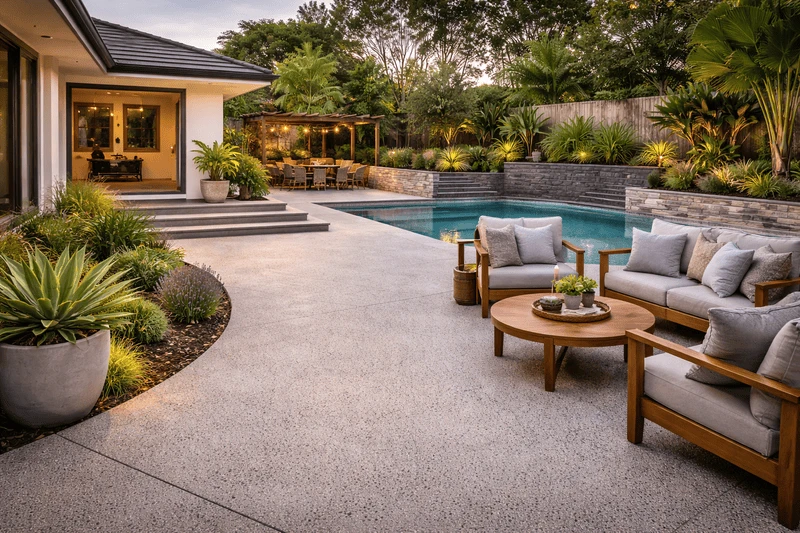
Concrete has long been associated with strength, durability, and function. For decades, it was chosen because it lasted, not because it looked good. That perception has shifted. Decorative concrete has changed how people think about hard surfaces, turning what was once purely structural into a design element that shapes the character of homes and commercial spaces alike.
Rather than covering concrete with tiles, pavers, or coatings, decorative finishes celebrate the material itself. Texture, colour, pattern, and finish are used to create surfaces that are both functional and visually engaging. This evolution has made decorative concrete a popular choice for driveways, patios, pathways, pool surrounds, and interior floors across Australia.
This article explores how decorative concrete works, why it has become so widely used, and what property owners should understand before choosing it for their space.
From Plain Slabs to Purposeful Design
Traditional concrete slabs were designed to be hidden. Once poured, they were often covered with another material to improve appearance. Decorative concrete challenges that approach by treating the concrete surface as the final finish.
Techniques such as exposed aggregate, coloured concrete, stencilling, and textured finishes allow concrete to mimic stone, tile, or bespoke patterns while retaining its inherent strength. The result is a surface that performs like concrete but contributes visually to the overall design.
This shift has been driven by both aesthetics and practicality. Homeowners and designers increasingly value materials that combine longevity with a clean, contemporary look.
Why Decorative Concrete Suits Australian Conditions
Australia’s climate can be demanding on outdoor surfaces. Heat, UV exposure, heavy rainfall, and temperature fluctuations all place stress on materials. Decorative concrete performs well under these conditions because it is designed to withstand them.
Unlike some surface coverings that fade, lift, or crack under environmental pressure, properly installed decorative concrete maintains its integrity over time. Sealing enhances resistance to staining and weathering, making it suitable for high-traffic areas and exposed outdoor zones.
This durability is one reason many people explore options such as decorative concrete by Cube Concreting when planning long-term upgrades rather than short-term cosmetic fixes.
Understanding the Different Decorative Finishes
Decorative concrete is not a single product but a category of finishes. Each technique produces a different look and feel, suited to specific applications.
Exposed aggregate reveals natural stone within the concrete mix, creating texture and visual depth. Coloured concrete introduces pigment directly into the mix for consistent colour throughout the slab. Stencilled or patterned finishes replicate the look of pavers or tiles without the joins and movement issues those materials can present.
Choosing the right finish depends on how the space will be used, the surrounding architecture, and the desired maintenance level. A pool surround may prioritise slip resistance, while a driveway may focus on strength and visual street appeal.
Decorative Concrete and Outdoor Living
Outdoor spaces are where decorative concrete often has the greatest impact. Patios, alfresco areas, and pathways benefit from surfaces that are easy to clean, durable, and visually cohesive.
Concrete allows large, uninterrupted areas without grout lines or joins that can collect dirt or weeds. This creates a clean visual flow between indoor and outdoor spaces, particularly in modern homes where transitions are designed to feel seamless.
Decorative concrete also works well alongside landscaping elements such as timber, stone, and planting. Its neutral base allows other materials to stand out without competing for attention.
Driveways and First Impressions
A driveway is often the first part of a property people see. Decorative concrete provides an opportunity to enhance street appeal without sacrificing practicality.
Coloured or textured finishes can complement the home’s façade, while exposed aggregate adds interest without appearing overly decorative. Because concrete driveways handle vehicle loads effectively, they are well suited to long-term use when properly reinforced and cured.
For Melbourne properties, where design standards and weather conditions vary, many owners look into decorative concrete in Melbourne by Cube Concreting to ensure the finish aligns with both aesthetic expectations and local conditions.
Interior Applications and Industrial Influence
Decorative concrete is not limited to outdoor use. Polished and coloured concrete floors are increasingly popular inside homes and commercial spaces. Their clean lines and minimal maintenance appeal to those seeking a modern, uncluttered aesthetic.
Internally, concrete floors offer thermal mass benefits, helping regulate indoor temperatures by absorbing and releasing heat gradually. This can contribute to energy efficiency when combined with good design.
The industrial influence of exposed concrete has also found its way into residential design, particularly in open-plan living areas and loft-style spaces.
Maintenance and Longevity
One of the strongest arguments for decorative concrete is its low maintenance. Regular sweeping and occasional washing are usually sufficient to keep surfaces looking their best. Sealing protects against stains and moisture ingress, extending the life of the finish.
Unlike modular materials such as pavers, decorative concrete does not shift or develop uneven joints. This reduces long-term upkeep and the likelihood of trip hazards.
Maintenance requirements vary depending on finish and location, but overall, decorative concrete is considered a long-lasting, practical solution for busy households and commercial environments.
Sustainability Considerations
Concrete often raises questions about environmental impact, but decorative concrete can support more sustainable building practices when used thoughtfully. Using the slab as the final surface reduces the need for additional materials, adhesives, and finishes.
Local sourcing of aggregates and materials further reduces transport-related emissions. Long lifespan also means fewer replacements over time, lowering resource consumption.
When combined with energy-efficient design principles, decorative concrete can contribute positively to a building’s overall performance.
Planning Is Key to a Successful Outcome
The success of decorative concrete depends heavily on planning and execution. Colour selection, aggregate choice, surface preparation, and curing conditions all influence the final result.
Once concrete is poured and finished, changes are difficult and costly. This makes early decision-making critical. Samples, test panels, and clear communication about expectations help ensure the finished surface aligns with the intended design.
Professional input is particularly valuable when decorative concrete is used across multiple areas or integrated with other materials. Consistency in finish and detailing creates a cohesive outcome rather than a patchwork of styles.
Decorative Concrete as a Long-Term Investment
While decorative concrete may have a higher upfront cost than plain concrete, its longevity and reduced maintenance often make it cost-effective over time. It eliminates the need for overlays, replacement pavers, or frequent repairs.
From a property perspective, well-executed decorative concrete can enhance appeal and usability, supporting both lifestyle and resale considerations. It offers a balance between practicality and design that few other materials match.
Rather than following trends, decorative concrete represents a shift towards materials that do more with less, serving both structural and aesthetic roles.
Looking Beyond the Surface
Decorative concrete works best when it is treated as part of the overall design, not just a surface finish. It influences how spaces feel, how they are used, and how they age over time.
Understanding its capabilities and limitations helps property owners make informed choices. When planned carefully, decorative concrete becomes more than a durable surface. It becomes a defining element that supports how people live and move through their spaces.